Malawi is an agrarian economy, with over 80 percent of its population engaged in farming activities.
While the nation’s abundant water resources hold great potential for the agriculture sector, low drive on mechanisation and slow adoption of irrigation farming constraint productivity potential.
The impact is felt when weather patterns swing from either drought or heavy rainfall leading to acute food shortages.
The Malawi Vulnerability Assessment Committee (MVAC) report of the 2023-2024 lean periods indicates that hunger looms, with 4.8 million Malawians being at risk.

The Department of Disaster Management Affairs (DoDMA) Commissioner Charles Kalemba recently told journalists that the lean period response will require about $226 million (about K270 billion).
- Advertisement -
However, a glimmer of hope emerges as the country embarks on a journey towards agricultural transformation through the concept of mega farms.
The mega farms are a catalyst for boosting agricultural productivity and increasing exports in line with Malawi 2063, the country’s long-term development blueprint.
And after three years of anticipation, the first mega farm has finally become reality.
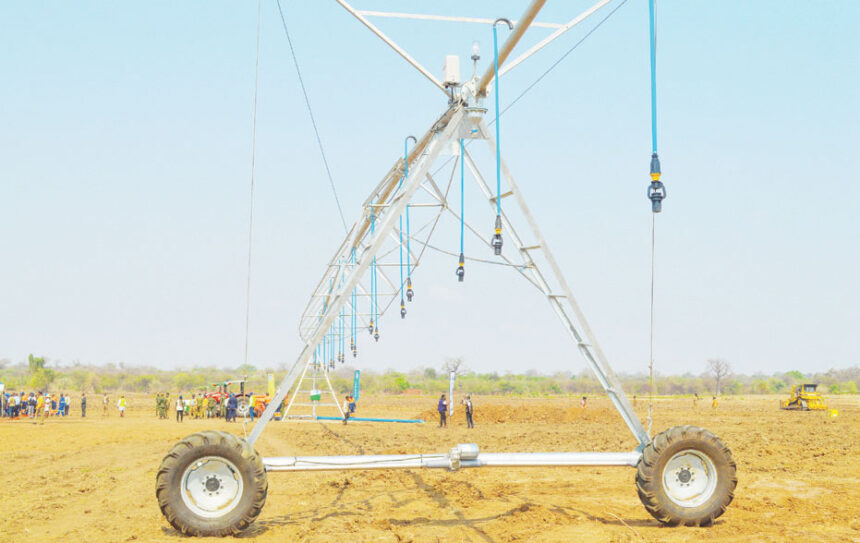
The Katunga- Maseya (Kama) Cooperative Mega farm, located in Chikwawa, is a testament to Malawi’s commitment to revitalise the agriculture sector.
- Advertisement -
- Advertisement -
Spanning over 1,000 hectares, this Mega farm showcases the potential of modern agricultural practices, advanced machinery, and sustainable farming techniques. It further illuminates the power of unity with over 2,000 farmers coming together to raise the seed capital of K4 billion before receiving a boost from the Agriculture Commercialisation Project (Agcom).
Kama Mega farm Chairperson Collins Mtalika said while the farm will focus on production of sugarcane for sale to the off-taker Press Cane Limited, every farmer is encouraged to put 10 percent of their land in the mega farm to produce food crops which will boost food security.
“We expect that this will transform the lives of the farmers in this area as the expected revenue generated per annum is over K4 billion. Furthermore, 75,000 households are participating in this farm and therefore are assured of increased income and food security,” Mtalika said.
Chairperson of Press Cane Limited Paul Guta said the impact of the development on the economy is quite notable.
He said the company was spending over $4 million in importing molasses from neigbouring countries as those from Illovo Sugar Company were not enough to meet its machine’s capacity.
“This development will mean a complete halt to such imports and once our production peaks, it will reduce fuel imports of not less than $30 million, and boost production of Carbon Dioxide hence reduce importation of the same,” Guta said.
The inauguration of the Kama Mega farm represents a significant step forward in Malawi’s journey towards agricultural transformation. If this concept is expanded and implemented effectively, it holds the potential to revolutionise the nation’s agriculture sector, improve food security, create jobs, and boost exports.
It remains to be seen as to whether the government will build on this momentum to transform the local economy.