




By Ruth Kamnitzer:
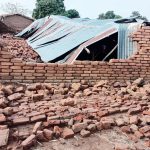
In March 2023, Tropical Cyclone Freddy hit Malawi, unleashing six months of rain in six days. Freddy was the largest and longest-lasting tropical cyclone ever recorded, and the impacts were catastrophic.
In Malawi, more than 600 people died and more than 650,000 were displaced.
Communities around Mount Mulanje, in the country’s south, were some of the hardest hit. Once heavily forested, parts of the mountain have been left denuded or bare from illegal logging, fires and demand for firewood.
Without trees to slow the rain’s descent, slopes turned to rivers of rocks and mud, destroying villages and smothering fields.
- Advertisement -
For many, Cyclone Freddy was a turning point, says Kondwani Chamwala, an environmental educator whose family home sits in the mountain’s shadow.
“The communities, most of them are now seeing the importance of protecting what is there,” he says.
Often called the ‘Island in the Sky’, Mt. Mulanje rises steeply out of the plains like a rocky fortress. It is massive, about 64,000 hectares (158,000 acres) around, with a broad, high-altitude plateau from which rise 13 peaks, the tallest reaching an elevation of 3,002 metres (9,849 feet).
Miombo woodlands, a type of forest common across parts of Southern Africa, dominate the lower slopes.
- Advertisement -
- Advertisement -
But as you ascend, you enter an otherworldly place: fog-laden forests and grasslands, home to nearly 70 endemic plant species.
Nine major rivers originate on the mountain’s slopes and there are hundreds of streams. In local lore, it is a place of spirits.
Designated in 1927, Mount Mulanje is one of Malawi’s oldest forest reserves. It is also a Unesco Biosphere Reserve and has been nominated as a World Heritage Site. But those designations have not been enough to fully protect the mountain’s biodiversity.
More than a million people live in the surrounding districts of Mulanje and Phalombe. Much of the most fertile land, on the southeastern side of the mountain, is covered by tea plantations.
On the rest, Malawians plant maize, beans, vegetables and other mostly subsistence crops.
At one time the miombo woodlands, rich in edible fruits and mushrooms, covered much of the land around these farms and the mountain’s lower slopes.
As a child, Chamwala recalls “playing around with monkeys” while gathering fruit in the miombo and catching fish in the cool, clean rivers. Dry wood was plentiful and collecting firewood was an easy task.
But things have changed drastically, Chamwala says. Women now have to travel long distances to gather firewood. Some of the rivers are drying up, making irrigation more difficult. Wild fruits and medicinal herbs are harder to find, and the animals have all run away. “Even a snake you cannot capture,” Chamwala says.
Malawi is one of the poorest countries in the world, with 70 percent of the population living below the poverty line.
Now, a shorter rainy season and more frequent cyclones due to climate change, along with currency devaluation and structural adjustment programmes imposed by foreign lenders, are making life even harder. In times of scarcity, people turn to the mountain as a coping mechanism, Chamwala says.
From 2002 to 2023, Mulanje Mountain Forest Reserve lost nearly 600 hectares (nearly 1,500 acres), or 21 percent, of its primary forest cover, according to satellite data from the Global Forest Watch platform.
Some of the forest loss may be from the direct impact of the cyclone. But it is also a sign of how difficult life has become. “If you move around, talk to people who have been up the mountain cutting down trees, they will tell you, ‘This is the only way that we can get support for our families,’” Chamwala says.
Last stand for the Mulanje Cedar
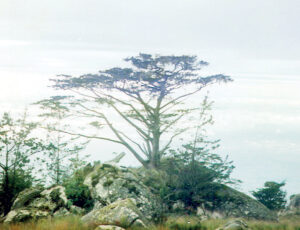
Of all the species on the mountain, the Mulanje cedar (Widdringtonia whytei), an endemic species and Malawi’s national tree, has taken the hardest hit.
The cedar is only found at elevations of 1,800-2,500 m (5,900-8,200 ft), and its fragrant wood, resistant to termites and water, commands high prices.
For many years, strict regulations meant logging was controlled. But those familiar with the situation say that, over the past few decades, breakdowns in law enforcement, historic grievances, corruption, fire and an invasive aphid infestation have conspired to virtually wipe out the cedars.
In 2017, an extensive survey of Mulanje cedars was conducted by the nonprofit Mulanje Mountain Conservation Trust (MMCT) along with the Forestry Research Institute of Malawi and United Kingdom-based Botanic Gardens Conservation International. The survey found only seven live trees.
Today, conservationists say there are almost certainly no wild-growing Mulanje cedars left on the mountain. For the past 20 years, MMCT, in partnership with other organisations, has been trying to bring them back.
They started in 2004, cultivating seedlings in nurseries on the upper mountain and planting out between 5,000 and 15,000 a year. Those early attempts weren’t overly successful. Many of the young trees were lost to fire, or simply died.
But over the last eight years, they have tweaked their approach. The teams put more effort into fire suppression, supporting community patrols and clearing firebreaks.
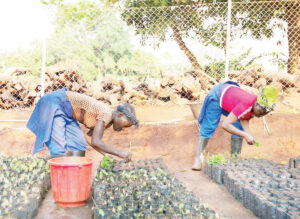
They moved seedling production from the top of the mountain to community nurseries in the villages. That had a few knock-on benefits. Selling seedlings to the MMCT is now a source of income for communities, which has helped build support for the project.
People want to see the trees survive and are more likely to help with fire suppression, even if there is not funding to do so, says Ibrahim Mitole, a research fellow with the Zoological Society of London’s Edge program (Evolutionary Distinct and Globally Endangered), and a former biodiversity research officer with the MMCT. They also started planting seedlings in small clusters instead of rows.
And they dramatically ramped up reforestation. Between 2016 and 2019, teams planted 700,000 cedar seedlings on the mountain; since 2020, they have planted around 50,000 to 70,000 per year.
It has been a herculean effort. The seedlings must be ferried from the community nurseries to the upper mountain.
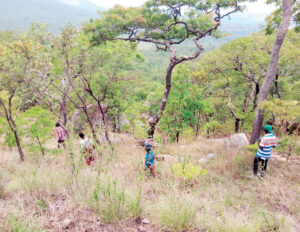
To do so, people carry bundles of 30 to 40 seedlings on their heads and hike for four to seven hours to the planting sites.
The ground must be prepared and each seedling planted at the right depth, all within six weeks after the onset of the rains.
Adding to the challenge is that endemic species like the Mulanje Cedar, are, by their nature, finicky. The tree naturally has low reproduction and high mortality and requires specific conditions, Mitole says.
As the cedar disappeared, loggers have turned to other trees like Podocarpus milanjianus, further stripping the ecosystem. Climate change, pests and invasive species could also be having an impact. But Mitole and others are not giving up.
“You’re looking at a tree that has so many challenges,” he says. “[T]rying to work out the best solutions to make sure that it survives … it takes a lot of effort. It takes a lot of courage and even passion.”
Those involved in the project say seedling survival rates have improved in the last decade. Although it takes about 50 years for the Mulanje cedar to reach maturity, some of the older trees, now nearing eight years old, are even producing cones.
But there has been some mysterious mortality amongst six-to-seven-year-old trees. That is unusual, says Alex Hudson, a programme manager with Botanic Gardens Conservation International.
Now, BGCI and partner botanic gardens are trying to figure out if a lack of mycorrhizal associations in the soil might be part of the problem.
Of course, growing the trees is only part of the battle. Keeping them standing is another.
Fire remains an ongoing threat. Those familiar with the area say many of the fires on the mountain are set intentionally: to clear brush and uncover previously felled logs (including old cedar); flush out game; divert forestry officers’ attention away from illegal activities; and more.
In dry years and with stronger winds — all part of more erratic weather due to climate change — the flames spread rapidly, consuming the young cedars and other trees.
The MMCT, as well as other groups, have helped put in firebreaks and support community firefighting brigades, but these are only partially successful.
As a boost to the protection of the species, in 2019, the Mulanje Cedar was listed in the Convention on International Trade in Endangered Species of Wild Fauna and FloraI Appendix II, restricting international trade.
Malawi has strict laws against illegal logging; even carrying an axe or a panga within a protected area is not allowed, Sivero Benias, a research assistant at the Forest Research Institute of Malawi, and formerly a forestry officer in Mulanje District, tells Mongabay.
But, he says, enforcement on Mount Mulanje is difficult; he has received threatening phone calls after apprehending illegal loggers in the reserve.
Another problem is that the forest department is chronically underfunded, says MMCT executive director Carl Bruessow.
For years the MMCT has been trying to enter a private public partnership agreement with the Malawi Government, similar to those established with African Parks in other parts of Malawi, but has so far been unsuccessful.
Moving into the miombo
Conservationists say part of the key to protecting the biodiversity on the mountains lies below, in the villages and adjacent miombo woodlands.
Miombo woodlands are found in a wide band across Southern Africa, and are renowned for their edible fruits and mushrooms, and the dominant trees’ capacity to rebound after coppicing.
Yet overharvesting, particularly for charcoal production, means that much of the miombo woodlands around Mt. Mulanje have been degraded or destroyed.
The good news is, the miombo can naturally regenerate on its own if protected. “Even in those completely clear areas, there are small plants of all the tree species,” Hudson says.
A number of local communities have co-management agreements with Malawi’s Department of Forestry and other agencies in miombo areas within the reserve and its buffer zones.
WeForest, a Belgian-based nonprofit, currently works with villages in four of the forest blocks. They provide technical and financial support for regeneration, fire management, agroforestry, governance, law enforcement and more.
In 2022, it supported 524 hectares (1,295 acres) of assisted natural regeneration and around 65 hectares (160 acres) of agroforestry, and distributed around 750 beehives. It is also working with communities on controlled burning to reduce fire risk.
“We realised that because the miombo around the mountain was already so deforested people were moving into the actual biosphere reserve where there’s all these endemic species,” says Dave Bircher, director of growth at WeForest.
“We’ve taken an approach where we’re focused on the communities and the miombo on the slopes of the mountain first, to bring those back and protect what’s still there.”
The MMCT also works with communities in co-management forest blocks. One of its more recent projects, in conjunction with BGCI, is on developing sustainable income streams as an alternative to selling firewood.
Historically, people in the communities collected fruits and mushrooms from the miombo woodlands; the sugar plum (Uapaca kirkiana) is even sold in markets in the region.
But local purveyors did not think of most miombo products as having commercial value, says Kate Chanthunya, programme manager with the MMCT.
Working with the wild foods certification body Fairwild, Chanthunya, who comes from a small-business background, is developing value-added products, for example, dried fruits and bars, from the miombo.
The plan, for now, is to sell the products in-country. Chanthunya says she hopes these products can replace imports, and that she can tap into the connection urban Malawians still have with their rural roots.
The MMCT also has its eye on other products. For example, it wants develop a line of essential oils from the vetiver, lemongrass and citronella that farmers grow to stabilise soils in their fields.
It has purchased a large oil press, and its new factory, which will also be used to process other forest products like fruits and honey, is almost complete.
While progress is in motion, communities around the mountain and those working to protect Mulanje’s incredible biodiversity still need all the help they can get, according to Carl Bruessow, executive director of the MMCT.
“We don’t want to send out another depressing story. But at the same time, we want people to understand that the situation on this tiny little mountain is dire,” Bruessow says. “We’re not talking big amounts of money. We’re talking about constant, reliable, small streams that can make a difference.”—Mongabay