By Lorenzo Kwalirakape, Precious Chimkande & Maureen Bakali:
Following the Cyclone Freddy devastation in March 2023, communities around the Chiradzulu Forest Reserve embarked on a remarkable journey of recovery and restoration in May that year.
The cyclone wreaked havoc across southern Malawi. It left a trail of death and destruction leading to loss of over a thousand lives and demolition of health facilities and schools, roads and energy facilities.
Through innovative nature-based activities on landscape restoration such as gully rehabilitation and beekeeping, communities in traditional authorities Mpama and Kadewere not only healed their land but also rebuilt their social connections and resilience against climate variability.
Two years down the line, and through collaboration and determination, these people are well equipped with knowledge on group dynamics.
- Advertisement -
Lives are being transformed and landscapes restored in the areas of group village heads Nkupu and Dokotala.
Eluby Anusa, now in her early 70s, tells a story of where they are coming from. She has witnessed a lifetime of changes in her community. As soil fertility declined, so too have crop harvests, leading to food insecurity and widespread landscape degradation largely attributed to human induced degradation, especially around the Chiradzulu Forest Reserve, which borders her village.
Now overseeing over eleven villages as Group Village Headwoman Nkupu, Anusa has seen firsthand how devastating environmental degradation has altered the lives of many of her people.
In 2023, Anusa’s village, located at the foot of the Chiradzulu Forest Reserve, was not spared. The cyclone’s mudslides and raging waters swept away crops, roads and homes.
- Advertisement -
- Advertisement -
In the process, deep gullies formed, creating physical barriers that disrupted social connections among the community.
Stray rocks and debris now litter the landscape, remnants of the disaster that reshaped Nkupu and neighboring villages like Dokotala.
To heal these scars— both in the hearts of the residents and in the ecosystem—Coordination Union for Rehabilitation of the Environment (Cure), a leading network in the environment and natural resources management sector in Malawi, partnered with the Department of Forestry.
With support from the Germany-based International Climate Initiative (IKI) Small Grants programme, Cure launched a project titled ‘Restoration of the Chiradzulu Forest Reserve while Building Resilience of Local Communities Against Climate Change.’
The two-year project, which began in June 2023, was being implemented in the areas Nkupu in TA Kadewere and Dokotala in TA Mpama. It aimed to restore the forest reserve and build the resilience of local communities to withstand the impacts of climate change.
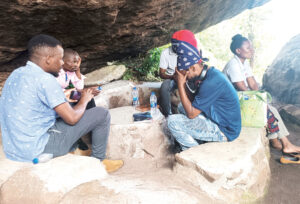
On May 31, 2025, Cure organised a final community engagement meeting, bringing together members of the various Village Natural Resources Management Committees (VNRMC) from the two project sites.
Yakobe Joseph, chairperson of Nkupu VNRMC, shares insights into the project’s progress two years down the line.
He emphasizes the importance of training local structures, noting that Cure prioritized this aspect throughout the entire project.
The committee at Nkupu received training in leadership, group dynamics, nursery establishment, management, beekeeping, and honey production.
“These trainings have empowered us to lead the community in managing our forest resources. We have mobilized and managed about 410 community nurseries, raising nearly 20,000 tree seedlings. Some of these seedlings have been planted in the forest reserve, while others have been distributed to the community to plant in their homesteads and gardens,” Joseph says.
Beyond restoration efforts, Cure also empowered the community by providing beekeeping equipment, including bee suits, smokers and beehives worth over K10 million.
Joseph says that out of the 20 beehives donated to Nkupu, the majority have already been colonized by bees. The community has been trained in honey harvesting and processing, and they have already tasted the fruits of their labour from their own apiary.
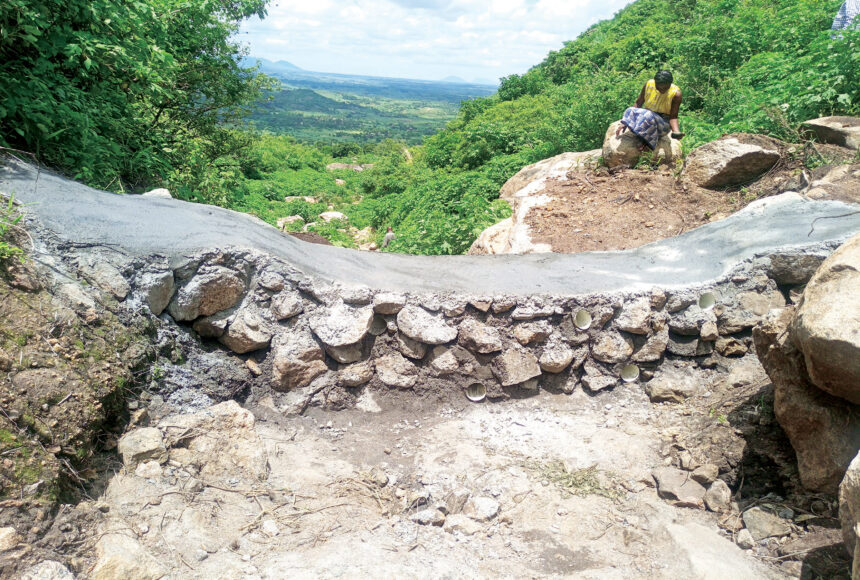
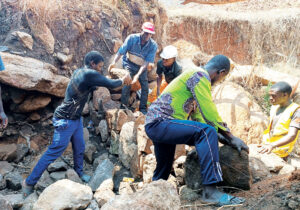
The project has also seen the construction of check dams and stone bands on the gullies created by Cyclone Freddy at the foot of Chiradzulu Mountain.
“Cure’s project has strengthened our community’s social connection by healing the deep gullies left behind by the devastating Cyclone Freddy.
“We are now connected, and more importantly, we have built friendships with the people of Dokotala,” says Joseph.
Despite these successes, challenges remain – including unpredictable rainfall patterns, which has led to a reduced survival rate of seedlings during the first year of the project, and pests that attacked seedlings at Dokotala during the second year.

Charles Mkoka, Cure Executive Director, commends communities for their commitment and cooperation throughout the project’s duration.
He emphasises the importance of sustaining the gains made thus far and urges community members to apply the knowledge and skills acquired to strengthen their livelihoods in an era marked by climate variability.
Kingsley Amon, chairperson of Dokotala VNRMC in the area of Traditional Authority Mpama, also recounts the successes of the project.
“Together with Cure, nature trails have been marked and places of tourists and cultural interests in the reserve have been developed. These include Chimwala Chachikulu, Leprosy grave and Njuli View. These have been identified as potential attractions for visitors and hikers,” Amon says.
Rosina Kanyumba, a member of the Nkupu Village Natural Resources Management Committee, cherishes the knowledge she has gained in gully reclamation, nursery establishment and management, as well as group dynamics and leadership.
She says these skills will be valuable for future environmental conservation efforts in the community.
Acklie Chimgonda, Chiradzulu District Forestry Officer, says the project’s impact on forest recovery is evident, although the full extent of land restoration will only be quantifiable with time.
“One of the most notable outcomes was the reduction in water runoff due to the construction of check dams at both Dokotala and Nkupu,” he says. “This was especially visible at Nkupu, where one of the deep gullies was completely filled with soil after the check dam was constructed.”
Chimgoda also admits there were challenges, particularly related to delayed funding in the project’s first year, which affected the timely implementation of planned activities.
He hopes for improved communication and coordination in future projects.
“Overall, this was a good project. If given the opportunity, I would welcome its continuation, as it directly addresses the issue of forest degradation in Chiradzulu,” he says.