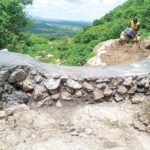
The Constituency Development Fund (CDF), first introduced under the leadership of the late president Bingu wa Mutharika, was never just a financial mechanism to deliver development at the grassroots.
It was, at its core, a calculated political move.
At the time of its inception, Mutharika was facing mounting resistance from a hostile opposition in Parliament.
Struggling to assert Executive authority and pass crucial legislation, Mutharika crafted the CDF as a strategic olive branch; a tool to entice Members of Parliament (MPs) to his side by placing financial resources directly in their hands.
- Advertisement -

By empowering MPs with a fund they could “control”, Mutharika managed to somehow shift the political dynamics in his favour.
- Advertisement -
The CDF gave MPs the rare opportunity to initiate development projects independent of national government bureaucracy, creating a sense of autonomy.
More importantly, it tied development results directly to their names, elevating their political profile among constituents.
This made CDF immensely popular in Parliament; even among opposition MPs who otherwise resisted Mutharika’s policies.
The result was a subtle but effective form of political co-optation. MPs, aware that the CDF gave them visible, tangible projects to campaign on, became less combative and more cooperative.
- Advertisement -
The fund was no longer just a development tool; it became political capital.
The political brilliance of the CDF lies in its simplicity: give MPs money, allow them to associate projects like school blocks, boreholes and bridges with their personal efforts, and let them reap the electoral benefits.
In doing so, the government shifted the narrative from State-led development to MP-led development. Constituents now “thank” their MP for a borehole, not the Ministry of Water or Local Government.

This gratitude politics has led to an ironic reality where MPs, who are meant to be overseers of government spending, have become micro-executors of public development funds.
Their loyalty to the CDF mechanism is unsurprising; it is one of the few instruments of government expenditure over which they have direct influence.
In an otherwise polarised Parliament, few issues unite government and opposition MPs like the CDF. Every budget session sees MPs across the aisle rallying together, demanding higher allocations.
Whether it is a ruling party backbencher or an opposition stalwart, the chorus is the same: increase the CDF. It is rare to see such bipartisan enthusiasm on any other fiscal item in the national budget.
This unity reveals a shared interest that transcends political ideology, and that is self-preservation.
In an electoral system where visible development translates into votes, CDF has become a kind of sustenance for incumbents.
Thus, its growth is often aggressively defended and justified, regardless of the country’s fiscal constraints.
But beneath the political convenience lies a deeply troubling truth. CDF is one of the most abused public funds in Malawi.
Numerous reports from the Auditor General, the Anti-Corruption Bureau and civil society organisations have highlighted cases where MPs misappropriate funds, inflate project costs or award contracts to cronies and ghost contractors.
In some instances, projects are poorly executed; unfinished classroom blocks, substandard bridges or boreholes that stop functioning weeks after completion.
What makes the abuse worse is the lack of effective oversight. Local councils often play a minimal role in monitoring CDF implementation and communities are rarely consulted or empowered to hold their MPs accountable.
The accountability vacuum has turned CDF into a personal piggy bank for some legislators, rather than a community-driven development instrument.
CDF, in its current form, serves MPs more than it serves communities. It gives them campaign material, enhances their visibility and secures political loyalty.
But it does not guarantee quality development, equity or transparency. The question then becomes why should MPs continue to control the fund?
If the goal is true development and community empowerment, then CDF must be radically restructured.
Independent oversight mechanisms, community participation and transparent procurement processes are essential.
Otherwise, the fund will continue to serve as a tool of political survival, rather than a means of improving lives.
As it stands, CDF is a brilliant political invention; but a flawed development tool. And for a country still battling poverty, corruption and inequality, that is a price Malawi can no longer afford to pay.