



Malawi’s rice sector is widely regarded as a sleeping giant, with around 600,000 hectares suitable for cultivation and abundant water resources along Lake Malawi and major rivers.
These natural advantages position rice as a potential driver of exports, food security and economic growth.
However, despite increased private investment and improved access to low-cost financing, structural challenges continue to limit the crop’s full economic contribution.
In Karonga, progress is visible. Rice milling firms are expanding operations, strengthening links with smallholder farmers and creating employment, showing the potential of agricultural value addition.
Yet this momentum is constrained by power outages, export barriers, currency instability and limited production capacity, which hinder scaling up the rice value chain.
- Advertisement -
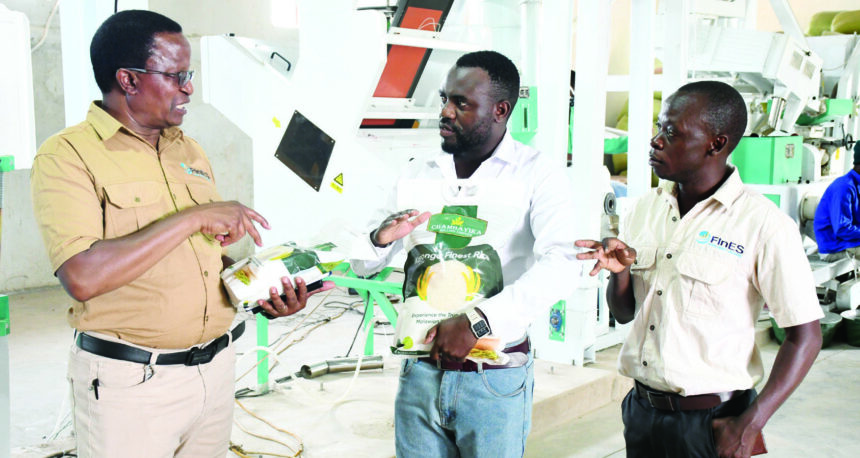
Chambayika Rice Milling Limited is central to this transformation, emerging as a notable local processor with community impact.
The company works with more than 90 farmers organised into cooperatives and spends around K150 million annually on rice procurement, keeping resources largely within local economies.
Paddy is sourced from Wovwe, Kasola and Fuliwa before being processed, packaged and distributed nationwide.
Chief Operations Officer Walekani Mhango said the firm’s operations cover aggregation, processing and distribution to a diverse customer base.
- Advertisement -
- Advertisement -
“Our factory can process up to 10 tonnes of rice per day. We supply hotels, restaurants, schools and individual customers,” Mhango said.
The company recently secured a K360 million low-cost loan through the World Bank-funded Financial Inclusion and Entrepreneurship Scaling (FInES) project.
The funds allowed it to complete a warehouse, procure equipment and expand its workforce from four to 11 employees.
While financing has strengthened capacity, ambitions to enter regional markets remain constrained.
Mhango said plans to penetrate the Southern African Development Community (Sadc) market are slowed by structural bottlenecks.
“We have the capacity and the stock, and demand is high in the Sadc region. But barriers to international markets, intermittent power supply and limited access to capital continue to interrupt production and expansion,” he said.
At Chilumba, Mphanga Holdings Limited, producer of TG Kilombero Rice, faces similar challenges.
General Manager Victor Gwaba Msonda said currency instability undermines competitiveness in export markets.
“Border districts face competition from foreign buyers. Tanzanians, for instance, buy raw paddy from Malawi, process it abroad and sell at higher prices. We lose both raw materials and the benefits of value addition,” he said.
Despite these pressures, the domestic market remains strong.
Opportunities exist to diversify into by-products such as briquettes, animal feed and rice bran, particularly under government initiatives promoting climate-smart agriculture.
Mphanga Holdings has also benefited from a K150 million capital injection from the Malawi Agricultural and Industrial Investment Corporation through FInES.
The funding allowed the company to procure machinery capable of processing 10 tonnes of raw paddy per day.
“The loan improved product quality with a secondary grader and polisher, increased grain stocks and helped meet customer expectations,” Msonda said.
In Lilongwe, agro-processor Food Empire Limited shows how access to finance supports growth.
The company, which supplies Pism Kilombero rice to shops and retail outlets, accessed a K100 million low-cost loan from NBS Bank through FInES.
Director Emmanuel Joseph Mseteka said the financing improved raw material availability and enabled diversification.
“We have acquired another plant for maize milling and packaging and will also venture into peanut production,” he said.
However, agriculture policy analyst Leonard Chimwaza warned that financing alone will not unlock Malawi’s rice potential without investment in productivity-enhancing technologies and irrigation infrastructure.
“Malawi remains a low producer for domestic and export markets despite vast irrigable land. Modern technology adoption is limited and production areas remain underdeveloped,” Chimwaza said.
With improved technology, average yields could rise from around 3,000 kilogrammes per hectare to at least 5,000 kilogrammes, a level necessary for regional competitiveness.
The government says it is addressing structural constraints through trade facilitation and industrialisation policies.
Ministry of Industrialisation, Business, Trade and Tourism spokesperson Patrick Botha said rice milling and packaging have been prioritised to drive an export-led value-addition economy.
“Government is facilitating trade through regional and continental frameworks such as Comesa, Sadc and the African Continental Free Trade Area, as well as simplified bilateral trade regimes to reduce tariffs and non-tariff barriers,” Botha said.
While some export barriers persist, Botha said Malawi’s biggest challenge is low production capacity rather than market access.
“Malawi’s Kilombero rice has a strong competitive advantage due to its unique quality and aroma. With higher production and improved value addition it can compete regionally and beyond,” he said.
These ambitions are reflected in the Malawi National Rice Development Strategy II for 2024–2030, which aims to expand rice cultivation from 77,000 hectares in 2021 to 110,000 hectares by 2030.
Despite export potential, Malawi continues to face a widening trade deficit, with the 2025 Malawi Trade Report showing a $3.31 billion shortfall in 2024.