





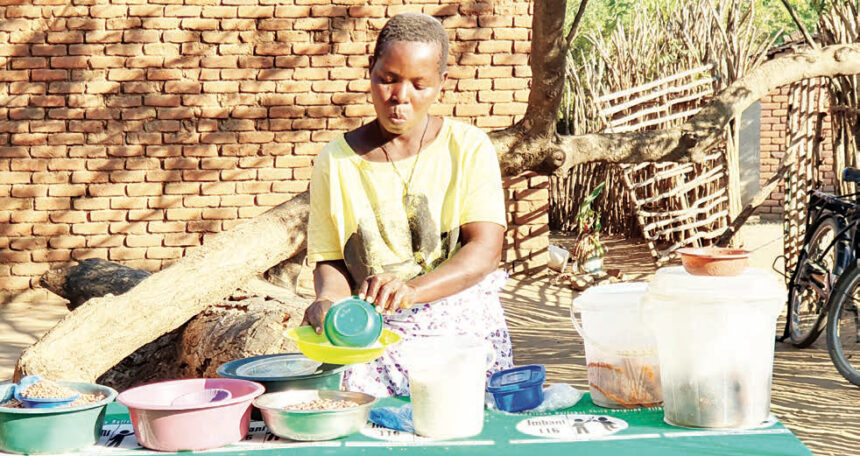
Dorica Elasimo used to watch her children go to bed without food. Today, she sells rice hand basin after hand basin and helps in paying school fees for the children.
The change started with a club, training sessions and K700,000 in seed capital which their group received to establish a business.
Elasimo, 38, of Chavalamisengu 2 Village, Traditional Authority (TA) Kasisi, in Chikwawa District, is one of hundreds of women whose lives are being reshaped by the Social Protection for Gender Empowerment and Resilience SP-Gear initiative.
“Before joining the club, I was struggling to support my family.
Now I can afford a smile because I am generating profits,” she says.
- Advertisement -
She joined Chitsanzo Club, a village savings and loans group, where members were trained in business management and saving.
With the K700,000 seed capital from the initiative, the group bought 30 local chickens.
From her share of the profits, Elasimo bought rice and other legumes which she now sells in the community to supplement household income.
“The money has enabled me to improve the living standards of my family members. From the profits I generate, I assist my husband in taking care of family needs,” she said.
- Advertisement -
- Advertisement -
The club is not stopping at rearing and selling chickens.
“We are now planning to buy goats. We thank the European Union for providing this support,” she explains.
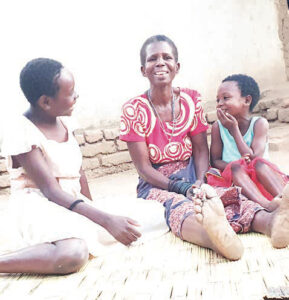
For Esilesi Landisoni, 61, of Chadula Village, TA Kasisi, the last 15 years were about survival.
After walking out of an abusive marriage, she raised her children alone.
“There were some nights when there was no food at home,” she recollects. “That pain gave me courage to embark on an income generating activity.”
Her turning point came after receiving K525,000 from the Social Cash Transfer Programme.
She joined a village savings and loans group, where she acquired business management skills.
She invested the grant in brewing and selling kachaso, a traditional distilled spirit.
Landisoni also bakes zigumu and sells sugar. “Now my daughter will be in Form Four in the next school calendar,” she says.
Landisoni is already thinking beyond herself. “I am training my child in business operations because that will help her in future in case she is not hired by a company,” Landisoni indicates.
Most importantly, she says she has broken the cycle of dependency on others.
“I have graduated from being dependent on initiatives such as social cash transfer programmes,” she says with quiet pride.
Landisoni’s story is not unique because, across Chikwawa, women who once relied on handouts are now running small enterprises, saving money and mentoring others.
SP-Gear is a three-year intervention funded by the European Union through the United Nations Children’s Emergency Fund (Unicef0 and it is being implemented by the government in partnership with Youth Net and Counselling (Yoneco) in Chikwawa, Nsanje and Mulanje districts.
In Chikwawa alone, the project is targeting 300 savings and loans groups (SLGs) and 450 womenled enterprises.
Since 2024, about K500 million has been disbursed.
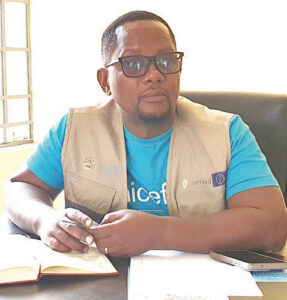
Unicef Social Protection Specialist George Juwawo calls it a turning point.
“We are very impressed because this programme has produced impressive results,” Juwawo says.
He made the observation during a recent monitoring visit.
“Apart from women who are engaged in business and small-scale enterprises, we have seen adolescent boys and girls benefitting from skills development initiatives,” Juwawo explains.
Juwawo says the goal is to promote resilience and not dependence.
“From our point of view, this is exactly what we were advocating for; an integrated social protection system within the government framework that looks at not only providing support but also bringing in the aspect of employment creation and jobs so that households are resilient and able to graduate out of poverty,” he adds.
Yoneco, the implementing partner, says sustainability is key to success.
Its executive director MacBain Mkandawire says village savings and loans groups have been established in all TAs in the district.
“This is a grant that is meant to boost businesses they were already doing. We are also supporting them by linking them to financial institutions,” Mkandawire explains.
“We support them to open bank accounts so that, in future, these groups can go to the same banks and get loans that could boost their businesses,” Mkandawire explains.
He adds that community ownership will keep the project alive after 2027.
“The communities want to get out of poverty. We have also trained community-based trainers in supporting the structure so that even if the project phases out, we will continue monitoring and interacting with them,” Mkandawire says.
The initiative directly supports Malawi 2063 vision’s pillars on human capital development and gender equality by putting both money and skills into women’s hands.
It also contributes to several Sustainable Development Goals (SDGs) like SDG 1, which focuses on fighting poverty by helping women graduate from social cash to selfreliance, and goal 2 about zero hunger through increased household income for food.
For women like Elasimo and Landisoni, the impact is felt daily. It is rice on the table, soap in the house and fees paid on time.