



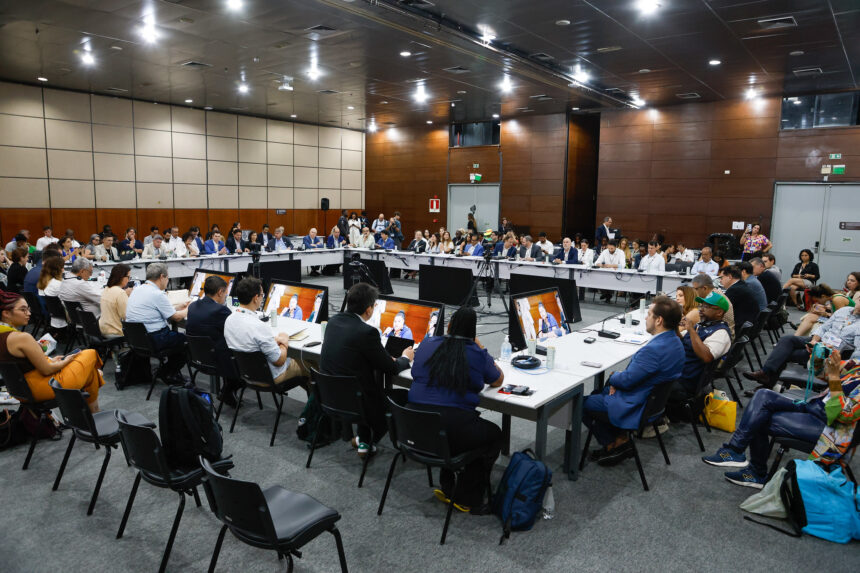
Negotiations on how countries adapt to climate change remain unresolved at the 30th United Nations Climate Change Conference (COP30), with delegates unable to agree on key issues and a week of talks still to come.
Observers say the outcome is uncertain and could change before the conference ends, even though Africa wants a delay of two years.
A draft text released after the meeting shows that delegates continued discussing the Global Goal on Adaptation (GGA) and agreed to forward the matter to the next session.
The GGA is the Paris Agreement’s target to help countries and communities become more resilient to climate change by reducing risks and strengthening their ability to cope with its impacts.
Key decisions, particularly on adaptation indicators, remain contested at COP30.
- Advertisement -
One major point of contention is how to measure countries’ progress on adaptation.
The draft proposes voluntary indicators described as “non-prescriptive, non-punitive and country driven” and not intended to create extra reporting burdens, particularly for developing countries.
Developed country negotiators clarified that the indicators “do not create commitments for new financial obligations and no new liability or compensation.”
However, several developing country groups, including African nations, want to delay adopting the indicators for up to two years.
- Advertisement -
They argue some proposed measures could unfairly shift responsibility for adaptation finance to developing countries and infringe on national sovereignty.
Other parties, such as the European Union, want at least some indicators adopted at COP30 to maintain accountability.
Funding remains another sticking point. The draft states that a strong adaptation response “cannot be achieved without a transformational increase in adaptation finance to developing countries delivered as new, additional, predictable grant-based public finance.”
Developing countries, particularly small island states and least developed nations, are further calling for clearer commitments while some wealthier countries have yet to fully commit.
Africa’s delegation insisted during a press conference that the continent has special needs, adaptation priorities and a role in global climate solutions.
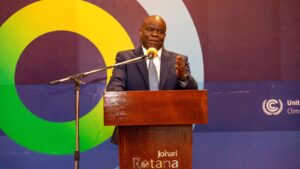
Chair of the African Group of Negotiators (AGN) and Climate Envoy of Tanzania, Richard Muyungi, called on the international community to provide fair financing and recognise Africa’s historical negligent contribution to climate change.
“There is a COP we all expected, the whole world. A COP ten years after the Paris Agreement. A COP of hope, where we hope the world will move in a direction of tested multilateralism,” Muyungi said.
He added that Africa seeks climate indicators that do not overburden the continent, saying countries spend nine percent of their GDP to address impacts of climate change.
The envoy also underlined Africa’s role in the global energy transition, referencing the continent’s critical minerals for renewable energy, which he put at 60 percent of capacity.
“We are here to help the world transition,” Muyungi said, calling for the unlocking of $300 billion in climate finance pledged in previous agreements.
On adaptation, he said fairness and science-based decision-making must take precedence.
“Many countries are across the equator. The [Intergovernmental Panel on Climate Change] tells us these countries are more vulnerable because of impacts related to heat, changes in a short span of time. Africa has a credible case from science and realities on the ground,” he said.
COP30 Special Envoy for Africa, Carlos Lopes, called for a shift in the global narrative from vulnerability to solutions.
“We want to change the narrative of engagement of the continent with climate. Shift the discussion from vulnerability to Africa also offering solutions for the world,” Lopes said.
He also mentioned Africa’s negligible historical carbon contribution and its role as a carbon sink due to tropical forests, savannas and grasslands.
“The world has a carbon debt with us; we have a credit. We have the largest carbon sink and emit less than anybody else. If you had to pick a continent closest to net zero, that would be Africa,” Lopes said, calling for compensation and recognition of historical inequities.
Meanwhile, the AGN maintains that postponing the talks does not mean abandoning the GGA but aims to secure what it calls effective and equitable implementation backed by adequate, predictable and new financial support.
This story was produced as part of the 2025 Climate Change Media Partnership, a journalism fellowship organised by Internews’ Earth Journalism Network and the Stanley Center for Peace and Security.