By Cathy Maulidi:
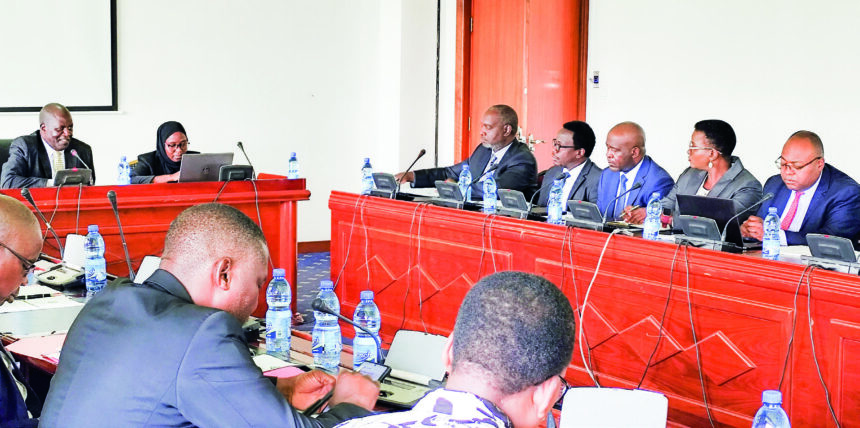
Malawi Energy Regulatory Authority (Mera) boss Henry Kachaje and his Nocma counterpart Clement Chinyama found themselves in the hot seat on Friday as they faced Members of Parliament over the country’s fuel crisis.
It was a frank discussion that highlighted the scale of the problem.
But there were also moments of intense pressure.
Early on in the meeting, Kachaje assured the Parliamentary Committee on Natural Resources that the fuel scarcity would stabilise by January 20.
- Advertisement -
However, when the MPs asked him if he would resign if his prediction failed, Kachaje backtracked on his statement.
He said every Malawian would see it for themselves when the situation stabilizes.
Vice Chairperson for the committee George Million asked Kachaje:
“You have repeatedly assured the nation that fuel supply issues would be resolved by specific dates, but this doesn’t happen. In your last update, you claimed the problem wouldn’t persist into January, yet here we are. I would like to know: what’s your plan if today’s promise also falls through?”
- Advertisement -
- Advertisement -
“Malawians have lost patience and are calling for your resignation due to the consistent failure to meet your own deadlines. Will you step down if your current assurances fail?”
In response Kachaje surprised the committee when he said he had decided to withdraw his entire sentiments on when the situation would stabilise.
“Let me say on record. Can I withdraw what I said? That we hope that fuel supply may stabilise by the 20th?
“Honourable Chair, I now withdraw the statement that I made. As of now, I will not give any date on when we think we can have stabilised supply.
“I only made that pronunciation based on projections of the trucks that we have loaded and how we see the consumption in the country because we are of the informed opinion that once we receive this fuel the queues might not be there by the 20th.
“But guided by the two honourable members, I think it is not right to come to this house and give a particular date.
“So allow me to totally withdraw that statement, so that what should be on record should be that we are making efforts to ensure that there is fuel in the country and when the situation stabilises everybody will know,” Kachaje said.
His new statement sent the committee members into disappointment and the committee Chairperson Werani Chilenga advised Kachaje not to withdraw.
He said doing so would put fear into many Malawians who are out there in the queues with hope.
At this point, Kachaje went back to assure that the situation “might” stabilise by 20th January’.
“Allow me to use ‘it might’ stabilise and not ‘it will’,” he said.
Machinga East MP Esther Jolobala also asked Kachaje if Mera and the government are implementing the Government-to-Government arrangement.
In the just ended meeting, Parliament passed the Liquid and Gas (Production and Supply) Act (Amendment) Bill which seeks to facilitate the transition from open tender to the Government-to- Government procurement of fuel.
This would make operational President Lazarus Chakwera’s directive on the arrangement.
Kachaje responded that no entity is implementing the new arrangement as there is no law in place backing it since the President has not yet assented to the fuel bill.
“What we are facilitating with Kenya is an emergency procurement arrangement and it’s allowed in a situation where the country is so distressed as we are and the Minister of Energy is allowed to intervene and activate an emergency procurement.
“This is what we have done; we are just riding on the back of the G-to-G arrangement Kenya already has with all oil producing countries such as Abu Dhabi, Dubai and Saudi Arabia.
“What we have done to address the critical situation we are in is to use the provisions in the current law to enable us to procure an emergency supply that has been done on the back of MoU [Memorandum of Understanding] that we signed with Kenya which has a long standing G-to-G arrangement with oil producing countries,” Kachaje said.
But in Kenya, Malawi approached Abu Dhabi National Oil Company (ADNOC), which recommended Gulf Energies which now Malawi is getting fuel from.
When asked if this means the country is getting the fuel from an agent, through Kenya which has also acted as an agent, Nocma’s CEO Clement Kanyama said:
“No, the President announced the G-to-G arrangement. This month a team from UAE is expected to come to finalise discussions. Once that is done, we will be able to sign an agreement with ADNOC and work directly with the company.
“In the short term Malawi is riding on the back of Kenya to source the product. We are not getting the product from an agent; we are getting it from ADNOC who has authorised its partner Gulf to release the product to us.”
During the meeting, Kanyama also said the country is facing challenges to transport the 51.5 million litres of fuel that it has procured through the Kenya emergency arrangement.
He said Tanga port where the fuel is at is locate further off than Dar-es-Salaam.
He said most transporters are used to Beira and changing to Tanga has proved a bit challenging as it requires additional money.
“At the moment the local transporters have released 260 trucks and out of these, 13 trucks have crossed the border to Tanzania. More trucks are at the border and we are engaging the Ministry of Transport to ensure that they are quickly cleared.
“Whilst our local transporters are at the border, Mera has given an approval that given the pressing situation, we should also use Tanzanian transporters to bring the fuel; so some of these transporters have already started off,” he said.
According to Kanyama, following these challenges and that tonnage of fuel involved, the process to bring in the 51.5 million litres may take 30 days.
“At the moment 3.5 million litres has arrived in the country and is expected to arrive in Mzuzu and other districts from Saturday until Sunday.
“We are hoping that the process to transport the whole tonnage of this fuel may take not more than 30 days,” he said.
Earlier, Kachaje told the committee that the price of the fuel may be higher because this is an emergency procurement and because of the route being used to bring the fuel.
“But when the house is on fire, you think of such [things] later after you have dealt with the problem,” he told the committee.
Responding to the issues raised, Chilenga said Mera should take heed of the committee’s recommendation for the Authority to increase the fuel prices if it is to deal with fuel supply challenges.
“If the fuel situation stabilises by January 20th, we anticipate that prices will be adjusted accordingly.
“This adjustment will help the country protect its fuel reserves and prevent a situation where foreigners buy our fuel in bulk and resell it to neighbouring countries where fuel is expensive for a profit,” Chilenga said.