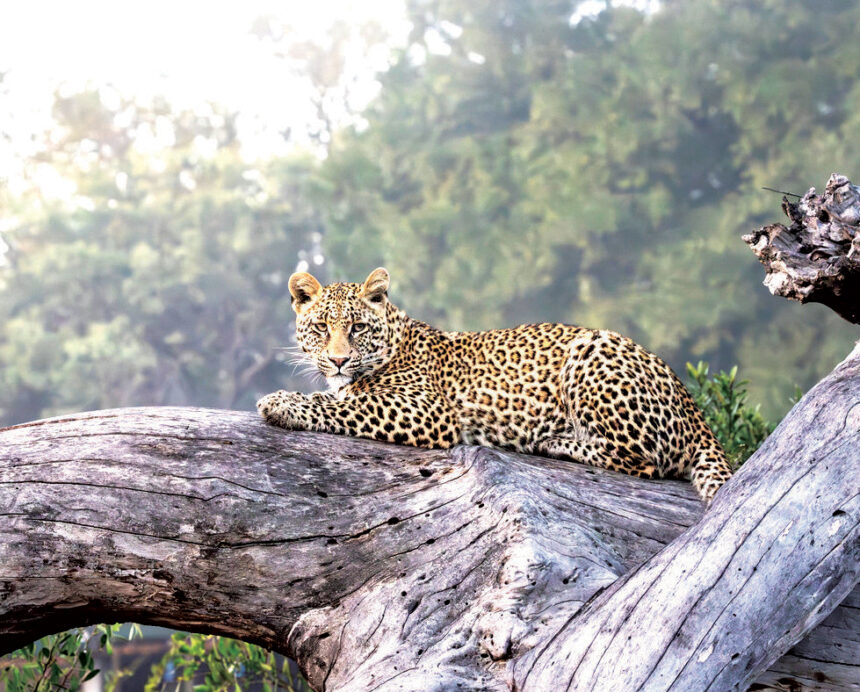

The cultural use of carnivore body parts is significantly more common in Africa than previously believed, emphasizing the importance of comprehending the causes and scope of this use and exploitation, a study has found.
In analyzing documented use of carnivore organs and derivatives, the researchers found leopards, lions, servals and cheetahs to be the most commonly exploited species among tribal and religious groups as well as political leaders on the continent.
“Traditional or ceremonial attire emerged as a prominent driver of use and trade in certain regions, particularly for leopards and other species with spotted pelage,” says the study published in the PLOS ONE journal in March 2025.
According to the study, using parts from wild cats is a common practice across many African cultural and religious groups.
For instance, leopard skins are highly treasured for their ceremonial importance in traditional royalty among the amaZulu, Barotse, amaSwati, and Ngoni kingdoms in Southern Africa and within the growing Nazareth Baptist Church, also known as Shembe, which has nearly 9 million followers in two provinces in South Africa.
- Advertisement -
Inadequate consideration
To date, studies into cultural uses of carnivore parts have mostly focused on a limited range of specific species, geographies, ethnic groups, purposes and supply chains. Yet, Africa has more than 2,000 ethnolinguistic groups, each with distinctive customs.
“Many of these cultures have traditions of using wildlife for purposes such as attire, zootherapy (medicine) and bushmeat, but the pervasive usage of carnivore parts, especially in traditional ceremonies, has not received the level of consideration it seems to warrant,” the scientists say.
Marine Drouilly, regional carnivore monitoring coordinator for West and Central Africa for Panthera, says building on partnerships the wildcat conservation organisation has had with cultural and religious groups across Africa, it commissioned the study to systematically identify and characterize the current use of wildcat products for cultural reasons.
- Advertisement -
- Advertisement -
“The purpose of the research was ultimately to help inform future engagement with culturo-religious groups and the co-development of conservation strategies aimed at reducing the pressure on key wild cat populations,” says Drouilly, a co-author of the study.
The researchers analysed evidence of customary use of 33 African carnivore species, reviewing nearly 600 accounts and 555 YouTube videos published between 1907 and 2020. The documentation covered 48 of the 54 countries on the continent.
Widespread use
In the trove of the documents, leopard appeared in the most publications, followed by African lion, serval and cheetah.
The analysis finds widespread traditional use of skins, claws, teeth, bones and tails for purposes like attire, traditional medicine and bushmeat, emerging as the key driver of poaching and trade.
The species most commonly reported were leopards in 45 countries, lions in 37, servals in 34 and cheetahs in 28 countries — their body parts used by tribespersons, religious groups and political leaders.
The study says larger carnivores like the leopard and lion are commonly revered across sub-Saharan Africa as powerful, fierce and dominant.
“Their body parts — like skins, claws, and teeth — are therefore often symbolically associated with empowering and protective qualities and regarded as icons of leadership, authority, wisdom, fear, spirituality, wealth and prestige,” it says.
The most recorded cases were of spotted carnivore skins worn by traditional leaders, healers and participants in annual cultural festivals.
Non-attire uses such as traditional medicine, rituals and bushmeat as well as musk used in fragrances, were recorded in 36 of the 48 countries, with lion having the widest coverage in Sahel region and sub-Saharan Africa.
Leopard and lion were also most frequently reported in the curio, skin and trinket trade and had the highest observations in markets, alongside serval and African civet.
Fostering awareness
The researchers say in conducting this study, their intention was “not to unnecessarily vilify cultural and customary practices”, but rather to promote an informed appreciation of their potential impacts on wildlife species.
“We also aim to foster awareness and, where appropriate, encourage the integraion of the cultural significance and implications of these practices into conservation frameworks and thereby avoid irreparable population depletion – without endorsing their utilisation as Trojan horses to conceal illicit, population-threatening activities,” they say.
Drouilly tells Malawi News in an email that understanding the extent, diversity and contexts of cultural practices involving carnivores can help conservationists to develop strategies that are more effective in mitigating unsustainable exploitation of the species.
For example, where carnivore parts are used for traditional medicine, programs could explore alternatives or promote modern substitutes that do not rely on endangered species.
She says that many conservation efforts fail when they do not consider local beliefs and traditions. This study can therefore serve as a foundation for community-driven conservation initiatives, ensuring that strategies align with local customs instead of alienating the people most directly involved.
“This can help create long-term solutions that balance cultural heritage with species protection,” she says.
Relevance beyond Africa
The study is also relevant to societies across Asia, Latin America and parts of Europe and the USA with traditions involving carnivore parts for rituals, medicine and status symbols, she says.
Conservation programs in Asia that deal with tiger parts trade or Latin America’s jaguar trafficking issues may benefit from understanding how cultural motivations influence demand in Africa.
“Illegal wildlife trade is often transnational, with demand for carnivore parts extending beyond local cultural use. Our study in Africa can reveal trade routes and connections to international markets, helping authorities combat illegal trade globally,” Drouilly says.
Utilization vs jeopardy for species
Phillip Muruthi, vice president for species conservation at the African Wildlife Foundation, says the study highlights how religious and cultural communities can be engaged in protection of healthy populations of carnivore to ensure long-term coexistence between people and wildlife.
“It shows that local communities value the species as exemplified in their use of the skins, etc. for certain symbolic purposes. But such utilization should not jeopardize the species now and in the long term,” he says.
Muruthi, who was not involved in the research, says the study also shows why it is critical to incorporate indigenous knowledge and culture into conservation.
“Let scientists work with the authorities and communities to manage the species in their natural ecosystems. Communities too should embrace science to learn more about the species and, how their cultural practices can affect the species they so much cherish,” he says.