By Brenda Kayo & Thomas Chilaya:
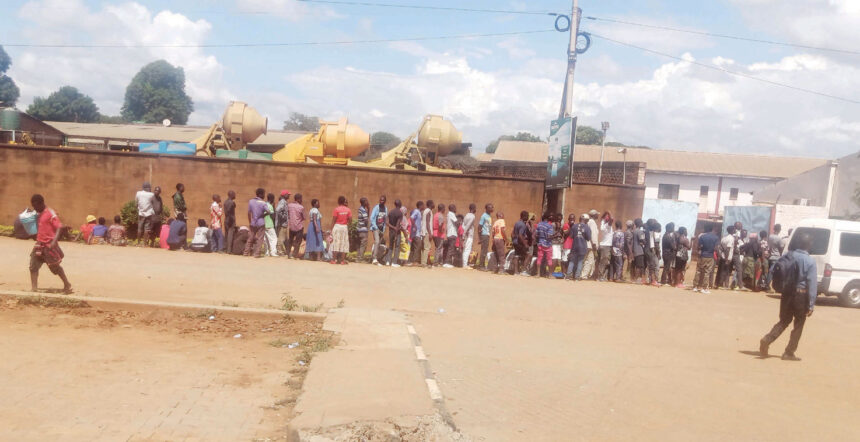
The shortage of sugar has led to long queues at retail shops in Blantyre and Lilongwe cities.
At Ginnery Corner in Blantyre, for example, consumers have been queueing for the commodity from Tuesday, especially when the commodity is being sold at between K2,200 and K2,500.
However, our investigations have revealed that some retailers are controlling the availability of sugar on shelves because there is a syndicate of traders who are sending street kids, vulnerable women and others on sugar-buying errands and then giving them between K100 and K200 per packet.
One of the kids we found at a queue at one of the Ginnery Corner shops said they have, of late, been generating income by offering to buy the commodity on behalf of traders.
- Advertisement -
“In my case, I get paid K100 per one kilogramme packet of sugar. The trader is then selling the sugar at K3,300 in Ndirande and Bangwe townships.
“However, because shops are rationing the commodity, and only allowing a customer to buy a maximum of two packets, I am forced to camp around shops, where I buy the commodity and, then, pack in in a sack outside the shop premises,” said the boy, who said he is nine years old.
Another woman we found in Blantyre Central Business District said she has been camping at big retail shops so that, when sugar is available, she buys some packets and get paid by traders, who resell it.
“I get paid K200 per packet of sugar,” she said.
- Advertisement -
- Advertisement -
In the administrative capital, Lilongwe, the situation is no better.
When The Daily Times crew visited some of the shops to appreciate the extent of the situation, it established that there were long queues at some shops.
In addition, each customer was being allowed to buy one packet only.
We then discovered that some buyers have devised ways of buying more packets of sugar— notably by bringing more people to buy the commodity for them.
One of the buyers said she connives with customers who do not want to buy sugar to add the commodity on their shopping list.
“We are doing so in shops that are selling the commodity at recommended prices because other shops are selling the commodity at an exorbitant price of K3,500. We cannot manage to buy a one kilogramme packet of sugar at that price,” she said.

Despite the government recently moving in to allow traders to import sugar, as well as revoking licences for wholesalers found selling sugar beyond its recommended prices, the moves are yet to bear fruit.
Last week, the government issued a statement—co-signed by Secretary for Trade Christina Zakeyo, Illovo Sugar Managing Director Lekani Katandula and Salima Sugar Executive Chairperson Peter Kosamu—indicating that government would continue to issue import licences for sugar until there is stability in the supply of the commodity on the local market.
Zakeyo has since disclosed that the Ministry of Trade will introduce regulations under the Business Licencing Act to regulate the distribution of sugar to protect consumers from unscrupulous distribution in the country.
Meanwhile, the two local sugar producers have committed to commerce production of sugar by the end of April this year.