By Justin Mkweu
Local authorities are preparing to assess the risk of a possible super El Niño in Malawi following World Meteorological Services’ prediction that it may hit the globe few months coming.
A Super El Niño is an unusually powerful El Niño that occurs when sea surface temperatures in the equatorial Pacific Ocean increase by two Degrees Celsius or more above average and cause severe and prolonged drought.
World Meteorological Services has indicated that the likelihood of its occurrence is currently at 90 percent, with United Nations General Secretary Antonio Guterres calling for proactive action from countries.
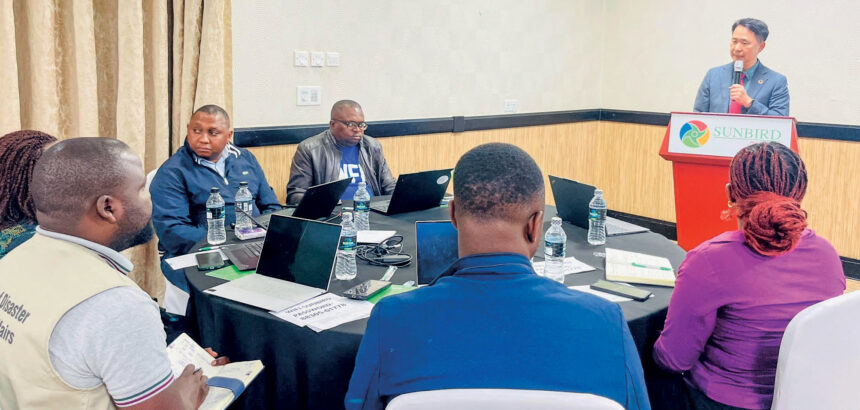
Speaking at the regional learning exchange on anticipatory action and climate preparedness workshop in Blantyre Thursday, Department of Climate Change and Meteorological Services Deputy Director Clement Boyce said when such weather threatens the globe, Southern Africa and Malawi were usually not spared.
- Advertisement -
He was, however, quick to say, in the past, the country had very strong El Niño probabilities but the impact ended up being less harsh than anticipated.
Boyce said they were yet to do an analysis on what was expected.
“In weather, we say no season is similar to another season. Therefore, this coming season may be described as a strong El Niño but we know that it may not be similar to the past. Therefore, we are supposed to do an analysis locally,” Boyce said.
The deputy director added that the workshop would be of value in preparing for the anticipated El Niño because all stakeholders were present and would be sharing notes with other countries.
- Advertisement -
- Advertisement -
World Food Programme Country Director Hyoung- Joon Lim said the El Niño scare was real because the probability of its occurrence was at 90 percent and the probability was getting higher each passing day.
He then called on the local authorities to treat the threat with the urgency it deserves.
“I met with the Minister of Agriculture [Roza Mbilizi] and we discussed this issue. The minister is very committed to working with us and we are also committed to supporting the people of Malawi and the Government of Malawi,” he said.
Department of Disaster Management Affairs Deputy Director for Preparedness Nelly Kalengamaliro said Malawi was on the right path, in terms of preparedness, because President Peter Mutharika had already guided them.
“At the moment, we do not have the specific forecast that has been downscaled but we are already geared for the anticipated El Niño. We will be guided by the National Anticipatory Framework, which will help us in mobilising tools and coordinating with other partners, among other [things],” Kalengamaliro said.
Malawi is an agri-based economy, meaning that any threat to the sector threatens the economy at large.
Agriculturalist Leonard Chimwaza said this meant most parts of the country would be affected.
“We need to have robust irrigation systems. We need to have a lot of reserves [food items such as maize and rice] in our silos. We should also not be relying on other countries to supply [food to] us because our neighbours will also likely be affected.
“Lastly, we need to have a multi-sector approach so that our farmers must get it right. [Getting it right means doing things] such as planting drought-tolerant crops,” Chimwaza said.
Malawi has, in the recent past, faced a number of El Niño-related weather events including during the 2023- 24 farming season, when the weather phenomenon culminated in prolonged dry spells, crop failures and widespread food insecurity across Southern and Central regions.
The huge impact of the drought resulted in the government declaring a State of Disaster in 23 of the country’s 28 districts