




 Sunday marks Malawi’s 61st independence anniversary; a moment that should, in any functioning and self-respecting country, be an occasion for reflection, pride and progress.
However, for many Malawians, it feels more like a bitter reminder of over six decades of missed opportunities and dashed hopes.
It is not so much a celebration of independence as it is a commemoration of 61 years of nothing, with the last 31 years in particular representing a staggering decline in national cohesion, public service delivery and development progress.
In the immediate years following independence in 1964, Malawi laid some promising foundations.
There was a vision for self-reliance, investments in education and agriculture, and aspirations for infrastructural development.
- Advertisement -
But over time, these foundations have been decimated through neglect, poor leadership and institutional rot.
What should have been a strong base for sustainable growth and modernisation has instead become a crumbling relic, reminding us of a time when Malawi had potential; potential that has since been squandered.
Today, development is stagnant and in clear decline. Our economic indicators, when not manipulated for political convenience, tell a story of regression.
A country that once showed promise in agriculture, trade and human development is now a shadow of its former self. It is as though the trajectory of growth was not merely halted but forcefully reversed.
- Advertisement -
- Advertisement -
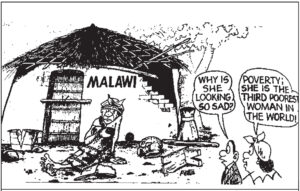
Poverty levels continue to rise, deepening inequality and widening the chasm between the political elite and the common citizen.
Despite decades of international aid and support, the lives of ordinary Malawians remain largely untouched by progress.
Unemployment is widespread, inflation continues to erode purchasing power and basic services, such as healthcare and education, are in a state of decay.
The State has largely failed to protect the vulnerable, leaving millions to fend for themselves in an increasingly hostile socio- economic environment.
Corruption has metastasised into almost every facet of public life. It is no longer a matter of isolated cases or rogue officials; it has become institutionalised.
Politicians, civil servants and business leaders alike have, with few consequences, loot State resources and prioritise personal enrichment over national development.
Efforts to tackle corruption are often tokenistic, designed more for public relations than real reform. Meanwhile, the ordinary taxpayer bears the brunt of a system that punishes honesty and rewards impunity.
Political violence, once an occasional occurrence, is now disturbingly common. In recent weeks, Malawi has seen a rise in politically motivated attacks, where people are harassed and beaten for merely expressing differing political opinions.
This erosion of democratic space is dangerous and unacceptable in a country that claims to uphold constitutional rights.
And indeed, division is another festering wound in our country. Malawi is increasingly fractured along regional and ethnic lines.
Political allegiance is often determined not by policy or ideology but by where one comes from.
Instead of embracing diversity as a strength, we have allowed it to become a tool for manipulation and exclusion.
The education sector, once a beacon of hope for upward mobility, has become a casualty of chronic underfunding and mismanagement.
Standards have fallen drastically. Teachers are demoralised, classrooms overcrowded and infrastructure in many schools is dilapidated.
Those charged with overseeing improvements in the sector have turned a blind eye, preferring instead to chase personal accolades or political appointments.
In healthcare, the situation is equally bleak. Even in 2025, patients are still being asked to source essential medication from private pharmacies because our hospitals remain understocked and under-equipped.
This is a national disgrace. Sixty years after independence, we should not still be struggling to provide basic medical supplies in public facilities.
Worse still, our leaders, those most responsible for this failure, routinely fly abroad for medical treatment, underscoring their own lack of faith in the health system they oversee.
Roads across the country remain in a deplorable condition. In many areas, they are barely passable during the rainy season.
Even those that have been constructed or rehabilitated often fall far below acceptable standards and deteriorate within a short time.
A country cannot talk seriously about development when its people and goods cannot move safely and efficiently from one region to another.
Now, with significant reductions in foreign aid, Malawi stands at a crossroads. This could be the reckoning we so desperately need.
The question is: Will we finally take responsibility for our own development and fight the corruption and maladministration that have robbed us of our future?
Or will we once again bungle the opportunity, waiting for another donor bailout while the country continues to deteriorate?
For now, we are, tragically, a nation in name only. We do not function as a proper country should.
The systems that underpin a working State, governance, healthcare, education, infrastructure, law enforcement, are broken or in disrepair.
The spirit of patriotism has been drained from our people, replaced with frustration, despair and a pervasive sense of powerlessness.
As we observe Malawi’s 61st anniversary of independence, we must ask ourselves some very difficult questions.
What exactly are we celebrating? If the past is any indication of the future, then we are not on a promising path.