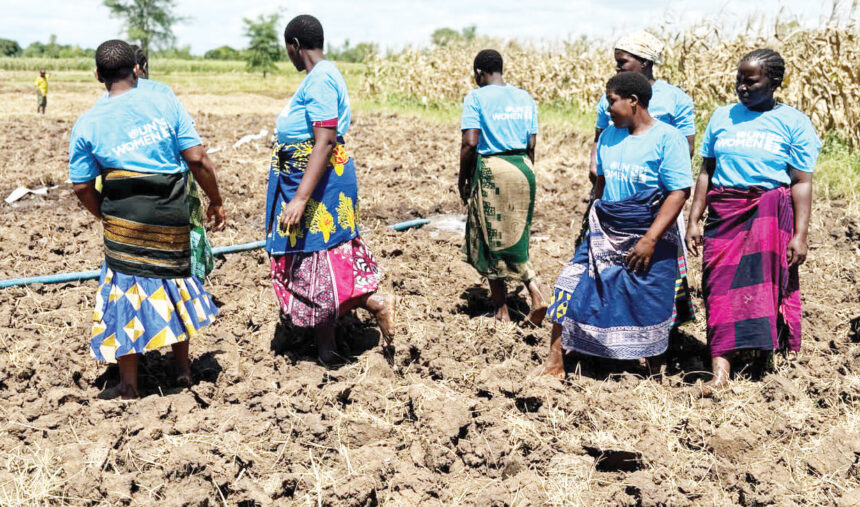
In Traditional Authority Mwambo, a once parched patch of land has blossomed into a beacon of hope, prosperity and empowerment.
This is Kanjedza Irrigation Scheme – one of five pre-existing schemes supported under the Women’s Resilience to Disasters (WRD) programme.
Today, it tells a story of triumph, resilience and transformation, especially for the women who till its soils.
With 38 hectares under cultivation and 264 farmers, including 172 women, Kanjedza has become more than just a farming venture.
Each farmer manages at least 0.25 hectares, irrigated by three solar-powered pumps that have revolutionised water access and farming efficiency in an area previously hard-hit by El Niño-induced drought.
- Advertisement -
Despite the harsh climatic conditions, every woman at the scheme proudly reports harvesting more than three 50-kilogramme bags of maize, a yield that not only puts food on their tables but also allows them to sell surplus vegetables and earn up to K60,000 per month.
For 40-year-old Agnes Chisoni of Alawe Village, a divorced mother of six, this project has changed everything.
“Before, I could not afford food. Now, I grow maize and vegetables like mpiru.
“With the income from my harvest, I built a house worth K250,000 and support my children’s school needs. It is not just farming; it is our dignity,” Chisoni says.
- Advertisement -
- Advertisement -
Alice Nyang’anya is set to build a two-room, iron-roofed house from the proceeds of the harvest.
“I would love to see my children sleep under a proper roof for the first time. The Kanjedza project has shown us that women can be more than carers. We are farmers, builders and leaders,” Nyang’anya says, happiness shining on her face.
Grecedia Banda used to rely on piecework. Now, she makes K120,000 in three months from vegetables alone.
Where climate change has crippled many livelihoods, Kanjedza stands out as a successful model of adaptation.
The solar-powered irrigation system, improved vegetable varieties and bio-fortified maize seed provided under WRD have boosted food security and incomes for hundreds.
Farmers are now preparing the land for the upcoming farming season, confident that their resilience, powered by sustainable support, will carry them through.
Francis Phasi, a community leader, praises the initiative for “restoring pride and power to the people”, especially women who are the backbone of rural agriculture in Malawi.
The scheme is growing voices, agency and aspirations.
During a recent tour, UN Women’s Deputy Country Representative, Fatima Mohammed, was visibly moved.
“Margaret, one of the women here, started with nothing but has now built a house. Women like her are redefining resilience for the whole of Malawi,” Mohammed said.
She stressed the need for continued collective effort to ensure women enjoy basic rights to food, water, education, health, housing and political participation.
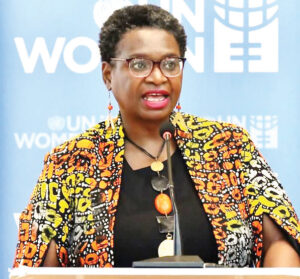
“This tour is part of our ‘push forward’ strategy for gender equality. It is not enough to give women tools. We must also shift the environment – legal, political and social – in which they operate,” the UN Women official added.
UN Women Malawi Country Representative Letty Chiwara echoed this and pointed out broader gender inequality issues.
“As of February 2024, women held only 27 per cent of parliamentary seats. About 37.7 per cent of women aged 20-34 were married before 18.
“These statistics reflect systemic challenges – poverty, patriarchy and harmful norms. But projects like WRD show us a path forward,” Chiwara said.
The WRD project, supported by the Australian Government through Australian Aid, is implemented in collaboration with Malawi’s Ministry of Gender and local civil society.
The goal is not just to provide aid but to shift mindsets and policy towards inclusive, gender-responsive disaster risk management.
As one walks through the neatly cultivated rows at Kanjedza, the transformation is evident, both in the land and the lives.
Women proudly show off their new iron-roofed homes, evidence of what a single harvest can do when paired with the right support.
They speak of better meals, no longer just nsima, but vegetables rich in nutrients. They speak of school fees paid on time. Of dignity restored. Of dreams revived.