




By Imam Wali:
Once a forsaken product, homemade soap has, in no time, found room in most rural dwellers’ hearts.
This is despite that there has been no research on the negative effects of the product on people’s health.
However, homemade soap is not the only product that has experienced an upsurge in production in rural areas. The other products are homemade butter and cooking oil, among others.
- Advertisement -

Martha Ben, from Traditional Authority Kachere in Dedza District, is one of the people whose living standards have improved due to the production of homemade soap.
- Advertisement -
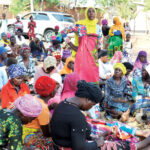
“I, and other community members, attended a workshop on soap making. We were also trained in how to make other products and, after that, we have never looked back,” Ben narrates.
Indeed, in rural areas, where people like Martha conduct their business, their customer base keeps on increasing as people opt for homemade soap because the product is cheaper than branded soaps on the market.
Martha is only worried that the Malawi Bureau of Standards (MBS) takes long to certify products such as homemade soap.
That means those who use the products are not sure about whether they can develop skin complications or not.
- Advertisement -
“Our product has not been certified by MBS but we understand that homemade soap and other products must be tested as one way of ensuring that they are safe to use,” she says.
However, other homemade soap makers, notably Atuween Abdul, insist that their products are safe for use.
“The raw materials we use are purchased from shops, meaning that they [raw materials] are safe. In the end, we are able to sustain ourselves using funds we generate through our businesses, thereby contributing to the national economy,” she points out.
True to her words, the Malawi Gemini MSE Survey of 2000 revealed that small and medium enterprises (SMEs) employ about 1.7 million people including owners, paid and unpaid employees, making up 38 percent of the total working age population of the country. Women comprise 42 percent of this employment and contribute about 15.6 percent to gross domestic product (GDP).
The Malawi MSME Survey of 2019 indicated that there were 1,600,739 MSMEs in the country. The MSMEs contribute about 47 percent to GDP, a rise by about 31.4 percent in 19 years).
The cheapest branded soaps found in groceries sell at between K300 and K500 while homemade soaps fetch between K150 and K200, according to a customer, identified as Kondwani, we found buying homemade soap.
“I started using homemade soap way back and have not thought about the implication of using something that is not certified by MBS,” Kondwani explains.

And, on his part, Director of Project Innovation Centre Kondwani Kachamba Ngwira, who has been involved in training people in soap making, laments that exorbitant fees required for one to have products certified stop small-scale businesspeople from getting their products certified.
“You may wish to know that the products of all those we trained, and whose samples were subsequently submitted to MBS, are pre-certified. Unless you present an example of anyone who has been injured through the use of such [homemade products].
“It is a theory to keep Malawians away from manufacturing so that the big gurus can continue to enjoy monopoly. Soap-making business for big companies is under threat because most Malawians are now manufacturing soap on their own,” Ngwira says.
He further points out that instead of standing in the way of rural people who have embraced homemade soap making, the government should provide, on loan, processing machines to those manufacturing high-class products.
“MBS has been good to us as they joined us in training SMEs in quality assurance and certification.
Through Smedi [Small and Medium Enterprises Development Institute], entrepreneurs were charged half the normal price for testing of some products— not all.
“But the charges are exorbitant. Even the half price that was paid was still costly, especially due to devaluation. Otherwise, standards are easy to meet,” Ngwira explains.
On February 1 2013, the Malawi Government merged operations of Small Enterprise Development Organisation, Development of Malawian Enterprises Trust and Medium Enterprise Development Institute to form a new organisation called Smedi. Smedi Communication Officer, Patrick Chimala Zgambo, says financial challenges make it difficult for some businesses to meet certification requirements.
“Financial constraints that most MSMEs face, due to their small-scale operations, make it difficult for them to meet these requirements. We, as Smedi, continue to encourage MSMEs to pursue certification, emphasising that the benefits outweigh the initial costs.
To alleviate the financial burden, we have established an MoU [memorandum of understanding] with Malawi Bureau of Standards, ensuring a 50 percent discount on initial certification fees for MSMEs seeking certification through reference from Smedi.
“In addition, the MoU enhances capacity building on food hygiene and standards. Over 500 SMEs have benefitted from the MoU since it came into effect in 2020 and, currently, there is more demand for MSMEs to benefit from the programme,” Zgambo explains.
He added that uncertified products are costly to the Malawi economy.
“Uncertified products face restricted access to formal markets resulting in revenue loss by the MSMEs. Moreover, uncertified products cannot be exported, resulting in revenue loss for the country. Additionally, uncertified products pose health risks to consumers,” he points out.

On her part, MBS spokesperson Monica Khombe says they are aware that some business operators manufacture and sell various products, including soap, without MBS certification.
“To address this, MBS conducts market surveillances, scheduled and spot-checks in various retail outlets and confiscates all uncertified products from the market. MBS also relies on tips from consumers from various corners of this country and, through this process, we undertake appropriate regulatory action,” she points out.
Khombe adds that the consumption of uncertified products poses a health risk to consumers.
“To address this, we, through our public relations team, conduct public awareness campaigns across the country to, among other things, advise the public on the importance of consuming certified products and also how they can identify the products that have been certified by the MBS,” she said.
Certified or approved products are allowed to use the MBS certification mark.
Later, MBS conducts surveillance assessment exercises targeting both production premises and the product to determine continued compliance with the relevant Malawi standards.
That way, consumers are assured that products they use may not compromise their health or cut their life short.