
group discussion at Mokhotho CDSS
To some, the water of Lisungwi River is just ordinary liquid; a ribbon of blue cutting through the hills, murmuring softly as it runs past rocks and reeds.
But to the 222 members of the Lisungwi Irrigation Scheme, located some 80 kilometres from Tsangano Turn-Off along the Tsangano- Neno-Mwanza Road, that water is everything. It is hope, sustenance and transformation.
Under the shimmering sun, the land around Lisungwi once lay dry and idle, the soil parched and silent during long stretches between rainy seasons.
The people of the area, armed with nothing but willpower and tradition, tilled the land for meagre harvests. Low yields, hunger and hopelessness were constant companions.
Then came a turning point.
- Advertisement -
In 2020, Lisungwi Irrigation Scheme was born, a community-driven initiative supported by the government of Malawi.
With guidance and leadership from Chairperson of Lisungwi Water Users Association, Posiyano Mateyu, and the collective labour of villagers determined to change their fate, the scheme began to take shape.
They dug canals, chiselled channels through stubborn earth and tamed the flow of Lisungwi River, drawing its life-giving water into their fields.
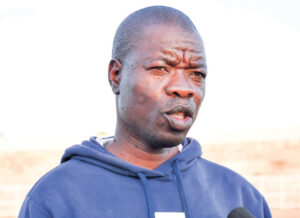
“I remember the day the first canal carried water into the maize field. It was like watching a miracle unfold,” says Mateyu, standing beneath the shadow of a slowly rising water tower.
- Advertisement -
- Advertisement -
With irrigation, the fields became green carpets of Irish potatoes, beans and maize. Plants once starved for rain now flourished under the sun, nourished by the ever-flowing river.
For the first time in memory, hunger gave way to surplus. Families had enough to eat and even more to sell.
Four years on, Lisungwi is no longer just a quiet village lost in the dust of rural Malawi. It is turning into the region’s breadbasket, drawing traders and curious eyes from as far as Blantyre.
“The dream is big. One day, our people will live in modern houses, drive their own vehicles and raise cattle. We were once buried in poverty, but now we can see the light,” Mateyu says.
The light grew brighter still with a new boost from the National Economic Empowerment Fund (Neef). Enoch Labisoni, the scheme’s Treasurer, wears a look of pride when he speaks about the fertiliser loan recently secured from Neef.
He says the loan means the farmers can triple their output.
And so, while others may pass by Lisungwi River without a second glance, those who live by its banks see more than just water. They see a future rising, row by row, harvest by harvest.
Lisungwi Irrigation Scheme is one of four irrigation schemes that President Lazarus Chakwera said his government has renovated since he assumed power in 2020.
Speaking during the State of the Nation Address (Sona) in Parliament on February 14 this year, Chakwera identified the other schemes as Thava, Chitseke and Fufule.
According to Chakwera, the rehabilitation of the schemes has helped to boost maize and rice production for 2,000 farming households.
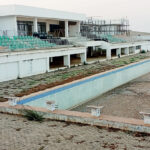
Also in the Sona, Chakwera said his government is nearing completion of Ntcheu Stadium. The Times also visited the facility to monitor progress.
Situated in Kandota Village, Traditional Authority Kwataine at Ntcheu Boma, the stadium was envisioned as a symbol of progress and a hub for sporting excellence.
It was designed to be the third-largest stadium in Malawi, with a seating capacity of 20,000 spectators, trailing only Bingu National Stadium and Kamuzu Stadium in size and capacity.
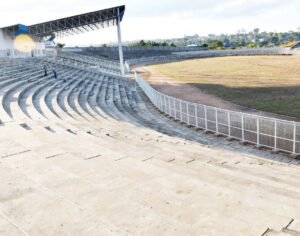
Situated midway between Lilongwe and Blantyre, Ntcheu Stadium presents an ideal opportunity for major teams from both cities in search of a home ground.
The stadium’s construction, however, has been marked by significant delays.
According to Ward Councillor for Gomani Chikuse, Juma Kunima Mambo, the project has remained at a standstill, with 95 percent of construction completed, for the past three years.
Mambo says the prolonged period of inactivity has understandably fuelled frustration among residents of Ntcheu, who are passionate about football and eager to see their local stadium come to life.
The anticipation of matches and events has been building, only to be met with continued delays, creating a sense of unfulfilled promise within the community.
Our visit to the place revealed a picture of near-completion, with most of the structural work finalised.
The primary remaining tasks include essential water and electricity connections, vital for the stadium’s functionality and the comfort of its patrons.
The pitch, once planted with grass, now requires reworking due to the prolonged delay in opening the stadium. The need for ongoing maintenance and the risk of further delays add to the complexity of the situation.
“The people of Ntcheu have been eagerly awaiting the opportunity to step foot inside the stadium, to cheer on their teams and to participate in the vibrant atmosphere that a modern sports venue provides.
“The stadium represents more than just a place to watch football; it symbolises community pride, development and the potential for positive change,” Mambo says.
In the Sona, Chakwera also indicated that his administration has completed the construction of three police units in Ntcheu.
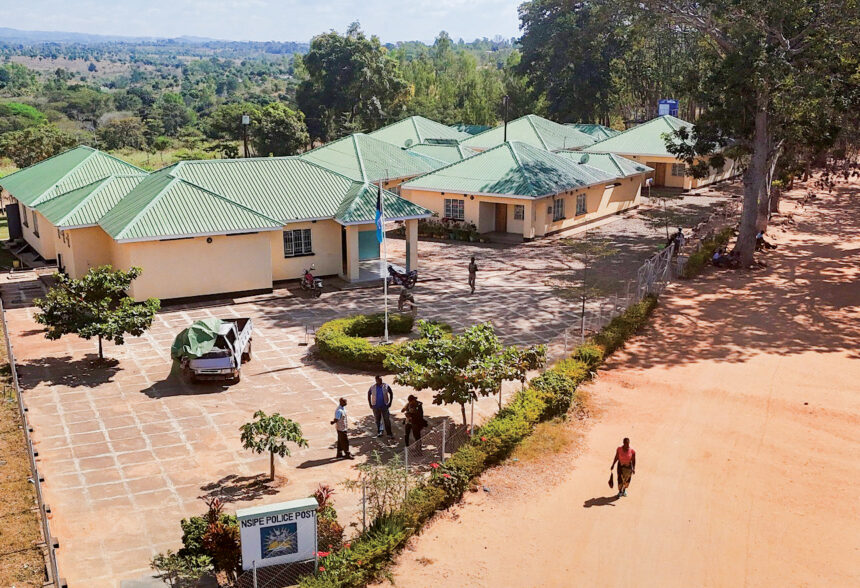
The Times travelled to Nsipe Police Unit, which was completed in 2021, according to Group Village Headman Gwedeza.
The facility has modern offices and four modern houses for police officers.
Gwedeza said the coming of the police unit has greatly improved security in the area.
“Before this facility, we used to travel about 12 kilometres to Ntcheu Boma whenever we caught a thief. Most of the time we walked. So, it was a big challenge. But with the coming of this facility, the police are within reach,” he said.
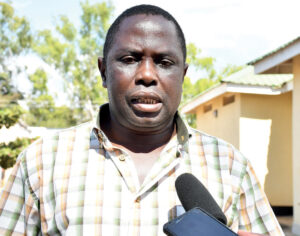
Oscar Njati, Chairperson for Nsipe Community Policing and the business community at Nsipe Trading Centre, agrees that the police unit has helped improve security in the area.
According to Njati, relations between the police and the community have been cordial, supported by frequent engagement.
Also in the Sona, Chakwera indicated that his administration has constructed five community day secondary schools (CDSSs) at Gomani Chikuse, Kalila, Mokhotho, Tambala and Bwanje, along with 30 secondary school classrooms, 24 primary school classrooms and recruited 174 new school teachers.
The Times visited Mokhotho CDSS, situated about eight kilometres off the Phalula-Senzani stretch of the M1 Road.
The modern secondary school was opened in December 2023, according to a plaque outside the headmaster’s office.
The school, which has a total enrolment of around 120 students, has two classroom blocks and a laboratory.
It also has two teachers’ houses.
The new CDSS, situated in Mpochera Village, caters for students from Mokhotho, Matchereza, Chitale, Luba, Ngongomwa and Bamba Primary Schools.
According to Edina Matias, a local community member, the school has reduced the distance that students used to travel to reach Likudzi Community Day Secondary School, which is about 17 kilometres away.
“Before this school, students used to walk for three hours to Likudzi CDSS and another three hours back. They arrived exhausted and many dropped out because of the long distance,” she said.
Another resident, Ida Samson, said that apart from the distance, students previously faced challenges during the rainy season due to flooded rivers.
“Often, students could not go to school whenever it rained. But now that is history because the school is at their doorstep,” Samson said.
In the Sona, Chakwera also said his administration has invested K162 million in farm equipment, processing and warehousing through the Agriculture Commercialisation (Agcom) project, benefiting 1,067 farmers.
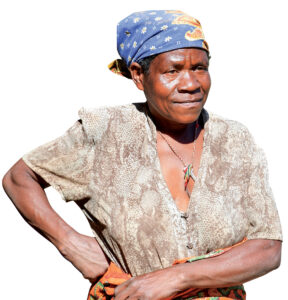
We travelled to Sharp Valle, where Chuma Chili mu Nthaka Farmers Association benefited from a K74 million matching grant from Agcom in 2022 and 2024 to construct a warehouse and purchase a two-tonne truck for transporting produce.
According to Chairperson Bright Pesani Gama, the association dreams of adding value to soya beans by producing cooking oil and soya pieces.
He adds that the association, which has 532 members, also hopes to add value to groundnuts by producing peanut butter.
In the Sona, Chakwera also said the Ntcheu-Kambilonjo Road has now been surfaced on the Ntcheu- Tsangano-Neno-Mwanza stretch.
However, a visit to the road showed that the stretch in question, like much of the road, remains in poor condition.
The President also highlighted that his administration has connected 8,727 households to electricity under the Malawi Rural Electrification Project.
A visit to Kachimanga Village revealed that many households have been connected to the electricity grid.
Village Head Kachimanga told Times that the electricity has helped improve lives in the area, enabling people to watch television and use lighting.
According to Kachimanga, the electricity has also enabled residents to start small businesses, such as selling cold drinks.
Israel Aladi, who produces and sells traditional beer in the area, says that electricity has helped extend business hours.
“We are now able to operate until 10pm. Previously, we closed by 7pm due to darkness. Also, because of electricity, we can play a sound system throughout the day. In the past, we relied on a battery-powered system that only worked for a few hours,” Aladi explains.