
Lydia Kafumu, a long-time vegetable vendor from Chimbeta Village in Thyolo, used to conduct her business in an open space at Ntambanyama Trading Centre along the road winding down to Chikwawa.
“I started selling tomatoes and leafy vegetables by the roadside many years ago. There were no shelters or proper space. We just laid out our produce on the ground, hoping passing minibuses or motorbikes would not splash mud or dust on it,” she recalls.
The work was not only demanding but also dangerous. The road passes through what used to be a busy cluster of vendors where accidents were common.
The traders would rush towards moving vehicles while buyers struggled to find space to purchase vegetables and other goods.
“One of my neighbours, a young girl selling sweet potatoes, was hit by a motorbike one afternoon. It shook us all,” Kafumu says.
- Advertisement -
For years, she and dozens of other small-scale traders worked under these unprotected conditions, exposed to harsh weather and the constant threat of speeding vehicles.
A modern market centre has now been built at Ntambanyama Trading Centre, located along the scenic road that winds through Thyolo’s undulating tea estates and stretches down to Fatima in Nsanje.
The market now features proper stalls, roofing and designated trading zones, offering traders a safe and dignified space to work for the first time.
“When I first saw the finished market, it felt like someone had finally said, ‘You deserve safety. You deserve dignity in your work’,” Kafumu says.
- Advertisement -
- Advertisement -
Now shielded from sun and rain and able to display clean, fresh produce, she has seen her daily income nearly double from around K10,000 to over K20,000.
“More importantly, I am no longer afraid of getting run over,” she adds.
Edina Juma, another vendor, shares this sentiment.
“Tomatoes used to get dusty and bruised or spoil in the rain. Now our vegetables stay fresh and customers are happier. Some even say our produce is better than what they get from Thyolo Town,” Juma says.
Buyers from neighbouring villages are now frequent visitors, strengthening community connections and boosting the local economy.

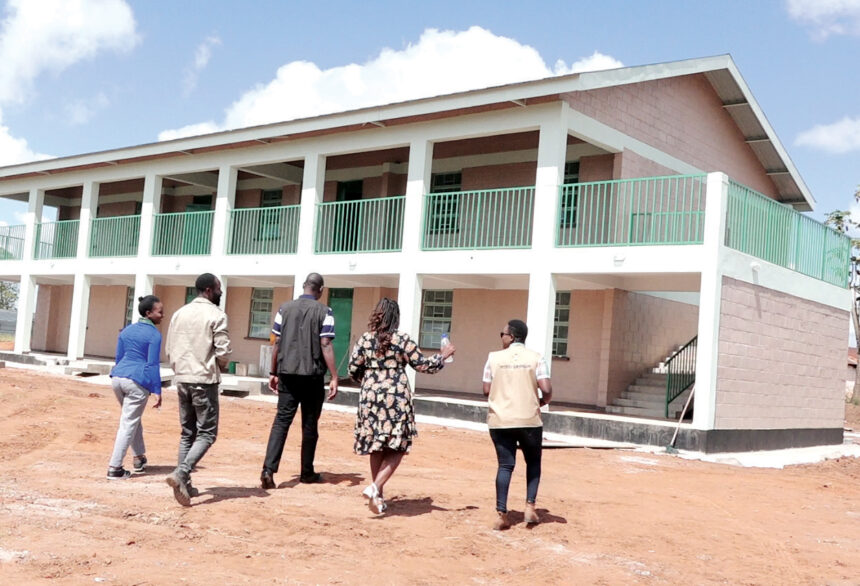
Elsewhere, near Thyolo Boma, the district’s first two-storey primary school is under construction.
The new Thyolo Boma Primary School is expected to provide spacious, modern classrooms and help reduce long travel distances for learners.
For John Bwanali, a father of three whose house lies just outside the school’s boundary, the new school is already bringing hope and pride.
“My two oldest children walk about half an hour to get to school. Now they will learn just a few minutes from home. It is safer and they will be less tired in class,” Bwanali says.
Beyond the convenience, he sees the school as a symbol of progress.
“This building has brought beauty to our area. It shows that our children matter. Even people passing by stop to admire it,” he says.
These changes are part of a broader development wave supported by the Governance to Enable Service Delivery programme funded by the World Bank.
According to Director of Planning and Development at Thyolo District Council, Thokozile Munthali Chingeni, the new infrastructure reflects a deeper vision for the district.
“The new market at Ntambanyama has brought safety and order to local trade, but it is also generating structured revenue for the council,” Chingeni says.
Meanwhile, at the council’s headquarters, a new multi-storey complex designed to modernise the working environment for public servants is operational.
The facility, funded by the Central Government, has replaced the outdated 1900 colonial-era structure.
“For years, our staff worked in old, overcrowded offices. The new office complex is improving efficiency ad lifting morale. It is spacious and, now that all offices are centralised, it is much easier to track work routines and improve coordination,” Chingeni says.
She adds that the new setup has also improved service delivery.
“People no longer have to move from one scattered office to another. Everything is under one roof, making it easier for citizens to access the services they need,” she says.
For Rhoda Lyson, an accounts assistant at the council, the move to the new building is something she has eagerly awaited.
“Working in the old offices was challenging. We were cramped and files piled up everywhere,” Lyson says.
She believes the improved environment will not only enhance staff performance but also uplift the council’s image in the eyes of the public.
“When people walk into a clean, organised building, they take the council more seriously. It builds trust. For us workers, it is encouraging to know that we matter too,” she says.