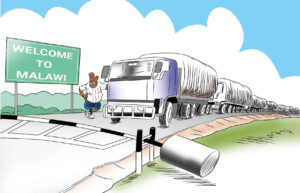
 Tanzania’s sweeping response to Malawi’s selective import ban has thrown trade diplomacy into stormy waters.
What began as a targeted restriction by Malawi on specific agricultural products has rapidly escalated into an all-out trade embargo from Tanzania.
The Tanzanian Government has banned all agricultural imports from Malawi and blocked the transit of goods from Malawi passing through its territory, including those destined for third countries.
At first glance, Tanzania’s response appears disproportionate.
After all, Malawi had only imposed a ban on certain agricultural products, which, in the world of trade, is a relatively common practice.
- Advertisement -
Protectionism, whether through tariffs or selective import restrictions, has long been employed as a tool to shield domestic industries from foreign competition.
So why this drastic retaliation from Tanzania? Could it be that Tanzania is simply flexing its muscles or is this indicative of a broader shift in trade dynamics?
In the short term, the consequences for Malawi could be severe.
Trade bans of this magnitude typically result in higher prices for consumers, as the supply of key agricultural products becomes restricted.
- Advertisement -
- Advertisement -
With the influx of imports cut off, local producers are left with the unenviable task of filling the gap.
However, there is a real possibility that local producers may not possess the capacity, resources or infrastructure to increase production swiftly enough to meet demand.
As a result, consumers may experience higher prices for food and other essentials, leading to inflationary pressures.
One of the most immediate impacts will be felt by the poorest segments of society.
Rising food prices disproportionately affect low-income households, who already allocate a large proportion of their income to basic necessities.
Moreover, restrictions on imported goods limit the range of products available to consumers.
The absence of competition in the market could lead to monopolistic pricing, where a few local suppliers are able to dictate prices, further burdening already vulnerable populations.
However, there is a flipside to this coin.
The government’s intention behind this move should be seen as an effort to encourage domestic production and reduce Malawi’s dependence on imported agricultural products.
In theory, by restricting imports, local farmers are provided with the opportunity to thrive, meeting demand that had previously been satisfied by imports.
This is a well-intentioned initiative designed to boost local agricultural industries and generate employment.
Of course, it is also necessary to consider the fact that Tanzania’s blanket ban could provoke retaliatory actions by other countries.
Already, countries such as Kenya are beginning to feel the repercussions.
Goods that formerly transited through Tanzania to Kenya are now being blocked, frustrating Kenyan businesses and further isolating Malawi from the regional trade network.
The broader concern is that if Tanzania’s embargo is perceived as unfair or excessively aggressive, it could trigger similar restrictions from other nations.
This kind of tit-for-tat escalation could lead to a regional trade war.
While trade wars are rarely beneficial to any country involved, they can be particularly harmful to smaller nations such as Malawi.
With a weaker economic base and fewer trade partners, Malawi stands to lose more in the long run if excluded from regional trade.
Furthermore, as other countries seek to diversify their trade routes and partnerships, Malawi could find itself increasingly isolated, without access to key markets for its exports.
Yet, there is another side to the equation: Tanzania, too, has much to lose from this blockade.
It derives significant benefit from the revenue generated by Malawi’s use of its ports.
By imposing this ban, Tanzania risks undermining its own economy, forfeiting the economic advantages of transit fees and the broader trade flows they facilitate.
Furthermore, if Tanzania’s actions disrupt the trade of goods between Malawi and Kenya, it could provoke dissatisfaction in Kenya.
Beyond the diplomatic disputes and trade restrictions lies a deeper issue that warrants attention; that is Malawi’s management of its agricultural sector and exports.
For years, there have been widespread concerns about the country’s inability to produce enough to satisfy domestic demand.
Yet, paradoxically, truckloads of agricultural produce continue to leave Malawi’s borders for neighbouring countries.
Whether it is maize, groundnuts or other staples, the volume of exports is considerable. The problem is not necessarily one of production— it is a matter of how these exports are managed and tracked.
Many experts argue that a significant portion of Malawi’s agricultural exports is undocumented, with no clear record of their destinations or the foreign exchange they generate.
In other words, a substantial share of agricultural output is being exported without properly accounting for the financial returns.
This lack of transparency raises questions about whether Malawi is truly maximising its economic potential and whether systemic inefficiencies exist that must be addressed.
If the goal is to become more self-sufficient, it is not enough to merely restrict imports; Malawi must also streamline its export processes, monitor goods more effectively and ensure that revenue from exports is accurately recorded.
By doing so, the country could strengthen its foreign exchange reserves and reduce its dependence on foreign imports.
Now is the time to reassess the nation’s reliance on external sources and invest in building a more resilient domestic agricultural industry.
However, it is vital to avoid reactive measures and instead pursue a calm, strategic approach.
Diplomacy remains a critical tool. The door to dialogue must not be closed.
If Tanzania’s embargo proves unsustainable or detrimental to both economies, there is always the possibility of returning to the negotiating table.
The path forward is not predetermined. With careful management, Malawi could emerge stronger from this crisis.