The Lilongwe Institute of Orthopaedics and Neurosurgery (Lion) is grappling with the problem of overcrowding, as rising numbers of road traffic accident victims overwhelm its capacity.
Lion Chief Executive Officer Sven Young told The Daily Times that despite the opening of a modern facility in 2024, the centre, which is located at Kamuzu Central Hospital, continues to face a surge in patients, many of them injured in motorcycle accidents and collisions involving vulnerable road users such as pedestrians and cyclists.
“With only 60 public beds available in Phase 1 and over 120 to 150 patients in the wards at all times, we have been forced to replace many hospital beds with mattresses on the floor,” Young said.
Meanwhile, Health Minister Khumbize Kandodo Chiponda said the government would soon introduce tough penalties for motorcycle tax (kabaza) to curb the accidents.
- Advertisement -

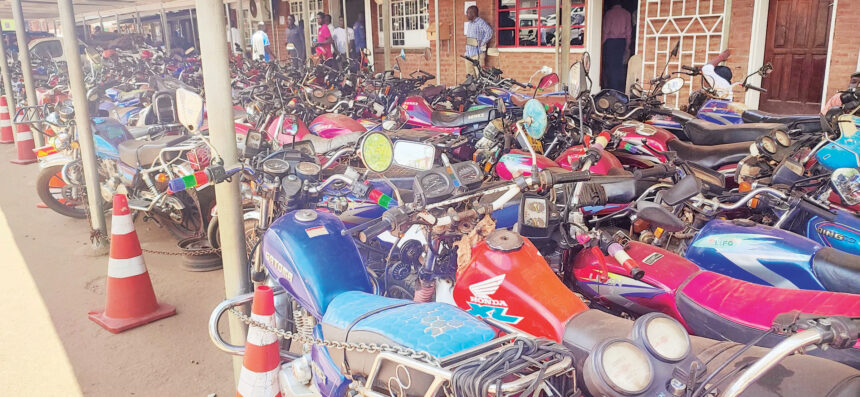
The sharp rise in motorcycle taxi or kabaza accidents is particularly alarming.
- Advertisement -
The hospital now treats more than 150 kabaza victims each month, with nearly half of all traffic accident cases involving motorcycles, Kandodo Chiponda noted.

She said the expansion of the centre’s capacity, which is under phase 3 of the Lion project, would culminate in the addition of 100 more beds, adding that it’s going to be a “huge improvement” — but warned that infrastructure alone would not solve the crisis.
“This will still not be enough if nothing is done to prevent road traffic injuries in the country,” Kandodo Chiponda said.
She stressed the need for sustained commitment and preventive measures to stem the tide of road traffic injuries.
- Advertisement -
Lion has benefitted from long-term partnerships and international support.
The Ministry of Health provided land, staff and operational funding while Norway’s Haukeland University Hospital has supported the trauma programme since 2007.
The AO Alliance Foundation contributed $2 million in 2014 to support the development of a semi-autonomous and financially sustainable model and continues to back trauma staff training efforts.
The Royal Norwegian Embassy supplied $4 million worth of equipment and hospital furniture for phase 1 and, later this year, Lion will mark another milestone with the opening of its $2.4 million Research and Training Building funded by CBM.
A study which National Association of Nurses and Midwives (Nonm) conducted revealed that the health budget was ballooning, largely due to kazaba motorcycle taxi accidents.
Nonm indicates that, in 2024 alone, the country’s public health sector spent K3.3 billion on treatment for kabaza casualties, a development researchers said was also putting a strain on healthcare workers.
Nomn President Shouts Simeza disclosed in Lilongwe last year, during the first-ever Malawi Nursing and Midwifery Scientific Conference and Nomn 9th Biennial General Assembly, that such cases were concerning.
According to Simeza, the kabaza enterprise had killed many people and had led to many disabilities because the operators were people who were riding bicycles or motorcycles without proper training.
In addition, Simeza said the kabaza operators did not have skills that would enable them to ably ride motorbikes.
He added that the operators were not controlled and regulated, rode motorcycles without helmets and headgear and that any accident that occurs with them leads to either death or serious injuries.
Worse still, Simeza said, the management of just one patient in the theatre for orthopaedic surgery, be it neurological surgery or other forms of surgery, takes the whole day of up to eight hours, meaning up to six healthcare workers attending to one patient all day, leaving the others waiting.
“And one surgery costs up to K3 million for fractures requiring open reduction, and internal or external fixation and up to K7.9 million for those fractures and injuries of the pelvis/acetabulum, brain injuries.
“Cumulatively, as [December 1, 2024] at today , Malawi has up to over 670 orthopaedic in-patient cases, all of them requiring surgical services. In a week, a hospital spends up to K20 million on ngozi [accidents] alone.
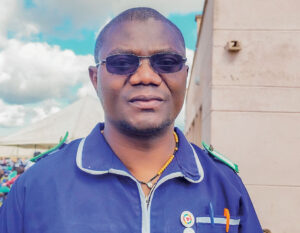
“It means for the 670 patients, Malawi will waste up to K3.38 billion and these resources would have been used to procure medicines, supplies and equipment for many patients with other conditions,” Simeza said.
The nurses and midwives chief has since proposed that the kabaza enterprise be seriously regulated by the Directorate of Road Traffic and Safety Services.
“And because we feel the pain associated with these accidents, nurses volunteer to be monitors to this directive, making sure that everybody complies. Those caught riding kabaza without helmets should be brought to book, including those that will be involved in any accident from the kabaza.
“Be it that somebody has fallen into severe injury, that one should be charged. Be it somebody who has died from the kabaza accident, [that one] should also be charged.
“We are aware that the Directorate of Road Traffic and Safety Services has a Road Safety Strategy that is being used to reduce road traffic accidents (at least by 50 percent) by 2030. We demand that this should not just he a paper and document but should be utilised to the maximum,” Simeza said.
Speaking a recent Trauma Conference last year, Kandodo Chiponda said time had come for Parliament to regulate kabaza operators.
“If we do not act now, we risk losing our productive citizens and seeing a surge in orphans and widows. The road accidents have reached a boiling point, and we need to take drastic measures,” Kandodo Chiponda said.
According to the Malawi Coalition for kabaza Stakeholder and Association (Macokasa), Malawi has over 2.8 million kabaza operators.
Makocasa Chairperson Moses Mwalabu last year admitted that most kabaza operators were operating illegally.
He blamed the situation on existing policies which, he said, looked at a motorcycle as a motor vehicle.
This, according to Mwalabu, had resulted in the import duty, licence and registration of a motorcycle being at par with that of a motor vehicle.
Mwalabu said his institution had been negotiating with the Treasury to reduce the import duty on motorcycles from K750,000 to K57,000 for smaller motorcycles and K76,000 for bigger motorcycles.
According to Mwalabu, Macokasa has been conducting awareness meetings to sensitive its members on the need to observe self-regulation in as far as the issues of wearing crash helmets and sitting capacity on the motorcycles are concerned.
Data of motorcycle accidents for 2022-2023 showed that 1,800 people died from injuries sustained from kabaza accidents.