By Cathy Maulidi:
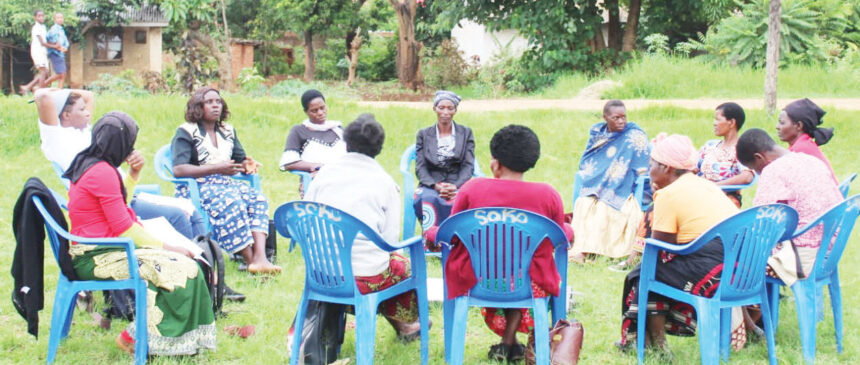
On a sunny Wednesday, afternoon, jovial looking women are sitting under a big mango tree.
The setting is Mchinji District, in the central part of Malawi. The big tree becomes a beehive of activity; a class-like set-up. And, yes, a class it is—these are women with very partial education but they are gathered here discussing economic issues and decisions impacting their lives.
One of the women, Joana Ching’amba, is the centre of focus. She is heard teaching peers how a budget is formulated and how the government gets debts—both domestic and external.
Ching’amba, beaming with confidence and speaking eloquently, is heard saying that during economic crises, women and girls, particularly in low-income countries like Malawi, are affected the most.
- Advertisement -
“From failing to access quality health services,” she says, “failing to get decent work, increased difficulties in accessing credit, which gets more tightened by banks during an economic crisis, and many more, women are the most vulnerable.”
Despite being the most hit, Ching’amba says, women and girls have not been given enough opportunity to be at the helm of economic decision-making at all levels.
The young women, together with their action-coalition partners, work to address structural barriers that prevent them from fully enjoying their right to economic security, integrity, decent work, and access to gender responsive public services, among other things.
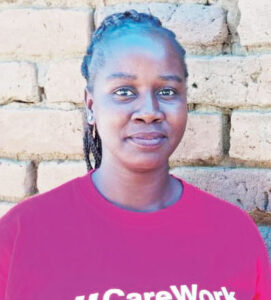
The women, sitting under the big tree, are part of groupings dubbed Feminist Economic Hub formed to discuss and find solutions to economic woes affecting women in these difficult times. Ching’amba is the Mchinji hub coordinator, and she said young women in her community formed a group of Feminist Economic (Feminomics) Hub which seeks to have a conversation on important topics such as economics and how they impact the womenfolk.
- Advertisement -
- Advertisement -
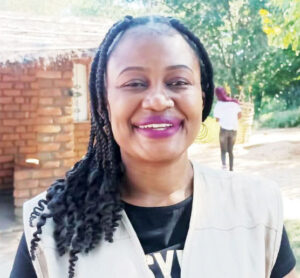
Another Feminomics Hub leader from Rumphi, Shekinah Shupekile Msimuko, said, through the groups, young women have come to understand how the country’s economic structure works and they are able to note some agreements and policies that are not favourable to women.
“Like in the past, before I joined the feminomics hub, I used to be excited when the International Monetary Fund (IMF) gave us a loan. I did not know how such things work and what they mean to the country.
“But now I get angry because I know that for the IMF to give us money, there are tough conditions that are attached to the support and these conditions impinge on us as women. I’m talking about conditions such as austerity measures where the IMF tells the government to cut expenditure to some crucial sectors such as the health and social protection. Such cuts have a huge bearing on women,” Msimuko said.
On austerity, she added that, when the government cuts expenditure in the health sector and decides not to employ nurses, women do suffer the most as they are left to take care of the sick.
A report released by Oxfam last year, titled ‘Fighting Austerity and the Covid Pandemic’ revealed that some austerity measures that are being implemented in poor countries including Malawi have the potential to increase inequalities and women are mostly at the receiving end.
“Austerity is being encouraged in (IMF) policy assessments and programmes by providing advice to reduce overall spending during or immediately after the pandemic in order to achieve smaller deficits and reduce debt levels,” the report reads.
The report faulted such advice saying austerity measures mostly affect spending on health, education, social protection, and food security which are sectors very crucial to women.
Non-Governmental Organisation, Gender Coordination Network (NGO GCN) Executive Director Barbara Banda said knowledge has potential to change harmful economic policies.
“When we look at women’s economic activities, they are not being counted in our Gross Development Product, which means that, where government policies are made, women are not being considered.
“So, we need to start this dialogue with women right at the grassroot level because we know they are active and contribute to the country’s economy,” Banda said.
Echoing Banda, Malawi Congress of Trade Unions (MCTU) Deputy Director Jessie Ching’oma said women are not recognised despite being among major contributors to the country’s economy.
“It is very unfortunate that, in terms of independence, we are over 50 years old now but if you look at where we are, especially on vulnerable groups such as women and youths, not much progress has been made to empower them economically,” Ching’oma said.
Ching’oma expressed worry that, in this era, Malawi still has women and youths left behind in economic development and decision-making processes.
According to Strategic Development Goals (SDG) goal number 1, ending poverty, empowering women in the economy and closing gender gaps in the world of work is key.
and the economy to grow?
ActionAid Malawi Executive Director Pamela Kuwali is equally concerned
“As ActionAid, we feel that neoliberalism that leads to austerity has not worked for Malawi. It was meant to promote growth for developing countries such as Malawi but over the years evidence suggests that this has not worked because our economy has continued to regress,” Kuwali said.
According to Kuwali, cutting expenditure on public services has affected Malawians, especially women, as they continue to get poor public services.
“So, if we are not allocating enough money to health services, education services, social protection services but then impose punitive tax measures that hinder growth of the economy, how do you expect people and the economy to grow?” Kuwali questions.
Meanwhile, Minister of Finance Sosten Gwengwe has said he has noted the concerns being raised by the women.
Young women in eight districts of Malawi, namely Nsanje, Blantyre, Zomba, Dedza, Mangochi, Lilongwe, Mzimba, Rumphi and Mchinji, with support from ActionAid, have formed the feminist economic hubs aimed at empowering each other and educating one another on economic issues.
Extreme poverty wears a female face and it would take women themselves to come together, hold hands and let their voice be heard if this narrative is to change.