








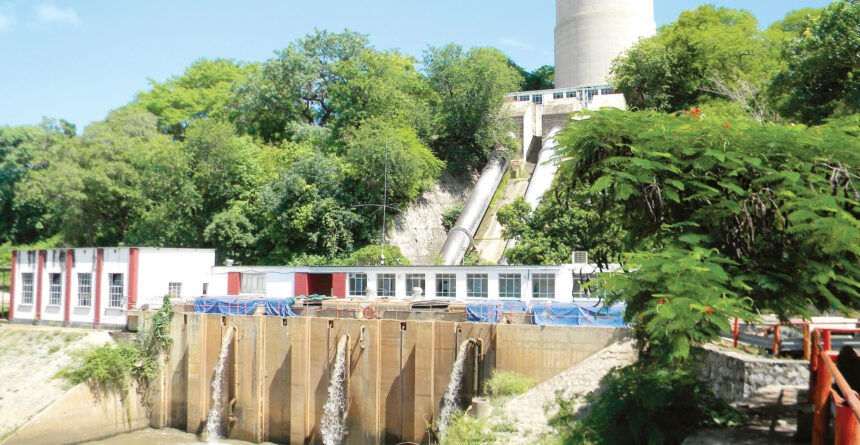
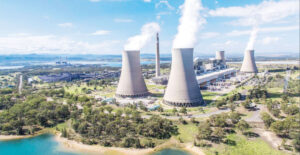
The picture is that of a huge portion of land fixed with machinery with a smoke stack on one edge exhausting flue gases to the outside air.
The surrounding areas are scattered with rock and dirt from the coal that gets thrust into the boiler to generate electricity that goes into the transmission lines on another end.
That will be the case if Malawi goes ahead with its coal-fired power plant project whose plans have been in the pipeline for over a decade.
“It is the usual balance between development and fighting climate change. Malawi is at a difficult point in terms of access to electricity,” development economist Phillip Chigalu says.
The Kam’mwamba Power Station is a proposed 300-megawatt (MW) project planned to be built within Zalewa area, about 60 kilometres north of Blantyre.
- Advertisement -
The global push for countries not to initiate new projects of this nature is failing to prod the Electricity Generation Company (Egenco) of Malawi to freeze the plans.
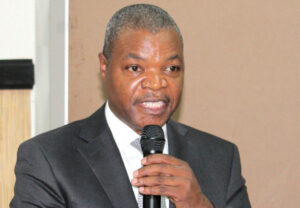
Last month, Egenco chief executive officer William Liabunya disclosed that the State-owned company has not given up on the power project.
It was supposed to be bankrolled by a $667 million (K723 billion) loan from the Export and Import Bank of China with Malawi required to secure $104 million (K112 billion) as commitment fee.
However, China’s new policy on coal-fired power plants implies the East Asian country is out of the Kam’mwamba Coal-Fired Power Plant picture.
- Advertisement -
- Advertisement -
“China will step up support for other developing countries in developing green and low-carbon energy, and will not build new coal-fired power projects abroad,” President Xi Jinping told the United Nations General Assembly in September 2021.
Searching for ‘coal partners’
So, with potential financing having gone up in smoke, the project is mildly on ice as Malawi searches for partners who can accept a joint venture.
Liabunya admitted anti-fossil fuels campaign are reminding investors to be cautious with technology that uses energy sources such as coal.
“[But] we have not given up; we are working with the Public Private Partnership Commission so that we can get an investor we can work with on such an investment.
“So, it is a project that we are still working on; a feasibility study was already done,” he said during a public hearing session Malawi Energy Regulatory Authority organised to get Malawians’ views on an electricity tariff hike proposal.
An energy expert from Mzuzu University Chrispin Gogoda also backs the project on the premise that power from coal is guaranteed.
What matters, he says, is the availability of the fuel source, which burns in the boiler and produces steam under tremendous pressure before it flows into a turbine, which spins a generator to create electricity.
Gogoda argues that while renewable energy is clean, it cannot be optimally relied on for Malawi to meet all its power needs.
“Coal is not clean energy, but all developed countries have coal-fired power plants. So, sometimes it is a question of ‘do we want to develop or not?’” Gogoda said during the session.
He even gave examples of countries such as India which apparently stood their ground that they would only stop relying on coal for power generation after attaining substantial development levels.
Lingering electricity poverty
Chigalu agrees that Malawi, which has a total installed generation capacity of slightly over 500MW, needs more electricity for its industrialisation agenda.
“The electricity is not enough to meet the demand and we are also one of the lowest emitters of greenhouse gases.
“But then there is the transition agenda. Are we ready to take the risk of being left behind? Shouldn’t we transition with the rest of the world?” he queries.

Environmental conservation activist Julius Ng’oma concurs with Chigalu that Malawi finds itself at a crossroads in terms of power generation.
Ng’oma is worried that as the global community transitions to clean energy, those initiating new fossil fuel-powered projects risk becoming dumping sites of the technology that is being phased out.
He further states that while electricity from coal may prove crucial in the short term, the ramifications are likely to linger on for decades.
“Even though our emissions are very low, we need to be cautions regarding the energy technology we opt for.
“There is a global campaign pushing for phasing out fossil fuels. Malawi risks turning into a dumping site of the technology for coal-fired projects,” Ng’oma warns.
He adds that the fact that many countries are phasing out such kinds of projects also implies Malawi may have problems maintaining the equipment as engineering attention shifts elsewhere.
Thus, Ng’oma posits, there should be enough conversation on the Kam’mwamba initiative for a proper balance between energy needs and Malawi’s climate pledges.
‘Clean alternatives are available’
The climate change activist further wonders why Egenco could be insisting on a coal-fired power plant “when there are clean alternatives at the company’s disposal.”
He admits that such a project may appear attractive because of its proficiency.
The Society for Mining, Metallurgy and Exploration (SME), a United States-based firm, states that coal, which provides more than 36 percent of global electricity, provides affordable, reliable and constant power.
SME argues that as much of the world lacks access to modern, clean energy, coal is still essential to alleviating energy poverty.
But climate activists maintain countries that are serious about their transition agendas are exploring sustainable and cleaner energy sources.
“For Malawi, studies have shown that it is possible to have more hydro-electric power stations on rivers including the Shire itself,” Ng’oma says.
He feels the devastating impacts of Tropical Cyclone Freddy, which lashed the country in March this year, should provide enough lessons on the significance of reversing climate change.
The strongest storm to hit the southern hemisphere left over 1,200 people dead in Malawi. It was linked to climate change.
“Well, we might argue that we are just victims of emissions by developed countries, but we also have a role to play in fighting climate change,” Ng’oma says.
Defaulting on climate pledges?
At the launch of the Malawi Carbon Markets Initiative (MCMI) on June 28, 2023, President Lazarus Chakwera reiterated that his country will not be party to any enterprise that pollutes the environment.
He touted MCMI as having the potential to generate up to $600 million (K651 billion) through carbon trading due to the extensive forest reserves and conservation parks.
The United Nations Development Programme escribes carbon markets as trading systems in which carbon credits are sold and bought.
“Companies or individuals can use carbon markets to compensate for their greenhouse gas emissions by purchasing carbon credits from entities that remove or reduce greenhouse gas emissions,” UNDP says.
There have, however, been concerns about Malawi really benefiting from this initiative given the complexity of the carbon trading system.
Experts argue carbon credits are highly uncertain, leading to endless debates over their value and the methodologies used to measure that value.
Still Chakwera insisted on the potential paybacks that Malawi can get from its conservation efforts and reducing emissions.
He also referred to the disasters triggered by Cyclone Freddy as a handy reminder that degrading the environment is unwelcome.
“We have every reason to prefer a green economy over an economy that degrades and destroys the environment,” Chakwera said while standing in the air-cooled backdrop of a botanic garden in Lilongwe.
But the coal-fired power project that Egenco is pursuing appears to be an antithesis of such pronouncements.
Even a preface to Malawi’s own nationally-determined contributions (NDCs) states that government is determined to fully address climate change issues and embrace available opportunities for a sustainable country.
NDCs are self-defined national climate pledges under the Paris Agreement, detailing what a country intends to do to cut emissions and adapt to climate impacts.
‘We already missed the train’
“We must move together with the rest of the world. How will we access climate funds, which include those for transition projects if we insist on coal?
“Coal power will accelerate development, yes, but we must accept that we already missed the train and must move on together with the rest,” Ng’oma says.
But if the fortitude in Egenco and the absence of contrasting views within the government system are anything to go by, the project will commence as soon funds are available.
The picture of the steam turbine plant burning the combustible sedimentary rock dutifully supplying power into the national grid will be real.
So will be that of fly ash particles emitted into the atmosphere to pollute the air and gaseous by-products to contribute to climate change.
“It is really a delicate balance. It is good that debate on the project continues,” Chigalu says.


