By Jimmy Chazama:
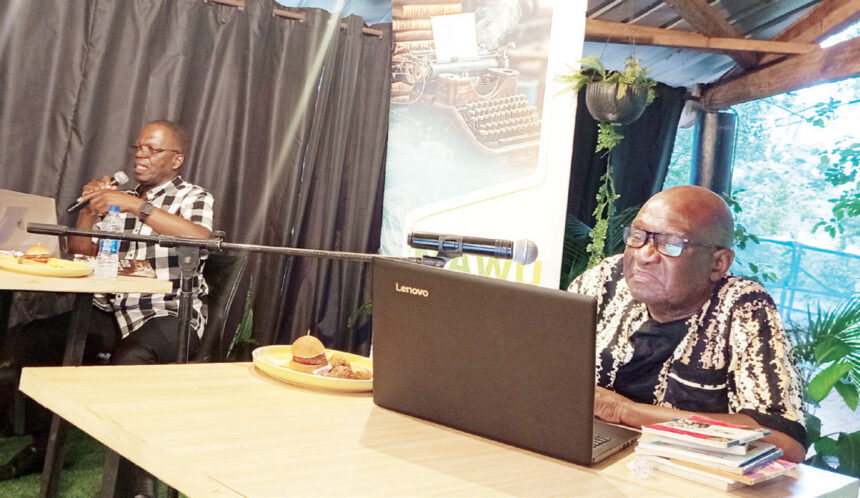
Renowned writers Ken Lipenga and Alfred Msadala on Saturday rekindled memories of their writing feats when they were at the University of Malawi (Unima) when they engaged in a literary conversation at Café House in Lilongwe.
Organised by Malawi Writers Union (Mawu), the rare conversation titled ‘Stories and Memories’, looking at words, memory and legacy, saw Lipenga and Msadala call upon writers in the country to keep writing and remain steadfast in their craft.
Enriched with readings, poetry and reflection, the literary gathering which attracted an impressive audience saw Msadala, who has several works to her credit including Malangano and Second Chance; encourage writers not to give up even when publication seems distant.
“Whoever is endowed with such talent must always go forward,” the former Book Publishers Association of Malawi (Bpam) president, said.
- Advertisement -
Lipenga known for his critical literary works reflected on his early years at Chancellor College now Unima and the significance of reconnecting with Msadala after decades.
He then hailed the new generation of writers for their creativity and energy.
“The arts are in excellent hands. I am much encouraged to see writers taking the craft to greater heights,” Lipenga said.
He said such gatherings revive traditions of intellectual discourse once found around village firesides.
- Advertisement -
- Advertisement -
On technology, Lipenga urged writers to embrace new tools wisely.
“Artificial Intelligence (AI) can assist with editing and research, but it should never replace the creative spirit that defines literature,” he said.
Mawu President Shadreck Chikoti described the event as crucial, saying today’s writers are riding on the shoulders of giants.
“A country that does not read can never lead, and a country that does not write can never be right,” Chikoti said.
He also cautioned against misusing AI, stressing that it should refine work but never replace human creativity.
The gathering came in timely underscoring the enduring power of literature in shaping the country’s cultural identity and inspiring future generations.