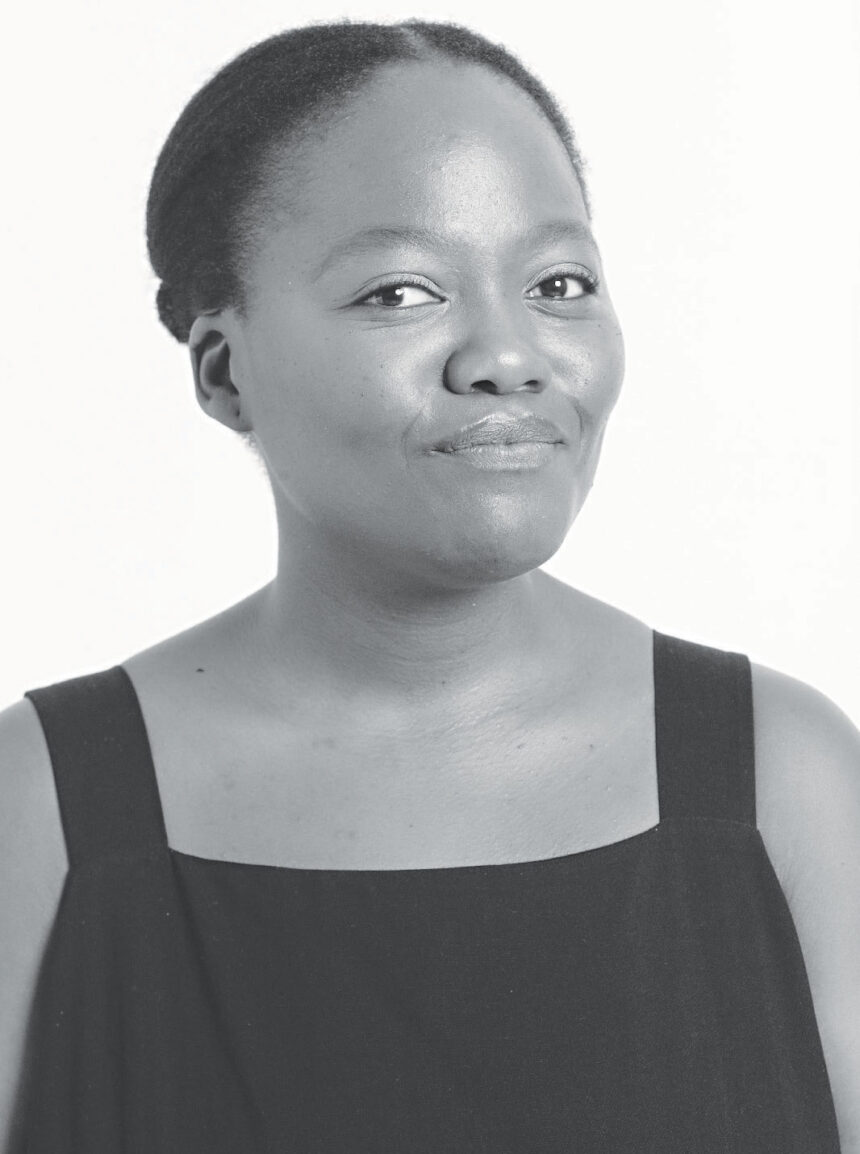
Koleka Putuma is an esteemed South African Theatre Director, Writer, and Poet. Her debut poetry collection Collective Amnesia (2017) won the 2018 Glenna Luschei Prize for African poetry, and was named the 2017 book of the year by the City Press, and one of the best books of 2017 by the Sunday Times and Quartz Africa. She spoke with Tess Rhodes for Africa in Words. Excerpts:
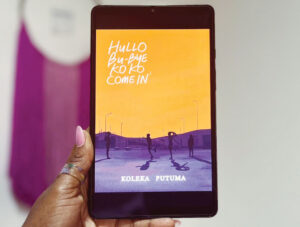
I would like to start by asking you about the women that you make visible through Hullo, Bu-Bye, Koko, Come in (henceforth HBB) and the research process behind that.
I started writing HBB when I was still touring and publicising my first collection Collective Amnesia and I got a lot of invitations to come and talk about the work, mainly from Europe.
During that time I found myself negotiating with what it meant to be Black and queer and South African, and viewing my body in those kinds of spaces. I started to feel this weird negotiation with ‘hyper visibility’ but also, at the same time, ‘invisibility’; between ‘being looked at’ and what people see and engage with when they look at someone like me.
When I started to write the poems in HBB I began to think about who else was having to negotiate themselves in the performance space? Who were these women who were doing this weird dance with visibility and invisibility, the media and the archives; being celebrated, but also being erased from critical materials?
Then I started to think about celebrated musicians, celebrated icons, not just in music or in entertainment, but in politics, figures that we don’t necessarily see mounted up as statues in public spaces. I really wanted to find people who contributed to our liberation in South Africa, specifically women who contributed to the struggle but never made the textbooks.
- Advertisement -
Then I wanted to look at icons, like Brenda Fassie and Miriam Makeba, who are really big women in entertainment but also iconic in how they contributed to the struggle, and to music and the culture of South Africa; women like Audre Lorde and May Ayim; observing the different ways that Black women have contributed to academia, politics, scholarship, performance in ways that haven’t been written about enough.
In a previous interview I saw that you said that you think it is important to celebrate Black female stories but not to do so as a response to the patriarchy. Given that HBB is your second collection addressing and responding to problems involving this, can you say that you’ve now achieved your aims?
I don’t know if I have achieved it. I feel as a Black queer woman in South Africa, I’m confronted with a lot of those issues that are rooted in capitalism and whiteness and patriarchy on a daily basis. It’s so in my face the whole time. It’s quite difficult to frame your experience and not engage with those subjects or engage with those topics but I don’t think it’s completely impossible – I think it absolutely is possible!
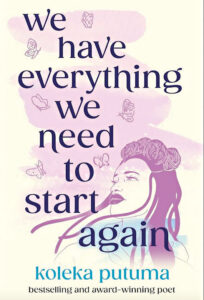
We are more than these bodies that live in patriarchal societies that have been affected by our histories in our past. There’s so much more that we could write about but I think for me, I don’t know if I’ve achieved it.
- Advertisement -
- Advertisement -
I think we need to write about and talk about things for as long as it’s necessary to have the conversation. It’s important to have a dialogue about the things that are plaguing us, or disturbing our peace and our freedom.
I keep joking with people at the moment, saying ‘I think my next collection is going to be about the erotic’. I do think I’m going to write erotica poetry and move away from the politics and blackness and queerness and all these other subjects because I think that both of the books I have written really engaged with that, and now I’m feeling over it.
I’m ready to move past it and talk about something else, talk about sex and erotica and addiction and other things that I’m fiddling with in my mind at the moment.
Many of the women that you feature within the collection were not only performers but also prominent activists. As you’ve just been saying, you want to continue to talk about things that are ‘in the moment’ and prominent. As a Black queer woman who focuses on female empowerment, would you consider your poetry a form of ‘activism’?
I hope so. I think people in the world take up arms or they contribute to movements in different ways. I’d like to believe that no matter what period I was born into, my writing or poetry would still have been my chosen way of contributing to liberation and contributing to conversations.
I think judging based on how the work has travelled through the world, the conversations that it’s initiated and the debates that it has sparked, I would think that it’s a work of activism. Because I think that at the heart of activism is dialogue. People start certain movements so that we can begin to move forward and heal. Dialogue is a critical component of activism and I’d like to think that the poems spark some sort of dialogue, start conversations in different ways, open up those difficult conversations that people can’t necessarily just launch into. I think that that’s the beauty and power of poetry – it cuts through the bullsh*t – it gets people to talk instantly about what it is that the poem’s trying to say, what it’s saying to them.
To what extent did your choices of costume work to confront the gaze of the audience and translate your concerns around the gaze from the page onto the stage?
One of the conundrums I was fiddling with was that my body and who I am is not a neutral space, not as a Black woman, not as Koleka. Whatever I do, people will see me. I worked on how to project a canvas of neutrality onto my body, where the other narratives of other women and stories could be embodied and lived.
I don’t think it is fully possible to get on stage and ask people not to read or see me. But, I tried to experiment with the idea of how to create a costume and looks where the audience is asked to engage with me as a performer that has the potential to take on other characters and narratives. To engage with me and the stories, those that have been erased and made invisible, around me.
It is not just poetry about me and my experience. The experience of being Black, queer and erased, from the archive, from politics, isn’t a singular story. It is not just my story, it is the story of multiple women.
Costume and staging allowed for multiple narratives to come in and out of that space. – AFRICAN IN WORDS
The article has been cut to fit. Full article can be found on https://africainwords.com/