



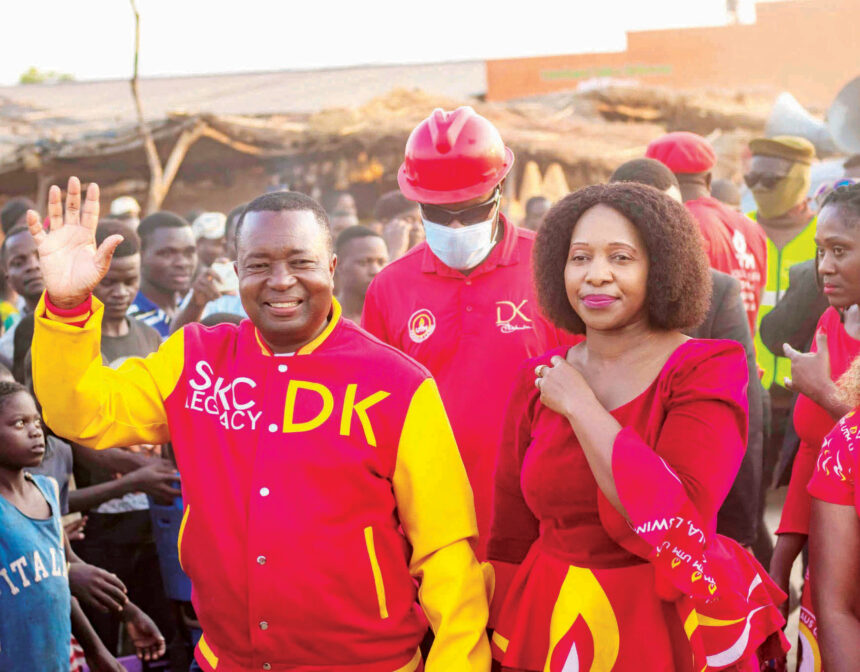
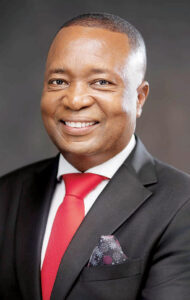
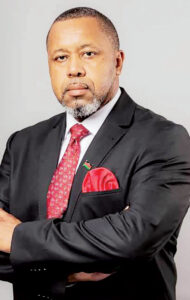
After a dismal performance in last year’s Tripartite Elections, UTM President Dalitso Kabambe concedes defeat but refuses to give up. ISAAC SALIMA caught up with him where he shared his vision for the party.
Was UTM’s performance in the September 16 elections what the party expected? Any surprises?
Looking back at the recent elections, UTM’s performance across councillor, parliamentary and presidential contests did not fully meet the ambitions we had set. While we had hoped for stronger outcomes, I take full responsibility as party leader.
However, a fair assessment must consider context. When I assumed leadership of UTM, we had only nine months to prepare for a national election. This period was not merely a campaign window for us, it was nine months to revive a party still grieving the loss of its founding president, rebuild morale, re-establish grassroots structures, and regain public confidence. Many districts had seen limited party activity for years, with weak organisational coherence and mobilisation capacity.
- Advertisement -

Reconstructing these foundations while competing in a high-stakes national election was a formidable challenge. The electoral environment added further complexity. We faced a DPP whose popularity was growing, buoyed by public frustration with the governing party.
- Advertisement -
In many cases, elections were less about ideological choice than a collective desire for political change, resulting in strategic voting that shaped outcomes across all levels. Even in this challenging environment, UTM’s ideas resonated where engagement occurred. Citizens responded positively to a platform emphasizing competence, economic realism and institutional reform.
This demonstrates that Malawi’s political future belongs not to any one party, but to ideas that prioritize productivity, inclusion, and good governance. For UTM, these elections were a learning moment rather than an end.
They underscored the need for stronger coordination among reform-minded actors, deeper grassroots engagement, and unity around a credible national development agenda. Malawi’s challenges of economic recovery, job creation, fiscal discipline, and institutional trust are too large for fragmented politics.
Looking ahead, UTM is committed to rebuilding with openness and cooperation. We are strengthening structures, refining policy messaging, and positioning ourselves as a constructive partner in national development.
- Advertisement -
We prioritize a productive, export-oriented economy, smarter decentralisation, job-led growth, fair taxation, and a national development plan anchored in delivery.
Importantly, we approach the future with a spirit of conciliatory engagement. We respect the support enjoyed by other parties and recognise that no single party holds a monopoly on wisdom or solutions.
Malawi progresses not through exclusion, but through dialogue, collaboration, and principled alliances.
UTM remains open to partnerships with reform- oriented stakeholders such as political parties, civil society, the private sector and development partners focused on economic transformation, good governance, and national unity.
Through cooperation and shared responsibility, Malawi can rise above political divisions and chart a hopeful path forward.
What is your general assessment of the conduct of those elections thus far?
UTM’s evaluation of the elections is measured, evidence-based, and forward-looking.
Compared to previous cycles, the process was largely orderly and peaceful with Malawians demonstrating remarkable civic discipline and commitment to resolving political competition through ballots rather than conflict.
This civic maturity is a national asset that deserves recognition. At the same time, democracy requires more than order on election day.
It depends on fairness, equity, and trust in institutions. On these fronts, the elections highlighted areas needing urgent attention: Unequal access to voter registration and polling facilities, with the Central Region disproportionately favoured, created perceptions of bias and undermined equal participation. Reports of intimidation and violence, particularly targeting opposition supporters then, revealed that political competition still carries risks for citizens’ freedom and safety.
Tensions between the Malawi Electoral Commission (MEC) and opposition parties, resulting in multiple court cases, highlighted the need for stronger trust, impartiality and collaboration between institutions and political actors.
Additional challenges included inconsistent enforcement of rules and limited civic education, particularly at local government level. Weak awareness of procedures undermines informed participation and disadvantages parties that rely on substantive policy messaging.
Moving forward, UTM is committed to constructive engagement with all stakeholders to strengthen electoral credibility.
We aim to rebuild trust in institutions, protect citizens from intimidation, ensure equitable access to participation, and deepen civic education.
A resilient democracy grows from dialogue, cooperation, and principled alliances, ensuring leadership is determined by ideas, competence, and vision rather than fear or inequity.
Moving forward, what is UTM doing for itself as a party and for future elections?
UTM’s future orientation is strategic and long-term, focusing on competitiveness, constructive engagement, and national development impact.
Key areas of focus include: 1. Strengthening Organisational Structures: From national to local levels, UTM is investing in robust grassroots networks, functional offices, trained cadres and accountability systems. These structures ensure that engagement with citizens occurs year-round, not only during election periods.
- Policy and Communication Excellence: We are refining our policy framework to present clear, coherent, and practical solutions in areas such as job creation, economic growth, governance, and social inclusion. The goal is to compete on ideas and credibility, not rhetoric.
- Financial Sustainability: UTM is building transparent, predictable, and independent financial mechanisms to support professional campaigns while safeguarding integrity.
- Youth Engagement and Civic Education: Recognizing the growing number of new voters, UTM is investing in voter registration, civic education, and outreach, ensuring that youth participation is informed and meaningful.
- ollaboration and Coalition-Building: National challenges cannot be solved by a single party. UTM engages constructively with like-minded parties, civil society, the private sector and development partners to amplify reform initiatives and promote shared objectives. In short, UTM is preparing for more than elections.
We are building a party that is disciplined, credible, and capable of delivering solutions for today and generations to come, fostering dialogue, cooperation, and inclusive national development.
On account of your experience in government and as an economist, what is Malawi missing to move on development, and how can we all get things done?
Malawi has abundant natural and human capital, yet economic outcomes have fallen short. Over the past five years, GDP growth has averaged below 2 percent which is less than population growth leading to declining incomes and rising poverty.
Persistent inflation above 25 percent has been eroding household purchasing power, particularly for the poor and middle class. Foreign exchange shortages constrain trade and investment, while public debt has surpassed 85 percent of GDP, with interest payments crowding out essential spending.
At the core of these challenges is a policy misalignment. For too long, growth has been pursued through taxation and borrowing, rather than focusing on what truly generates wealth: production, value addition, and a thriving private sector.
Development comes from producing more than we consume, exporting rather than importing, adding value to raw commodities, and building reliable energy, logistics, and transport infrastructure.
It requires an investment climate that rewards risk-takers instead of punishing them. Current fiscal measures such VAT increases, higher PAYE and proposals to tax pensions at high rates risk undermining the engines of growth: the middle class, formal SMEs, and growing businesses.
Overburdening them reduces formal sector activity, discourages entrepreneurship, and weakens capital markets. Taxes must protect and grow economic success, not penalize it. I advocate a production-first national economic strategy:
Decentralized fiscal authority: Each district must be allocated enough resources annually to invest in education, healthcare, infrastructure, and enterprise development, accelerating job creation and stimulating local economies.
Agricultural modernization: Investments in irrigation, mechanization, localized fertilizer production, crop diversification, and district-level agro-processing facilities to improve productivity, ensure food security, and supply raw materials for local industry.
Mining development: Fully capitalized Mining Development Corporation to operationalize strategic deposits, promote local content, and reinvest revenues into infrastructure and social services. Industrialization: Promote manufacturing including textiles and high-value products supported by modern logistics, reliable energy, and digital connectivity to enhance competitiveness and export capacity.
Tourism development: Leverage destinations such as Likoma Island, Cape Maclear and Mulanje Mountain through strategic marketing, infrastructure investment and public-private partnerships to create jobs and generate foreign exchange. Macroeconomic stability:
Restore fiscal discipline, reduce debt sustainably, rebuild reserves and implement rational taxation and regulatory frameworks to attract investment and stimulate growth. Malawi’s development challenge is not a lack of resources, but the absence of strategic focus on production, private sector empowerment, and coherent fiscal and structural policy.
By adopting a production-first, export-oriented, and district-empowering strategy, Malawi can expand opportunity, create jobs, and deliver sustainable prosperity.
How can you describe the new administration’s 100 days in power?
The new administration’s first 100 days have shown both promise and challenges.
There are visible initiatives in cheap maize availability, public sector reform, infrastructure development and stakeholder engagement in sectors like agriculture, mining, industrialization and tourism.
These efforts demonstrate willingness to address long-standing structural issues. At the same time, economic measures such as VAT increase to 17.5%, higher PAYE, and additional taxes place pressure on households and the middle class, potentially slowing domestic investment and growth.
Legacy challenges in foreign exchange and debt remain significant, requiring strategic management alongside supportive policies for production and investment. On tourism, early policy moves such as visa reintroductions risk reducing Malawi’s competitiveness. Affordability, accessibility, and strategic marketing are key to attracting tourists, conferences and investment.
The administration’s success will be judged by whether policy decisions translate into tangible improvements for households, businesses, and communities.
A focus on production-led growth, inclusive economic opportunity, and strategic investment will enable Malawi to turn intentions into real outcomes, district by district, sector by sector, citizen by citizen.
What are your final words?
UTM’s approach remains forward-looking, constructive, and collaborative. Elections have provided lessons on organisational resilience, civic engagement and policy credibility.
Malawi’s development challenges demand production-first strategies, structural reforms, decentralized empowerment, and macroeconomic discipline. Political success is inseparable from economic performance and social inclusion. By focusing on jobs, value addition, industrialization, agriculture, mining, tourism, and fiscal responsibility, Malawi can achieve sustained growth and national prosperity.
UTM is committed to principled engagement, policy-driven leadership, and cooperative nation-building, ensuring that democracy strengthens, institutions perform and citizens thrive.
Through shared responsibility and strategic focus, Malawi can rise above political divisions and chart a prosperous, inclusive, and sustainable future.