





Since the Tonse Alliance administration assumed power, a number of policy changes have been implemented. One such policy instrument has been a tight monetary policy stance where a central bank raises borrowing rates.
The idea is to make money very expensive to borrow, thereby discouraging people. Theoretically, this will reduce the amount of money that is in circulation and will erode people’s purchasing power, thereby suppressing the amount of goods and services that people demand and purchase.
Eventually, this will reduce inflation which is a general rise of prices for goods and services. Considering that Malawi is currently facing some unprecedented levels of inflation, RBM and the government is definitely banking on this economic theory to fight the current escalating levels of inflation
But wait! Are the economic theories supposed to be applied wholesomely without understanding the context and underlying causes?
- Advertisement -

In my basic understanding of economics, there are two major drivers of inflation. That is the cost and demand. It is for this reason that economists categorise inflation into cost-push and demand-pull inflation.
- Advertisement -
As the name suggests, cost-push inflation occurs when the cost of production is too high to the extent that it is transmitted to consumer prices. Mostly, this is caused by external shocks such as the current Russia-Ukraine conflict, and supply chain disruptions that were induced by the Covid pandemic. When an economy is faced with cost-push inflation two things occur:
First, there is a drop in quantities of goods as well as services that are demanded because consumers do not have much disposable income to buy them. Second, businesses cut down production as most of their goods and services are not purchased due to the eroded purchasing power of the consumers.
A continued combination of these factors plagues an economy into low economic activities, low economic growth, trade deficits and high levels of unemployment. This forces the government to borrow in order to provide basic public services as revenues of the country are far below its expenditure needs. Unfortunately that is the current situation for Malawi.
On the other hand, demand-pull inflation occurs when there is too much money circulating in an economy. People have too much money to the point that they do not care about the prices at which the goods and services are being sold. As a result, sellers take advantage of this and continuously raise their prices.
- Advertisement -
Economists call this situation a scenario whereby too much is chasing too few goods and usually occurs when there is too much economic activity with high levels of employment and high economic growth.
Having provided this background, I now get to solutions that are proposed when economies are faced with either of the two scenarios. During the cost-push inflation and the accompanying recession, it is recommended that the government should come up with measures that will make the economy recover.
Some of these measures include: deliberate investments in strategic productive sectors, tax breaks, subsidies, lowering of interest rates for borrowing money, and other “bail-out” packages. The idea is to stimulate the economy and get it back on track as this increases disposable income of consumers and spurs investments due to reduced cost of borrowing money.
The opposite happens when the economy is being faced with demand-pull inflation. During this scenario, it is said that the economy is heating-up hence it is recommended that governments should come up with measures that will cool-off or slow-down the economy.
Common measures that are used are the raising of the interest rates for borrowing money, introduction of new tax measures, and reduction of government spending. These measures are crafted in such a way that people should not have too much disposable income to push prices upwards.
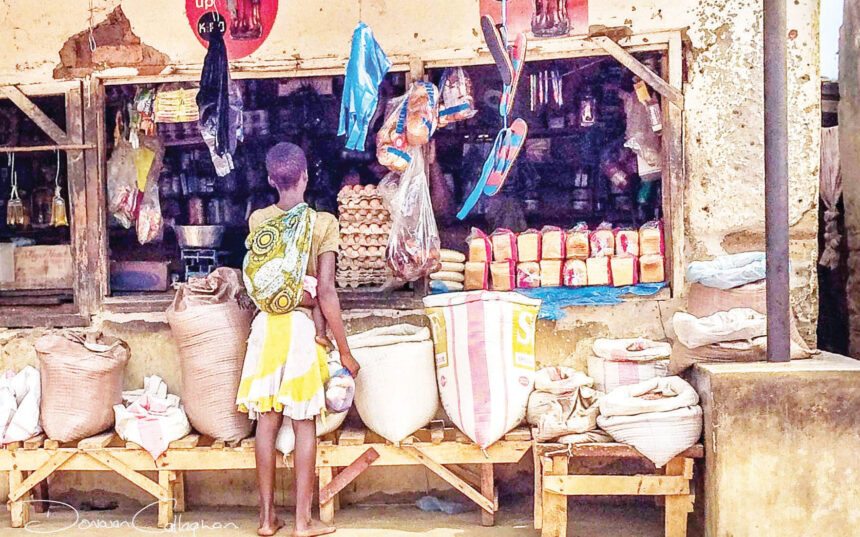
Now this is where I don’t get it. Since the Tonse government assumed power the country has been bartered with various external shocks that have resulted in cost-push inflation. In the past three years, food, fuel, transportation and fertilisers have increased by more than 100 percent pushing the cost of living to a record high.
However, instead of the government and the Reserve Bank of Malawi implementing the list of measures that will stimulate the economy and get it back on track, what is happening is that most of the policies that are being implemented are taking the economy deeper into trouble.
Amid the high cost of living and dwindling disposable income, the government has been introducing taxes that are further eroding the remaining consumer demand. One would wonder how businesses, production and manufacturing would grow when there is no domestic demand for the same. As a result, economic activities will continue to dwindle, companies will lay-off staff as they will be making fewer sales, and overall economic growth will continue to slump.
Furthermore, RBM has been continuously increasing policy rates for borrowing money and just recently the policy rate has been raised to 24percent. According to the Monetary Policy Committee Chairperson of RBM, the policy rate has been raised because price pressures have intensified such that inflation rate is projected to remain substantially above the medium-term target for longer.
This is exactly what I am talking about. We are doing the opposite in order to address our inflation. As a result, our inflation will continue rising to the point that the situation will go out of hand. It is not in all scenarios that inflation is tamed by raising the policy rate.
I remember hearing the Tonse government talking about mega farms and the much touted ATM strategy which will promote investments in Agriculture, Tourism and Mining? All these are good initiatives that can change the fortunes of this country. But how can investors venture into such initiatives when our interest rates are among the highest in SADC? Investments need cheaper and easily accessible money.
I would therefore like to remind the Tonse government that time is running out. Good economic policies are measured by how the welfare of ordinary citizenry is improved. How easy is it for ordinary Malawians to access basic needs? Soon Malawians will be judging whether the government has helped them or not. Unfortunately, that judgement will be passed over a ballot paper and it will be too late.
The author holds a Master of Science Degree in Agricultural & Applied Economics. He writes in his personal capacity