On Tuesday next week, Malawians from all corners of the country will rise with a singular purpose. They will line up, some at their nearest school, others at market sheds or community halls, each one armed with a simple yet powerful weapon: a ballot paper.
In the quiet hush of early morning, under the soft warmth of the September sun, citizens will gather at polling centres not just to participate in a routine democratic exercise, but to decide the future of their beloved nation.
On that day, the country will pause, take a collective breath, and cast votes not only for a new President of the Republic of Malawi, but also for Members of Parliament and ward councillors.
These are the men and women who will shape policy, direct development, and, more importantly, set the moral and economic tone for the years to come.
To the untrained eye, this may seem like a simple civic duty, perhaps even mundane or forgettable. Some may see it as just another election, another Tuesday. But such thinking is dangerously flawed.
- Advertisement -
The polls next week are not just about choosing individuals; they are about choosing Malawi’s direction. They are about reclaiming hope, restoring dignity, and realigning the country with its long-term dream of becoming an upper-middle-income economy by the year 2063.
This is not just about party colours or campaign slogans. It is about deciding who can guide this country through the turbulent waters of global uncertainty, local economic challenges, and social transformation. And unlike past elections where candidates were often new or untested, this time around Malawians are presented with a rare opportunity: to choose from leaders they have known and experienced.
The candidates: Familiar faces, different promises
In this election, three familiar figures have returned to the national stage, hoping to reclaim the highest office in the land. Joyce Banda of the People’s Party, Peter Mutharika of the Democratic Progressive Party (DPP), and Lazarus Chakwera of the Malawi Congress Party (MCP) all present themselves with promises of a better tomorrow. But behind each name lies a history. Some commendable, others questionable.
- Advertisement -
- Advertisement -
For the majority of the 7.2 million registered voters, many of whom are under the age of 30, these names might not evoke much emotion. To them, Banda and Mutharika may seem like just names in a history book. But for those who lived through their regimes, the memories are still vivid.
Joyce Banda: A legacy tarnished by scandal
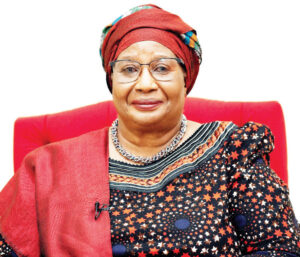
When Joyce Banda took over the presidency in April 2012 following the death of Bingu wa Mutharika, many celebrated her as a breath of fresh air. A woman leader with bold ideas. But her short-lived tenure was overshadowed by one of the most scandalous episodes in Malawi’s democratic history: the infamous Cashgate.
Between 2012 and 2013, a wave of corruption swept through the public sector. Government employees were caught with huge amounts of unexplained cash, millions stashed in car trunks, personal homes, and even hidden in offices.
Civil servants, businesspeople, and political affiliates all feasted on government coffers, stealing over K23 billion in public funds. The theft was not only brazen but systemic.
While Banda maintained she was not directly involved, her administration failed to prevent or fully prosecute the rot. Trust in the government plummeted.
And in 2014, Malawians made their verdict loud and clear, they voted her out. Today, Banda returns, rebranding herself as a reformed leader. But the question remains: can Malawians forgive Banda?
Peter Mutharika: A return to old ways?
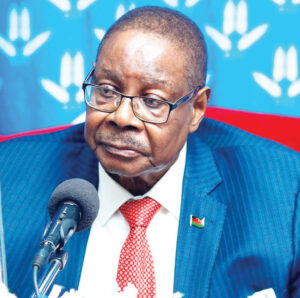
Peter Mutharika, fondly known as APM, succeeded Banda in 2014. Many hoped he would restore order and integrity. But his six-year rule, from 2014 to 2020, soon revealed its own cracks. Corruption once again reared its ugly head.
One of the most shocking revelations from his administration was the accumulation of 72 luxury vehicles by his own personal bodyguard. How could a mere security officer afford such wealth?
Investigations are still ongoing. Moreover, many of Mutharika’s former ministers are now answering charges in court related to fraud, theft, and abuse of office.
During his rule, Malawi witnessed one of its most disturbing social crises, the brutal killings of people with albinism. Their body parts, believed by some to possess magical powers, were harvested for ritual purposes. The government’s response was lukewarm at best.
Bon Kalindo, a then-DPP lawmaker who dared to protest these atrocities, was cast aside by his own party.
And who can forget the notorious DPP cadets? These young political loyalists were often linked to acts of intimidation, violence, and suppression of opposition voices. Mutharika’s silence was deafening.
And yet, today, he returns, seeking redemption, positioning himself as a stabilising force. The question again arises: Have Malawians forgotten so soon?
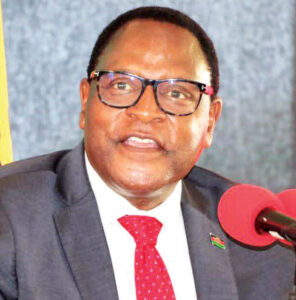
Lazarus Chakwera: A pastor in the palace
Then there is Lazarus Chakwera, the current occupant of State House. A former pastor and theologian, Chakwera came into power in June 2020 following a historic court-sanctioned re-election after widespread irregularities in the 2019 polls.
Riding on the promise of servant leadership and guided by his High 5 principles, servant leadership, uniting Malawians, prospering together, ending corruption, and respecting the rule of law—Chakwera entered with high expectations.
While his presidency has not been without criticism, particularly over delays in fulfilling some campaign promises, there are undeniable strides that Chakwera has made.
Under his leadership, the capital city, Lilongwe, has undergone a remarkable transformation. From narrow, dusty roads to modern six-lane highways, from dark, unlit corners to beautifully lit boulevards, the city has taken on a new identity. One of progress and modernity.
More impressively, Chakwera has revitalised Malawi’s railway system, a lifeline for trade and logistics. Fuel is now being transported from Mozambique’s port of Nacala directly to Malawi by rail, cutting transport costs and improving efficiency.
He has also expanded access to financial support through the National Economic Empowerment Fund (Neef), providing loans to young entrepreneurs and farmers alike. His administration’s Affordable Input Programme has ensured that more farmers can access fertiliser, supporting food security at a time when climate change has made agriculture more unpredictable.
All this has been achieved amidst global disruptions such as Covid 19, cyclones, cholera outbreaks, and the economic tremors of the Russia-Ukraine war. And yet, Malawi has not collapsed. It has endured. It has grown, even if slowly.
The youth factor: A generation unaware?
With such history laid bare, it’s important to reflect on the fact that the majority of voters in this election are young. Many were very young when Banda was president. Most only remember Mutharika for the last year of his presidency, when protests rocked the nation.
This presents both a challenge and an opportunity. A challenge, because memory fades quickly, especially among those who never felt the sting of failed leadership.
But an opportunity, because young people also represent fresh energy, new thinking, and the possibility of rejecting recycled politicians whose past performances have left the country poorer.
The youth must be made aware of the power they hold. Their vote is not just a mark on paper. It is a voice. A decision. A declaration of what kind of Malawi they want to inherit.
Choosing the future
As Tuesday approaches, every Malawian must pause and ask: Who can best take this country forward?
Do we go back to leaders who presided over some of the darkest chapters of our nation’s economic mismanagement and social instability? Or do we stay the course with a leader who, despite challenges, has shown measurable progress and a vision aligned with Malawi 2063?
Elections are not about perfection. No leader will ever be flawless. But leadership is about direction. It is about values. It is about choosing between going backward, standing still, or moving forward.
So, come Tuesday, as the sun rises over the hills of Mzuzu, the shores of Lake Malawi, the plains of Kasungu, and the hills of Thyolo, remember this: your vote is your voice. Do not stay home. Do not remain silent.
Choose wisely. Choose with memory. Choose with hope.
To me, given the track record, the commitment to infrastructure development, the revitalisation of national systems, and the resilience shown through the crisis, Lazarus Chakwera stands out as the most deserving to continue leading Malawi.
But above all, vote. Because not voting is choosing to stay voiceless and Malawi deserves better than that.