The World Bank has warned that the new Foreign Exchange Act being proposed by the government may have unintended consequences on investment.
Government is, during the current meeting of the august House, expected to bring Bill Number 43 of 2022, which seeks to repeal the Exchange Control Act (Cap. 45:02), a piece of legislation enacted in 1984, and replace it with a new Foreign Exchange Act.
According to the draft bill, the main reason for introducing the new act is to reflect the shift of the policy of the Reserve Bank of Malawi (RBM) from not only focusing on controlling foreign exchange transactions in Malawi but also the regulation of foreign exchange flows entering or exiting the Republic of Malawi.
This, according to the bill, has been necessitated by the foreign exchange challenges the country has been facing lately.
Among other things, the bill seeks to enhance the substantive provisions on foreign exchange operations which are not adequately covered under the current Exchange Control Act. The bill consolidates regulations made under the Exchange Control Act and incorporates them into this new principal legislation.
- Advertisement -
The bill also fixes a period during which a person can hold foreign exchange in Malawi.
The bill also provides for administrative penalties on authorised dealers and international foreign exchange brokers who contravene provisions of the Act, apart from criminal penalties provided in the bill.
The legislation also seeks to standardise penalties for offences provided in the bill and related pieces of legislation and provides for forfeiture provisions for the courts on convicted persons.
But, in its 17th Malawi Economic Monitor (Mem) released last Wednesday, the World Bank has warned that the draft legislation puts more restrictive capital controls and transfer restrictions on multinational companies and places restrictions on domestic firms’ access to foreign exchange.
- Advertisement -
- Advertisement -
The World Bank says these measures could have an adverse impact on attracting new foreign investment and potentially undermine the competitiveness of the domestic private sector that may not be able to import critical inputs for production or services they provide.
“In finalising this legislation, it will be important to find a balance between bringing stronger controls into the foreign exchange market and ensuring that this does not create additional barriers for much-needed investment,” the Mem reads.
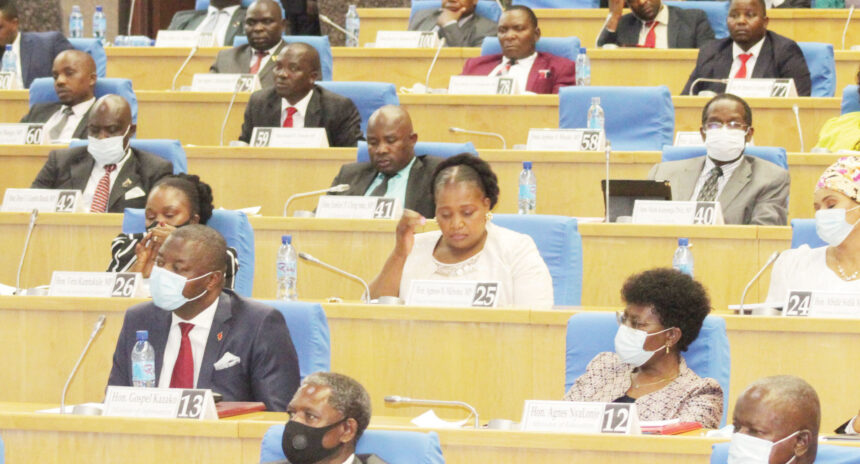
The bill has been appearing on the Parliament Order Paper for the current meeting of the House, which started on Monday.
According to the World Bank, given constraints on non-concessional external borrowing, short-term swap rollovers remain a key source of reserves, though the RBM has begun to wind down new foreign exchange swaps with non-residents in recent months.
The World Bank says RBM plans to increase purchases of foreign exchange from the market and conduct foreign exchange auctions with market-determined rates but that these plans are only proceeding slowly.
The pilot auction in January 2023 was cancelled due to insufficient interest by authorised dealer banks. A further auction held in June 2023 saw the participation of all authorised dealer banks and resulted in the new market selling price increasing to K1,063.86 per United States dollar.
“While this marks the first rate increase since May 2022, the spread between TT and bureaux Malawi Kwacha–United States dollar exchange rates remains large,” the Mem reads.
Before the current meeting of Parliament started, Leader of the House Richard Chimwendo Banda said lawmakers would table some bills.