








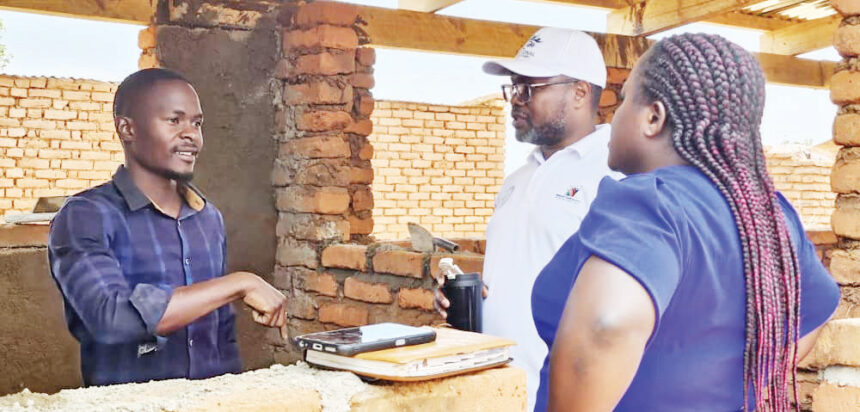
What began as a modest dream to connect adventure seekers with nature has grown into an eco-friendly campsite that is redefining how young Malawians see tourism.
On the outskirts of Mzuzu, the Adventures with Colby Expedition Company is an example of how enterprise, sustainability and youth ambition can meet.
With support from the Malawi Government-funded Youth Innovation Fund (YIF), the team transformed their idea into reality, using their grant to buy materials such as cement, timber, poles and iron sheets.
The project now employs eight people, four of them women, who have gained stable work and new skills.
When National Youth Council of Malawi (Nycom) officials visited the campsite recently, they found the first platform roofed and open to visitors and a community beginning to feel the benefits of youth-led innovation.
- Advertisement -
For founder Colby and his team, eco-tourism is a response to Malawi’s environmental and economic realities.
Their model promotes low-impact tourism and community participation, aligning with Malawi 2063 vision of Economic Diversification and Wealth Creation.
In Lilongwe, another youth-led idea is also taking shape. Madyo App, once a school project, is now a growing logistics business.
Early on, its founders struggled with limited capital and reliance on hired motorbikes, which made deliveries unreliable.
- Advertisement -
- Advertisement -
With YIF support, they have since purchased their own fleet, giving them independence, structure and room to expand.
Founder Mike Kachembwe says the change has given his team confidence to plan for sustainable growth and professionalise their operations.
“By doing so, Madyo App is ready to contribute to the goal of an inclusive and self-reliant nation where young people drive economic transformation,” Kachembwe says.
In Salima, creativity and tradition have found common ground through Akhada Baskets, an enterprise weaving economic opportunity into cultural heritage.
By building on local basket-making skills, Akhada is helping women and young people earn sustainable incomes while celebrating Malawi’s craftsmanship.
During a recent visit, Nycom’s Monitoring and Evaluation team saw how the workshop merges artistry with entrepreneurship.
Each basket carries both cultural identity and market value, reflecting the National Youth Policy’s vision of youth-led, sustainable livelihoods.
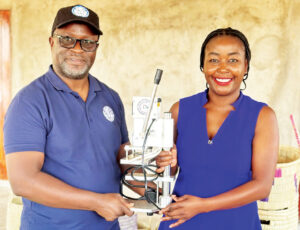
Through YIF support worth K11.5 million, Akhada Baskets used its first tranche to buy welding and branding machines, improving both production capacity and quality.
Further north in Chitipa, young farmers are changing perceptions of agriculture through Dope Farms, a piggery venture founded by Given Myaba and Donald Nyondo.
With YIF backing, the pair have built a modern piggery that can now house over 50 piglets, increasing both capacity and income.
“This milestone allows us to meet growing demand and create work for local youth,” Nyondo says.
In Blantyre, a similar story of innovation and persistence is visible at Kalubadini Garments Workshop.
Founded in 2018 after its owner noticed safety challenges on construction sites, the business began with a single second-hand sewing machine and a clear sense of purpose.
Officially registered in 2019, Kalubadini has grown into a diverse garment producer making safety wear, footwear, fashion items and soft furnishings.
With YIF support of K10.3 million, the workshop purchased two high-end machines that have boosted output and improved quality. It now supplies jerseys to St Andrew’s High School and employs eight young people.
“Our progress aligns with Nycom’s Strategic Plan, particularly Pillar One on Youth Economic Empowerment, which seeks to build a generation of productive and innovative young Malawians,” Kalubadini representatives said.
Kalubadini’s journey shows how determination and public support can transform small ventures into engines of local growth.
In Zomba, innovation takes a different form at Egg Care Innovations, founded by Christopher Trapence, who is redefining what small-scale manufacturing can look like.
Using a YIF grant of K4.8 million, Trapence began producing locally made egg incubators, creating both jobs and profits.
Within a month, he had manufactured 13 incubators, eight large units sold at K1.1 million each and five smaller ones at K350,000 each, earning over K5 million in revenue.
“This growth has transformed Egg Care Innovations from a one-man operation into a growing enterprise,” Trapence said.
The business now employs two technicians, improving efficiency and expanding production.
Once limited by slow processes and low profits, Egg Care Innovations has become an example of how targeted investment in youth enterprise can drive industrialisation and self-reliance in Malawi.
Across these ventures, Nycom’s Director of Finance, Enerst Mangani, says the council has implemented the Youth Innovation Fund swiftly and effectively.
“For the first time, we have seen a government project executed within months and with professionalism and diligence,” Mangani says.
Earlier this year, former Finance Minister Simplex Chithyola Banda announced in the 2025 national budget that the government had allocated K2billion to the Youth Innovation Fund.
The fund was launched by former president Lazarus Chakwera during the 2025 National Youth Summit, marking a renewed commitment to putting young innovators at the centre of national development.


