About 2,000 children are born with sickle cell anaemia annually in Malawi, research has shown.
Child health nursing lecturer at Kamuzu University of Health Sciences (Kuhes), Nestayi Kilembe, disclosed this in Lilongwe when Malawi joined the rest of the world in commemorating World Sickle Cell Day.
The day is commemorated on June 19 as one way of promoting awareness about the disease.
“About 10 percent of people in Malawi have been affected by sickle cell. This is why we are calling on the government and well-wishers to allocate more resources towards the management of the disease.
“We, as a country, need to do more, as we do in other areas such as HIV, so as to manage the disease. We need to increase budgetary allocations to the health sector to support the lives of people living with sickle cell,” she said.
- Advertisement -
The National Sickle Cell Support Group has since called for intensive awareness of the disease to ensure that more people are screened and treated accordingly.
Chairperson for National Sickle Cell Support Group Anderson Msamanyada said there is a need to promote sickle cell campaign awareness and invest more resources in sickle cell departments to mitigate the impact of the disease.
“Our medical system is not that much strong and we, as a country, are not well prepared for this disease and, so, we need to improve on this,” he said.
Sickle cell disease is an inherited blood disorder marked by defective haemoglobin and it inhibits the ability of haemoglobin in red blood cells to carry oxygen.
- Advertisement -
- Advertisement -
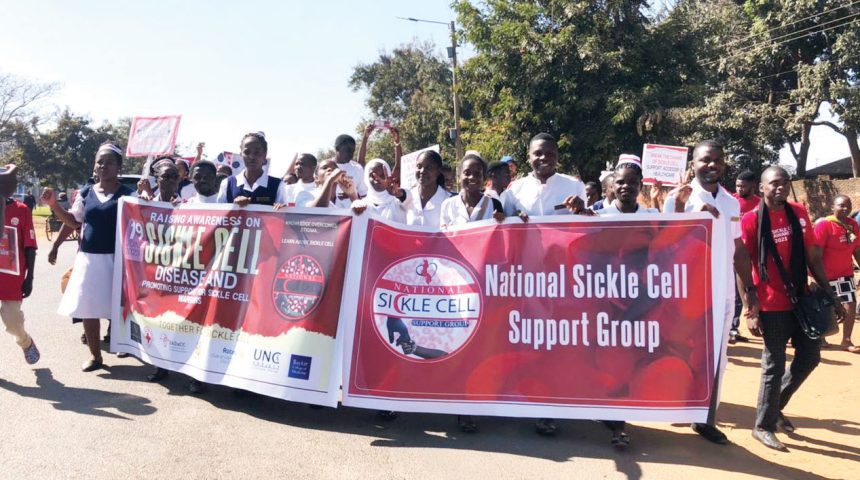
The National Sickle Cell Support Group, in partnership with Malawi Red Cross Society and nurses from Kuhes, yesterday organised a big walk and public awareness meetings in Lilongwe to sensitise Malawians to issues related to the disease.