Private sector players in the country have described the first quarter of 2024 as a mixed bag owing to persistent macro-economic challenges and a sluggish pick-up in business.
Top on the list of challenges faced by the sector are shocks the local economy has experienced such as shortage of foreign exchange, rising inflation, deteriorating buying power among the people and rising cost of borrowing.
In an interview, Malawi Confederation of Chambers of Commerce and Industry (MCCCI) Chief Executive Officer Daisy Kambalame said it became really hard to operate in such an environment, but there are also some positives.
“We’ve seen that there’s stability in power supply, so that has actually given some relief, but the floods also came with some disturbances. So, it is a bit of a mixed bag, because just when they’re fixing certain roads, you then have floods that actually destroy others.
“So, already you can see if you’re operating in that environment, it continues to provide challenges. And as a result, because of the drought, for example, most people’s disposable income has actually shrunk, which means our partners, our members, their customers don’t have as much disposable income as before. So, we know that they’re going through a difficult time, and I think that’s something that we will really observe,” Kambalame said.
- Advertisement -
President of the Malawi Union of Small and Medium Enterprises Barbara Banda said as an agro-based economy, the picture is not looking good in the sector because the rainfall patterns this year have not been as good as previously.
She said expecting below normal rainfall means that food security is also at stake and downstream industries like the transport sector will be affected because there is no produce to transport.
“The packaging industry will be affected. Jobs are also being affected in the agricultural sector. There are other changes as well; for example, we have seen policy changes in terms of duty that is being charged on second-hand motor vehicles, which has brought in a lot of these issues.
“That is a challenge for SMEs and it means that when that business is not working, it has impacts on the general public transport systems and even transportation of commodities because of over-reliance on imported vehicles,” Banda said.
- Advertisement -
- Advertisement -
She added: “Our demand always exceeds our supply, and this then means that shortage of forex continues to be with us, and it has a negative bearing on the manufacturing sector,” she said.

In a separate interview, Executive Director of the SME Chamber James Chiutsi said basically the first quarter was flat in business.
He said there was no growth of the economy which may be propelled by macroeconomic stability.
“We are also confident because of the cash injection that is coming into the economy through loans being given to small enterprises so we’re looking at that as something that will help our SMEs meet their dreams. They will actually be able to scale up their businesses. So, we remain hopeful in the three quarters within this year that we will see some modest growth in the economy,” Chiutsi said.
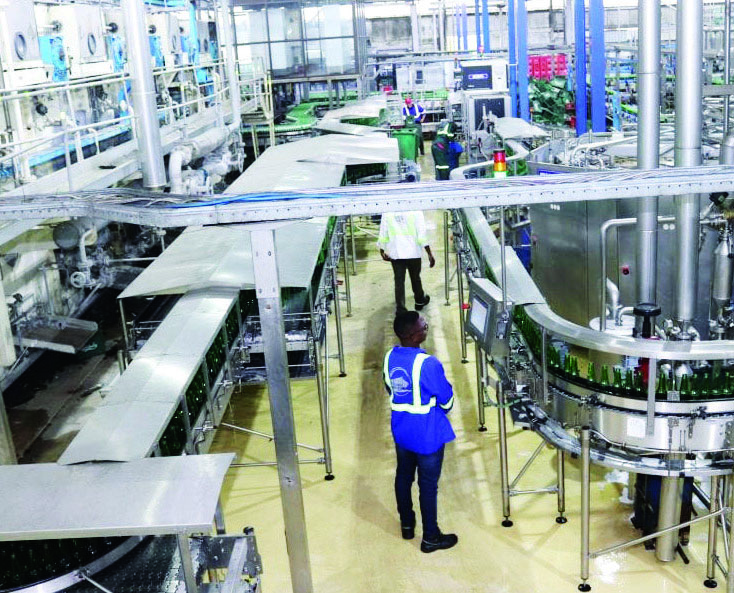
A recent Financial and Economic Review published by the Reserve Bank of Malawi indicates that the manufacturing sector is poised to grow by 4.4 percent in 2024.
The central bank highlights that in the manufacturing sector, the growth forecast for 2023 was adjusted down to 0.4 percent during the November 2023 estimates from 1 percent.