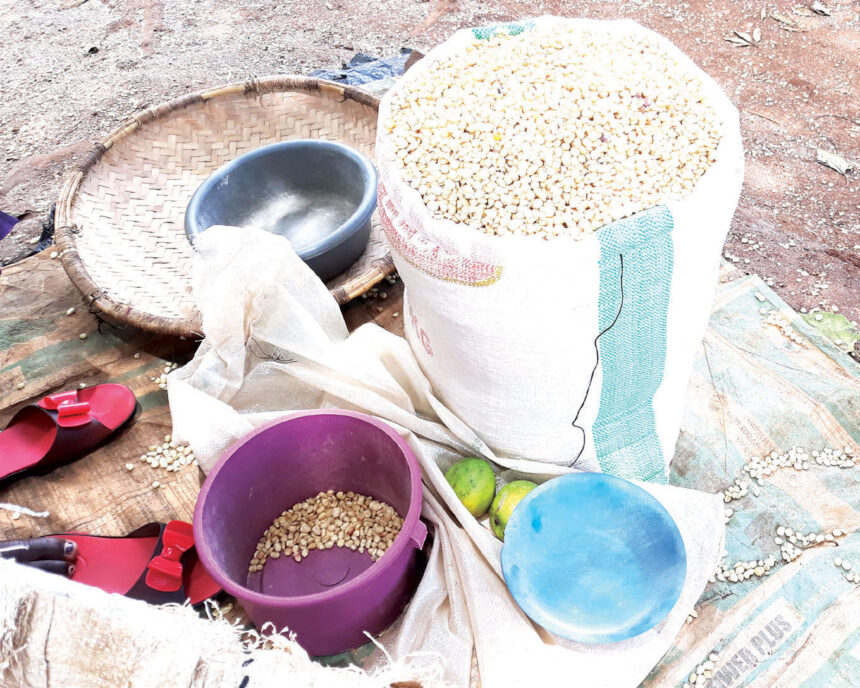
About 4.4 million people are at risk of facing hunger following an annual food security assessment in the month of June and mid- July this year.
A statement on the assessment issued Monday indicates that the assessment determines the number of people who are likely to be food insecure during the 2023-24 consumption year and the period the assistance would be required.
The assessment reports that during the 2023-24 consumption period, 4.4 million people will likely not be able to meet their annual food requirement, a figure representing about 22 percent of the country’s total projected population of 19.6 million.
“There is a 15 percent increase of those requiring food as compared to a similar number in 2022, which was at 3.9 million. Out of the 2023-24 food insecure people, 470,000 are from the four cities namely Mzuzu, Lilongwe, Blantyre and Zomba; and 3.9 million are in rural areas across the country.
“The number of [the] affected population in rural areas has increased by 23 percent from 3.1 million in the 2022-23 consumption year while urban areas have registered a decline by 25 percent from 627,571 people,” the statement reads.
- Advertisement -
According to the statement, disasters such as Tropical Cyclone Freddy, flooding and dry spells are some of the factors that have fuelled the problem.
“Farming input uptake during the 2022-23 agriculture season among the farming households was low, which has also affected agriculture production. The Third Round Production Survey by the Ministry of Agriculture has estimated maize production at 3,509,837 metric tonnes in the 2022-23 agriculture season compared to 3,716,479 metric tonnes in the 2021-22 agriculture season, representing a decrease of about 6 percent,” it reads.
Commenting on the matter, agriculture policy expert Leonard Chimwaza said the report testifies that there is a possibility of hunger in the country.
Chimwaza said the situation has come about due to the poor implementation of the subsidy programme by the Ministry of Agriculture and has since called on government to, among other things, declare a state of emergency so that the country can get adequate assistance.
- Advertisement -
- Advertisement -
“Let the government waive some expenditure lines and direct the funds towards the procurement of more food stuffs to distribute to people as relief food. The government and non-governmental organisations can run programmes on relief food provision.
“And, in the long term, the government should commercialise maize production through the private sector to supplement what small-holder subsistence farmers will produce. Expedite the process of bringing back the Agricultural Development and Marketing Corporation and privatise the implementation of mega farms so that it takes an inclusive business approach,” he said.