By Elvis Howahowa:
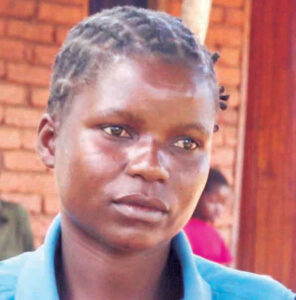
Pregnancy news, often received with joy by most women, came as a curse to Lukia Samiledi of Senior Chief Chamba’s area in Machinga District.
This is because the only nearby maternity wing at Chamba Health Centre was still not offering healthcare services, long after being closed in 2017.
The other nearest facility, St Luke’s Hospital, is located 14 kilometres (km) from Malosa in Zomba.
- Advertisement -

To make matters worse, the only way to get there for most expectant women is by hiring a motorcycle.
- Advertisement -
Samiledi, who became pregnant for twins in 2022, had to witness the death of one of her children during birth because Chamba Maternity Wing is failing to open its doors to serve over 1,000 women who require maternity services every year in Senior Chief Chamba’s area
“It all started with back pains on February 14 2023 and, being my first pregnancy, I was so anxious that I sought advice from my mother. Her response was that the baby was probably turning in the womb in readiness for delivery and, as time went by, the pains got worse, such that we were forced to hire a motorcycle taxi to take us to St Luke’s Hospital for assistance.
“When we were about to get to Chamba Health Centre, my water broke and that’s when I, my mother and the motorcycle taxi operator asked health personnel at the healthcare service facility to help us. One healthcare worker noticed that I needed assistance urgently but told us to proceed to St Luke’s Hospital. Fortunately, one healthcare worker agreed to help me deliver my babies,” she says.
“Unfortunately, the other one died in the process and I’m only remaining with this one,” Samiledi adds, while fondly snuggling her other child.
- Advertisement -
We understand that Chamba Maternity Wing has been failing to open for nearly eight years because of inconsistencies in construction guidelines of a septic tank by the Machinga District Health Office.
“Honesty, we are fed up,” a resigned Senior Chief Chamba says.
Member of Parliament for Machinga South, Grant Ndecha, weighs in on the issue, saying they used part of Constituency Development Fund allocations to help in constructing the facility but it appears that women are still bearing the brunt of lack of services.
This is because, on average, a motorcycle taxi costs a service seeker K14,000 to and from St Luke’s Hospital.
The development has riled Malawi Health Equity Network Executive Director George Jobe, who says pregnant women deserve easy access to healthcare services.
He says this is key to reducing the number of women and children that die due to pregnancy-related complications.
“Access to healthcare services is a human right and, as such, the government is under obligation to ensure that access to such services is eased. Best efforts have to be made in ensuring that women and children do not die in the course of seeking healthcare services,” Jobe says.

On his part, health rights advocate Maziko Matemba says the country should try its best to ensure that patients do not cover long distances to get to healthcare service delivery points.
“That is why we have been advocating for increased allocations to the health sector,” Matemba says.
Meanwhile, Machinga District Council Monitoring and Evaluation Officer Mirriam Mumba has said such problems would soon be a thing of the past as the Central Government has proposed an increase in the allocation of the Hospital Rehabilitation Fund for Chamba Health Centre.
The facility serves a population of 47,000 people.
The Ministry of Health has put safe motherhood at the centre of its focus, with the ministry’s spokesperson Adrian Chikumbe indicating that this is meant to ensure that women’s and children’s lives are safeguarded.
This emphasis is corroborated by line minister Khumbize Kandodo Chiponda.
“The Government of Malawi has, over the years, demonstrated high level political will to improve the provision of quality sexual and reproductive health services to its people with the aim of accelerating uptake of maternal and neonatal healthcare services in a bid to reduce high morbidity and mortality rates. This has been manifested through various policies and strategies being implemented by the Government.
“The set-up of the Presidential Initiative on Safe Motherhood within the President’s Office enhanced cooperation and coordination with other key partners including the Ministry of Health and other relevant stakeholders towards efforts aimed at reducing maternal and neonatal deaths in line with various strategies implemented by the country to speed up reduction of maternal and neonatal morbidity and mortality rates,” she says.
Fortunately for Malawi, some development partners have been helping it advance its safe motherhood cause.
For instance, World Health Organisation (WHO), in collaboration with the European Commission (EC), donated basic emergency obstetric care equipment and skills development materials worth $69,815 to the Ministry of Health. This is part of the partnership agreement that the Ministry of Health, WHO and EC signed in Malawi on February 15 2007.
The partnership is in relation to the memorandum of understanding which was signed between WHO and the Commission of the European Communities in the field of development which was signed on July 2 2004.
The aim of the partnership is to support Malawi Government’s efforts in reducing the high number of deaths due to pregnancy and child bearing.
At the time, the maternal mortality ratio stood at 984 per 100,000 and was among the highest in the world.
Clearly, every effort must be made to ensure that there is no life lost in the course of giving birth. More so because every life lost is one too many.