




By Wezzie Gaus:
The Malawi Electoral Commission (Mec) has called for continuous funding of electoral activities between elections, saying credible polls cannot depend on support that only becomes available as polling day approaches.
Mec Chairperson Justice Annabel Mtalimanja said development partners should treat electoral support as a continuous investment in democratic governance, particularly civic and voter education.
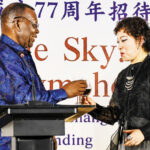
She was speaking during the Post-Election Review National Conference in Lilongwe, where stakeholders assessed the 2025 General Election and discussed preparations for the 2030 polls.
Mtalimanja said civil society organisations needed predictable funding to provide civic and voter education between elections.
- Advertisement -
“It is imperative for development partners to view electoral support as a continuous investment in democratic governance rather than assistance that begins shortly before polling and ends once results are declared,” she said.
She said political parties also needed sustained support for institutional development, policy formulation, internal democracy, leadership development and engagement with citizens.
United Nations Resident Coordinator Rebecca Adda-Dontoh also called for continued investment in Malawi’s electoral system, stressing the need to strengthen institutions responsible for safeguarding democratic processes.
The post-election review identified several areas requiring attention ahead of the 2030 election, including voter participation, misinformation and disinformation and weaknesses in internal political party democracy.
- Advertisement -
- Advertisement -
According to the review, 7,203,390 people registered for the 2025 General Election, representing 64.87 percent of the projected eligible voting population. Turnout among registered voters was 76.4 percent.
Independent candidates accounted for 39 percent of candidates in the 2025 election, which the review linked to weaknesses in internal party democracy.
Mtalimanja said stakeholders should move away from treating elections as isolated events and instead adopt a continuous electoral cycle approach.
“The quality of the 2030 General Election will depend significantly on what we collectively do between now and then,” she said.
She said preparations for the 2030 election had already begun and would include legal reforms, voter registration, civic education, procurement, technology, recruitment and training and institutional strengthening.
The commission said the findings would inform further consultations and electoral reforms ahead of 2030.