By Deborah Madeya:
His only dream, perhaps a life-long one, was to be given a chance to smile from ear to ear.
After 54 years of praying, hoping, praying and hoping again, John Mkwenda’s dream has materialised.
This is because Mkwenda, who is from Kadzuwa Village, Senior Chief Bvumbwe, in Thyolo District underwent surgery for cleft lip and cleft palate.
According to Centres for Disease Control and Prevention, cleft lip and cleft palate are birth defects that occur when a baby’s lip or mouth do not form properly during pregnancy.
- Advertisement -
It further says other people are born with an opening at the roof of the mouth, a condition known as cleft palate. Cleft palate occurs alone or as part of a genetic condition or syndrome, with symptoms arising from the opening in the mouth. These include finding it difficult to speak, with even more problems when feeding.
The global body further says people often have problems in eating, drinking and babies often choke when suckling. For those born with both cleft lip and palate (orofacial cleft), their situation can be more challenging.
The centres also say surgery restores normal function with minimal scarring and that, if required, speech therapy helps correct speaking difficulties.
The World Health Organisation indicates that over 600 babies are born with cleft lip, palate or orofacial cleft worldwide.
- Advertisement -
- Advertisement -
In Malawi, the problem is said to affect thousands of people.
While countless Malawians with the condition have nowhere to go, others, notably Mkwenda, have been lucky in that they have undergone surgery after some organisations came to their rescue and funded the whole process.
“I can now have a proper interaction with people after getting an operation for my cleft lip,” he says.
Mkwenda, now 54, was born with an opening in the upper lip.
One of the immediate effects of that condition was low self-esteem.
“Apart from having hearing and speaking problems, I had crooked teeth— which prompted people’s ridicule.
“Whenever I tried to initiate conversations with people, they could take turns to ridicule my physical appearance,” he says.
His situation changed for the better in May 2017, when he was operated on, courtesy of Operation Smile.
Operation Smile is a charity medical organisation that provides free surgeries to patients with cleft lip. It started its operations in Malawi in 2012 and operates on over 30 patients per month.
“I am now happy because all the challenges I was facing have gone away, such that smiling is no longer a new phenomenon to me,” he explains.
“When I heard about the surgeries that Operation Smile Malawi was offering in 2017, I thought of giving it a try. I was consequently operated on at Zomba General Hospital. It only took 45 minutes in the theatre to get my lips repaired. I then waited at the hospital for two weeks for my lips to heal. When I went back home, everyone was surprised with my new look. I could even afford a smile,” he narrates.
After getting a new lease of life, Mkwenda decided to work as a volunteer for Operation Smile Malawi so that he could motivate more people with cleft lip.
So far, Mkwenda has managed to get four people operated on after going deep into the villages of Blantyre to teach people that cleft lip can be repaired.
Operation Smile officials indicate that surgeries for patients with cleft lip are normally done from six months and everyone is eligible.
Fortunately, Malawi has a number of organisations that operate on patients with cleft lip free of charge, one of which being Operation Smile.
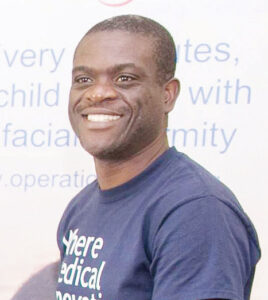
The organisation’s programme manager, Ibrahim Nthalika points out that there is hope for people with the two conditions in Malawi.
“We thank well-wishers, both in Malawi and outside, who have been funding the initiative,” Nthalika explains.
He, however, says there is a need for specialists in Malawi.
“We do not have enough cleft lip and cleft palate specialists in Malawi,” the official explains.
Operation Smile records indicate that 459 patients have undergone surgery between July 2022 and June 2023.
Fortunately, the Government of Malawi is doing something about the situation.
Ministry of Health spokesperson Adrian Chikumbe indicates, for example, that they have been investing in capacity building, citing human resources as one of the areas they have been focusing on.
“We have been training local doctors with the aim of building their capacity to handle those with cleft lip and cleft palate. That way, we will ease the pressure on health personnel,” Chikumbe explains.
For those wishing to establish the truth on this, Queen Elizabeth Central Hospital is the place to go. The referral hospital has a cleft lip and cleft palate specialist who, day in day out, thinks about making patients smile— if not today, at least some other day.