




By Nelson Gonjani:
At Dambo Primary School in Senior Chief Lukwa’s area in Kasungu District, a shortage of classroom blocks has forced some learners to attend lessons in a kitchen, a storeroom and dilapidated structures.
One of the classroom blocks has had its roof blown off several times by strong winds, leaving learners attending lessons in fear and, at times, forcing them to stay away from school during bad weather.
A 13-year-old Standard 7 learner, whom we shall call Khama, says the conditions are affecting learners’ academic performance.
- Advertisement -

“We are being demotivated by the learning environment. We are always in fear. This classroom block has been blown off several times and we are always afraid,” he says.
- Advertisement -
Khama says the situation has also contributed to school dropouts, particularly during the rainy season.
“When it rains, some learners who usually attend classes under trees become reluctant to come to school. As a result, they start thinking about dropping out of school,” he says.
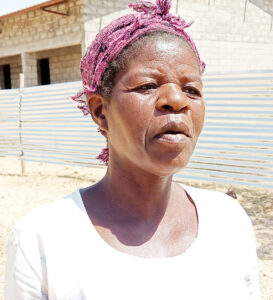
Parents and Teachers Association Chairperson Martha Banda says the situation is a concern for the school community.
“We admit that things are not okay here. Sometimes learners are sent home when it rains, and the same happens when there is other bad weather,” she says.
- Advertisement -
Dambo Primary School is a full primary school, offering education from Standard 1 to Standard 8. Banda says the community previously mobilised resources to construct a classroom block to address the shortage.
However, strong winds later damaged the structure, blowing off its roof.
“To complement the government’s efforts, we joined forces as a community and constructed the classroom block. However, years after completing the construction, it was blown off by heavy winds.
“This has happened several times since the block was built 12 years ago. It is still being used, even though learners live in fear because this area is prone to strong winds,” she says.
Banda says the school also needs more teachers’ houses.
“Teachers’ houses are another major challenge. The school has 14 teachers, but only six live in staff houses. This results in some teachers reporting late, which also affects the start of lessons,” she says.
The community is also encouraging residents around the school to plant trees as part of efforts to reduce the impact of strong winds.
“We are encouraging people surrounding the school to plant trees. As you can see, there are tree seedlings that have recently been planted around the school,” Banda says.
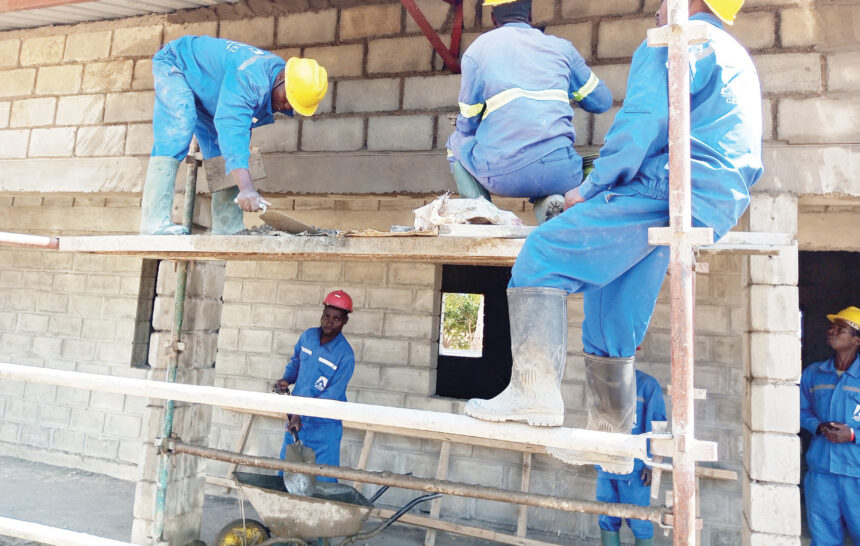
Following the repeated damage to the classroom block, the government, through the National Local Government Finance Committee (NLGFC), under its Regional Climate Resilience Programme Phase II (RCRP-2), with support from the World Bank, is constructing a climate-resilient classroom block at the school.
The project aims to strengthen Malawi’s resilience to water-related climate shocks, including floods, droughts, tropical cyclones and climate-related rainfall variability.
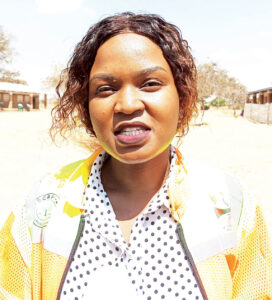
Speaking after touring the project, Kasungu District Council’s RCRP-2 Engineer Cindy Ngwira said the new structure was designed to withstand climate-related shocks.
“The construction of this classroom block came to Dambo Primary School after the old classroom block was blown off by strong winds.
“This construction project is stronger, safer and more resilient to climate shocks such as strong winds. Construction started on July 13 and is expected to be completed by October 1,” she said.
For Khama and Banda, the project is expected to improve learning conditions at the school.
“This is a timely intervention. Our pupils will be highly motivated because of the improved learning environment,” Banda said.
Meanwhile, Headteacher Jonathan Mhango says the project could also contribute to increased enrolment.
“Before this project, we had an enrolment of about 580 pupils. After the project, we are talking about 650 pupils, and we believe this increase is because of the project,” he said.
Under RCRP-2, Chamkango, Kalanga and Dambo primary schools in Kasungu District are among the beneficiaries.
RCRP-2 is a five-year, $240 million project being implemented by NLGFC, the Department of Disaster Management Affairs and other government agencies.