



By Farai Shawn Matiashe:
Agriculture remains underfunded in Africa as governments struggle to deliver on decades-old promises to dedicate 10 percent of national income to agriculture.
But for many farmers, mobilising finance is only half the battle. Reaching smallholder farmers in the last mile with the little available finance remains a challenge. Some of the funding is heavily politicised, less affordable and inaccessible to many farmers.
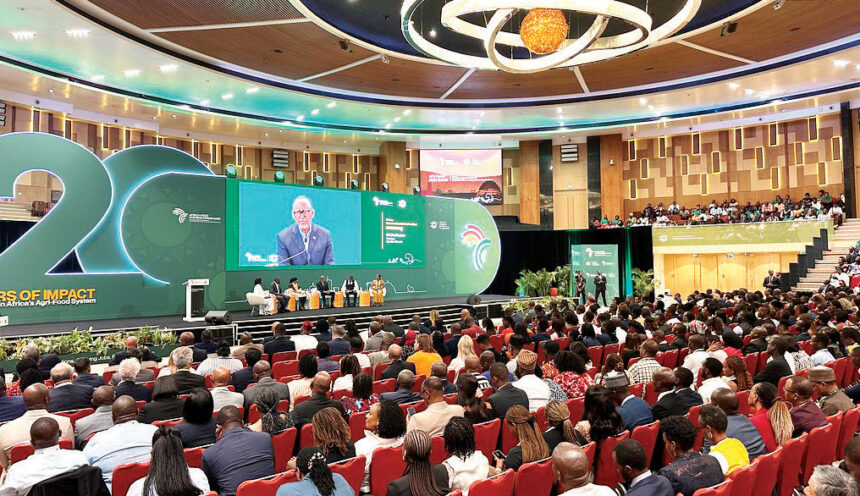
At the Africa Food Systems Forum in Kigali, Rwanda, from 31 August to 4 September, farmers are calling for cheaper and more accessible grants and loans, removal of bureaucracy, and more funding from both public and private sectors.
- Advertisement -

The Forum comes after the Comprehensive Africa Agriculture Development Programme (Caadp) that just came into force and the Kampala Declaration, a legal commitment by African leaders to fund it by mobilising $100bn in public and private finance, including committing 10 percent of national income to agriculture.
- Advertisement -
Caadp is a 10-year plan to end hunger and reduce poverty by boosting productivity, climate resilience and environmental sustainability, cutting food waste, and increasing intra-African trade.
Governments leaving smallholder farmers behind
Daniel Mwendah M’Mailutha, president of the World Farmers’ Organisation, which represents farmers around the world, said that of the little resources that are going to agriculture, not everything is reaching the farmers.
“A lot of it is lost in the system. It could be a misappropriation. If you talk about input subsidies, in some countries, they are just looking at, let’s say, chemical fertilisers. You would need capital fertilisers, but maybe you have not looked at the soil health. So, it is a blanket application,” he told IPS.
- Advertisement -
“In the other instance, these inputs are not really at the grassroots. Some farmers spend a lot of time travelling to pick up a bag or two of fertilisers. Fertilisers get to the farmers late, and given that farmers operate by seasons, if the fertiliser comes late, that season is lost.”
Smallholder farmers make up 70 percent of the world’s 570 million farms, according to the United Nations’ Food and Agriculture Organisation.
They produce 90 percent of Africa’s food and are the backbone of rural economies. In Sub-Saharan Africa, family farms employ around two-thirds of the workforce, 60-65 percent, while agriculture accounts for at least 20 percent of the region’s GDP.
Babafemi Oyewole, chief executive officer (CEO) of the Pan-African Farmers’ Organisation (Pafo), which represents over 80 million African farmers, said farmers invest their personal funds in their farms every year.
“What Africa does not understand is that farmers make the largest investment by themselves. They invest their money, time and labour. Yet, there is no social protection for them,” he said.
Smallholders are the biggest investors in agriculture, globally spending $368bn a year of their own income on climate adaptation and natural resource management.
Yet they struggle to access finance, getting less than 1 percent of what they need to build resilience and adapt to shocks.
Some African countries are making progress
Under the African Union (AU)’s Caadp framework, which originated with the 2003 Maputo Declaration and was reaffirmed in the 2014 Malabo Declaration, African nations committed to allocating at least 10 percent of their national public spending to the agricultural sector.
But many African countries are failing to meet this commitment. Only a handful of countries have met the target inconsistently since 2004.
Malawi, which has faced hunger because of climate shocks, is at 9 percent of the required 10 percent, according to the government.
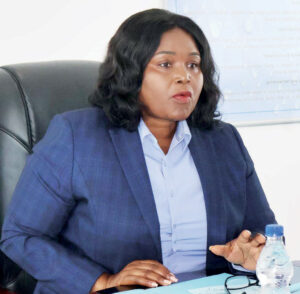
Roza Fatch Mbilizi, Malawi’s Minister of Agriculture, said it has been difficult for some African countries, including Malawi, to mobilise resources to fund agriculture.
“We have to upscale financing, especially from the government, because it has to start with us,” she told IPS.
“So, in our budget, agriculture has the highest funding of about 9 percent. And AU requires us to go to 10 percent. So we are almost there.”
Mbilizi said that donor funding complements domestic resources.
She said Malawi is focusing on commercialisation, mechanisation and up-scaling irrigation to be at the center of the agriculture sector and reduce reliance on rain-fed agriculture.
Mbilizi said her country is crafting and enforcing favourable policies for the private sector to invest in agriculture in Malawi, as well as promoting youth-driven agriculture powered by young people who constitute 78 percent of the country’s population
Private investment remains alarmingly low, with only 3 percent of private investment targeted at the sector, considerably less than the 10 percent global average.
Call for farmers to unite
Despite the vast expanse of arable land in Africa and abundant water resources, Africa spends between $70 billion and $100 billion every year importing food from other parts of the world.
Joseph Gausi, a director at the Civil Society Organisation Nutrition Alliance, said access to finance and facilities such as the cold chain remains a challenge in Malawi.
“The majority of our people who are involved in agriculture do not have adequate financing to do meaningful production,” he said.
“For them to upscale to commercial farming, there has to be a serious investment in facilities and technologies.”
The Malawian government runs a subsidy programme where farmers access inputs like fertilisers and seeds at discounted prices.
But Gausi says that though the government invests a lot of money in the programme, some farmers fail to access the inputs because of politics.
“It is a politically motivated programme. Politicians use it to solicit votes in rural areas,” he said.
Gausi said farmers must come together into cooperatives and speak with one voice, demanding equal access to affordable loans and grants.
“We need to create institutions that are available to farmers that can provide low-interest-rate loans to young farmers and women,” he said.
M’Mailutha said farmers need to speak in one voice and start organising from the grassroots level.
“We see a lot of fragmentation in farmer voices across Africa, within countries where distinct entities claim to speak for farmers,” he said.
“A lot of banks and credit institutions will say that farmers are high risk because their transactions are not known. They conduct a lot of their transactions in the dark and in cash. So, we should have platforms that bring farmers to light.”
Oyewole said African governments should work hand in hand with the private sector to increase funding to farmers so that they can boost output to reduce reliance on food imports.
“We are advocating for development partners and the government to send the money directly to the farmers through their organisations,” he said.
Elizabeth Nsimadala, president of the Eastern Africa Farmers Federation, which represents farmers in the East Africa region, said African governments must work with farmer organisations to ensure every dollar counts.
“This means dismantling the barriers that prevent smallholders from accessing the finance they need to build thriving businesses. It means using public finance to unlock private investment, including lending at interest rates and providing affordable credit and agricultural insurance,” she said.
“And it means working with farmers’ organisations to get finance to where it will have the most impact, supporting them to adopt practices that will build resilience, like using organic fertilisers, planting a greater variety of locally adapted crops and better water management.”—IPS