



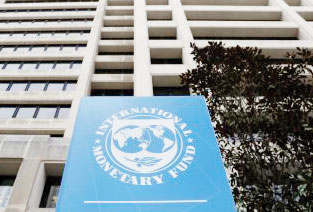
All eyes will be on Georgetown, Washington DC, United States of America, today when the International Monetary Fund (IMF) Executive Board meets to decide Malawi’s Extended Credit Facility (ECF) fate.
The all-important IMF Board meeting comes at a time Malawians are beginning to feel the full weight of last week’s 44 percent devaluation of the Kwacha.
The Executive Board meeting follows a Staff-Level Agreement which Malawi reached with the IMF Mission on September 21 this year.
Like in any other meeting, the expected outcomes are two: ‘Yes’ or ‘no’.
- Advertisement -


Economics Association of Malawi (Ecama) newly elected President Betchani Tchereni said, as much as Malawi is excited that it would get $174 million, it is not everything that the country needs.
- Advertisement -
According to Tchereni, what is crucial is the support that other multilateral and bilateral institutions will bring to Malawi in the aftermath of getting the ECF.
The Ecama chief said failure to secure the ECF would spell disaster for Malawi, as it would mean missing out on the $174 million IMF package as well as support that may come from bilateral and multilateral institutions.
“But I am hopeful, and I am sure, that they will bring to us what we have been hoping for,” Tchereni said.

In an interview on Monday, European Union (EU) Ambassador to Malawi Rune Skinnebach said the ECF would mean both good news and bad news for Malawi.
- Advertisement -
“Good news because Malawi will begin to restructure its economy [for it] to become more sustainable to live up to the expectations that [are] indicated in Malawi 2063 [vision] but also to know the criteria of an economy; an economy that should be self-sustainable; [an economy] that should embrace private initiatives that should foster development of the country.
“It’s a project which we can do our utmost, or we will do our utmost, to support. We will try to cushion the negative effects of the devaluation by front loading as much as we can, hopefully around 60 million Euros in foreign currency. And, of course, it will allow us, alongside other development partners like the World Bank— who have the DPO— to sit towards budget support for Malawi,” Skinnebach said.
According to Skinnebach, the ECF will be bad news because it comes at a price.
“It is like medicine. It doesn’t taste well but you need to swallow it to get better. Easier said than done when the price of fertiliser may be affected by this. It will be painful but I think it’s necessary. We will do all we can to cushion the effects of these through our social cash transfer [programme],’ Skinnebach said.
He added that there would also be an effect on the government as the country enters the election period.
“They need to stay on track now. It’s a four-year programme and it requires the government to continue to demonstrate fiscal discipline; to continue to make constant improvements on public finance management and meet the benchmarks required.
“This is going to be painful for government but it is necessary because the main attraction of the ECF is that it could reassure investors±— it would allow investors— to say we can now invest in Malawi because things are on the right track and there is a better element of predictability,” Skinnebach said.
Speaking at the end of the IMF Mission in September, IMF Mission Chief for Malawi Mika Saito said the Staff Level Agreement for the four-year $174 million ECF Programme is subject to IMF Management and Executive Board approval and receipt of the necessary financing assurances by Malawi’s partners and creditors.
“The authorities continue to pursue good faith negotiations with commercial and official bilateral creditors and are in arrears on commercial debt while these discussions continue.
“The prospective ECF-supported programme will aim at restoring macroeconomic stability, building a foundation for inclusive and sustainable growth, addressing weaknesses in governance and institutions and strengthening resilience to climate-related shocks,” Saito said.
She added that fiscal policy would aim at achieving a debt-stabilising primary balance in the medium term through a package of expenditure adjustment and revenue mobilisation measures.
According to Saito, the authorities are committed to applying fiscal discipline, containing domestic borrowing and improving public financial management.
While commending the authorities for reaching a Staff Level Agreement with the fund, United Kingdom’s Foreign, Commonwealth and Development Office (FCDO) Deputy Economist, Nick Lea, said finalising the agreed prior actions before the decision point at the IMF’s mid- November Board meeting is crucial, as is carrying out other important reforms to secure potential budget support.
Lea, however, said although a new IMF programme would provide crucial fiscal and foreign exchange support, development partner funds alone would not solve Malawi’s significant economic challenges.
“For Malawi to catalyse the growth it so desperately needs, it must attract the type of rules-based domestic and international investors who can drive export growth and export diversification within a predictable and fair business environment. The latter is critical to unleash the power of the private sector,” Lea said.