By Madalo Haji, psychosocial counselor:
As Malawi welcomes home citizens displaced by xenophobic violence in South Africa, there is a painful reality that many of us are overlooking: for some returnees, coming home does not feel like coming home at all.
Among the returnees who arrived in the country this week was a man clutching a pillow with determination. To many people, it was just a pillow.
To him, it appeared to be much more, perhaps the last remaining symbol of security, identity and belonging in a life that had suddenly been turned upside down. The image was striking and difficult to ignore.
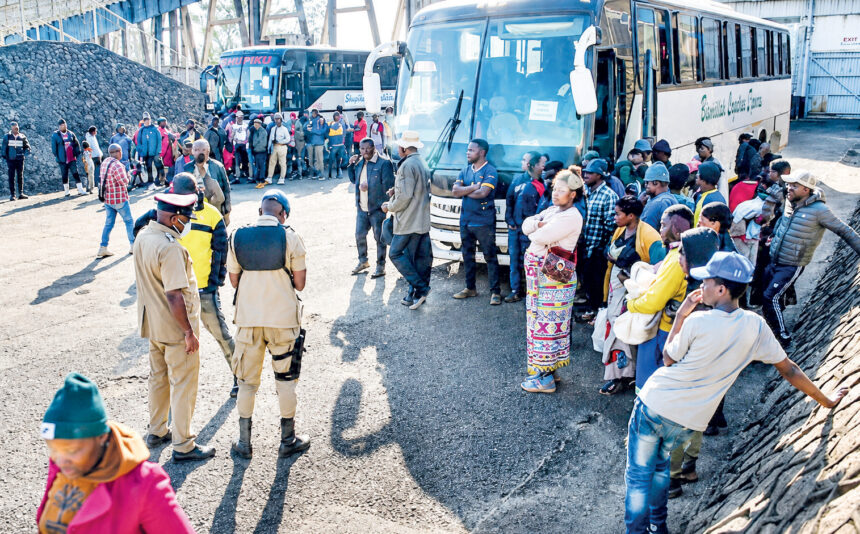
The faces of many returnees told a similar story. They carried expressions of sadness, fear and uncertainty. These are people who had built lives in South Africa, some for more than a decade.
- Advertisement -
Others spent years working, raising families and establishing social networks. For many, South Africa had become home.
Now they have returned to Malawi with little or nothing.
We, Malawians, naturally celebrate the fact that they escaped with their lives.

However, survival alone does not erase the trauma of losing everything.
- Advertisement -
- Advertisement -
Many of the returnees have lost their possessions, their livelihoods and, in some cases, their sense of identity. Some have lost contact with family members back home and may struggle to trace their villages after years of staying away.
Others no longer have the support systems they once relied upon.
The government’s responsibility to repatriate citizens safely is commendable.
However, bringing people across the border is only the first step. The greater challenge begins once they arrive in Malawi.
Many returnees are being dropped off hundreds of kilometres away from their home districts. Some come from Thyolo, Zomba and Mangochi while others are from Mzimba and other distant parts of the country.
Where do they go from here? How does a person start over after losing everything?
As a psychosocial counsellor, I am particularly concerned about the invisible wounds many of these individuals carry. Trauma does not always leave physical scars. The fear, humiliation and helplessness experienced during xenophobic attacks can have lasting psychological effects. Anxiety, depression, sleeplessness, recurring memories and a loss of hope are common responses to such experiences.
Unfortunately, mental health needs are often overlooked during humanitarian crises. We focus on food, shelter and transportation, all of which are essential, but forget that emotional recovery is equally important.
What is even more troubling is that many returnees may still view South Africa as their best hope for survival. Given the opportunity, some will likely return despite the dangers they faced. That reality speaks volumes about the economic hardships that continue to push Malawians to seek opportunities elsewhere.
We should not judge them for that. Instead, we should ask ourselves why returning home feels more frightening than returning to a place where they were violently targeted.

In many ways, some of these returnees resemble refugees in their own country. Not because they crossed an international border, but because they have returned to a place where they feel disconnected, unsupported and uncertain about their future. They have lost not only possessions but also stability, community and, in some cases, their sense of belonging.
As a nation, our response must go beyond sympathy. These individuals need practical support, including temporary shelter, economic assistance, family tracing services and access to psychosocial care.
Communities must embrace them, not stigmatise them. Faith groups, civil society organisations, government agencies and ordinary citizens all have a role to play.
The same compassion we extend to people displaced by war and natural disasters should be extended to fellow Malawians who are returning from xenophobic violence. Their suffering may be less visible, but it is no less real.
If we truly believe that home is where one finds comfort, dignity and acceptance, then we must ensure that those returning home can find all three.