consumption support
Once viewed in abstract terms, poverty finally has a face—that of the Mangochi child.
This is because 60.5 percent of children in Malawi—that is, those aged between zero and 17 years—are, according to a 2023 United Nations Children’s Emergency Fund (Unicef) report, multi-dimensionally poor.
In Dedza District, the rate stands at 78 percent, in Machinga it is at 76 percent while in Salima it is pegged at 74 percent.
The lowest rates are found in Mzuzu City, at 18 percent, and Blantyre City, pegged at 20.4 percent.
The reason Mangochi has become the new face of child poverty in Malawi is simple; nearly 700,000 children live in abject poverty there.
- Advertisement -
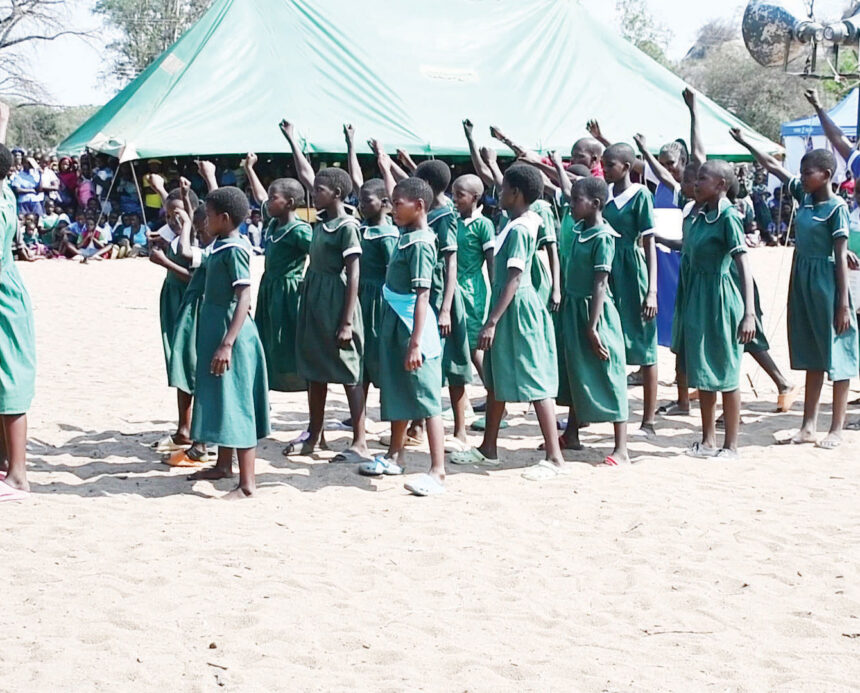
This was revealed at a Day of the African Child event which Mangochi District Council officials organised.
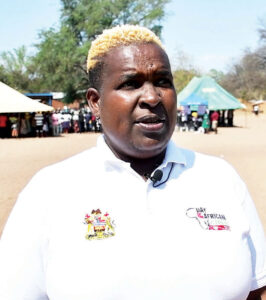
Confirming the statistics, the district’s social welfare officer Harvey Mbwezo attributed the problem to factors such as child marriages, unintended pregnancies, hunger and absent fathers.
“Most of the girls here marry early but their marriages don’t last.
“Consequently, a lot of children grow up without fathers and this has had far-reaching consequences,” Mbwezo pointed out.
- Advertisement -
- Advertisement -
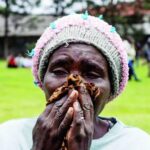
On our way to the event, which took place at Mkope Primary School ground, 250 metres south of Mangochi Central Business District—otherwise known as Zero Point—we met over a dozen women who were waiting to receive their monthly cash transfers at Nabale Trading Centre.
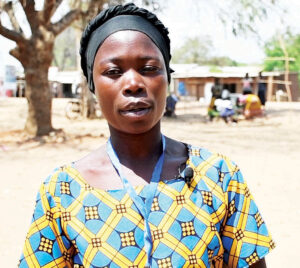
When we met with some of them, we learned that they were beneficiaries of a social cash transfer programme being implemented by Yamba Malawi, an organisation that is working to find solutions to the problem of child poverty in the area.
Emily Guma from Mwalembe Village, Traditional Authority Nankumba, in Mangochi District is one of the beneficiaries of the programme.
She recalled how hard life was.
She was referring to the time before she was earmarked as a beneficiary of the poverty alleviation initiative.
“Things are getting better. I have established a fish business and I can provide for my child’s needs.
“As such, I’m thankful to Yamba Malawi for this initiative,” Guma explained.
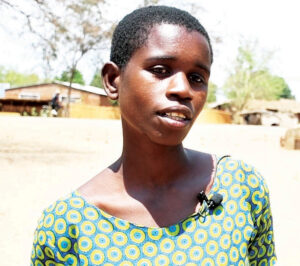
Clare Kamkwalala from the same village was also elated to be getting her seventh monthly consumption support cash transfer.
She indicated that she was into the trade of selling farm produce, such that she was planning to build a house in the future.
Another beneficiary, Mary John, said she was finally meeting her child’s nutritional needs because of the social safety net programme by the firm.
Weighing in on the issue, Yamba Malawi District Coordinator for Mangochi, Ellena Mphongozidana, said the organisation was alarmed by high levels of child marriages.
She said such cases were fuelling child poverty.
“We wanted to do something about the problem. That is why we have targeted around 1,717 women in this district.
“We give them consumption support cash transfers of K34,000 each and K515,000 for establishing businesses. We are also training them in business management to ensure that they are able to support themselves once this program ends,” Mphongozidana stressed.
In the analysis of the child poverty conducted in 2020, Unicef and the World Bank warned that any progress made in recent years to address the problem of child poverty was worryingly slow-paced, unequally distributed and at risk due to the economic impact of the Covid pandemic.
The two organisations went on to say that although children made up around a third of the global population, around half of the people who were extremely poor were children.
They added that children were twice as likely to be extremely poor as adults.
Unicef and the World Bank added that youngest children are the worst off and that nearly 20 percent of all children below the age of five in the developing world lived in extremely poor households.
For such children, life is, no doubt, akin to being thrown in a furnace and being left for dead.