
By Imam Wali:
When Madalitso Banda walked out of Dedza Prison on July 18, 2023, she carried a tailoring certificate and a heart set on a fresh start. But the five years she served for impersonating a nurse at Dedza District Hospital had not erased the memories of her neighbors in Kathumbo Village under Traditional Authority Malumo in Ntchisi. Instead of a welcome, she found cold shoulders.
“The friends even members of the church abandoned me yet all I wanted was a fresh start and their forgiveness since I had let them down. They did not know the prison had transformed me. I have also been forced to change the church,” Banda recalls.
The resentment was so volatile that Banda was eventually forced to flee her home, becoming a stranger in a new land in Lilongwe just to survive.
Her story was once the standard for ex-offenders in Malawi. However, a shift within the Malawi Prisons Service (MPS) is beginning to change the narrative through the Restorative Justice and Peace Building (RJPB) initiative. The system is moving away from mere punishment toward a philosophy that values reconciliation as much as rehabilitation.
- Advertisement -
The successful reintegration of Zigele Matiki, from Mpalare Village under Senior Chief Kasumbu in Dedza, serves as a blueprint for this shift. After serving ten years for manslaughter, Matiki returned home in 2024, not to face a lynch mob, but to find peace. Her case proves that sustainable justice requires more than a jail cell as it requires a conversation.
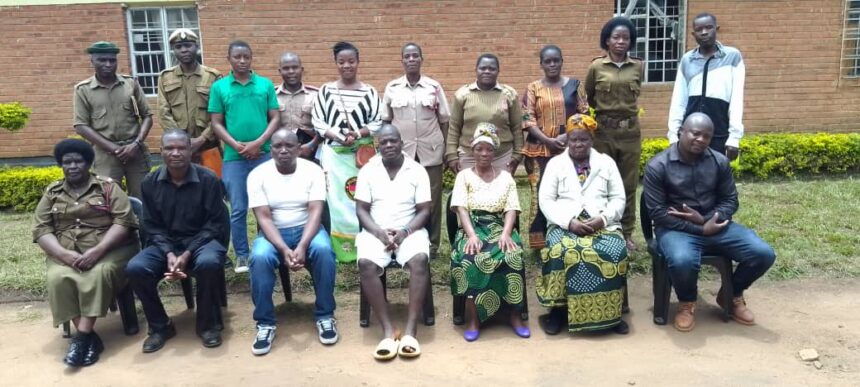
Before her release, prison officials facilitated a dialogue between Matiki and her late husband’s relatives to ease local tensions.
“The community welcomed me back because of that mediation. I found peace before I even stepped foot outside because the one I had wronged had forgiven me. This was not something I was expecting.” Matiki explains
Despite these successes, experts warn that restorative justice is not a magic wand. Chimwemwe Mike Shaba, Officer-in-Charge at Dedza Medium Security Prison, acknowledges that many releasees still avoid their homes for fear of enmity and angry people.
- Advertisement -
- Advertisement -
There is also the risk of re-traumatising victims. Priscilla Gowela, who forgave a man for stealing her fertilizer, admits her forgiveness is conditional: “I just hope he is a changed guy.” For others, like Damiano Master, currently serving four years for grievous harm the hope is that a productive conversation with his victim today will lead to a normal life tomorrow.
Beyond fear, there is the issue of resource scarcity. For mediation to work long-term, ex-offenders need the tools to remain honest. The MPS continues to face shortages in vocational materials needed to turn prison-learned skills into sustainable village businesses.
The data, however, remains encouraging. The reoffending rate has dropped from 30% to 20% since the project began. Over 981 inmates participated in victims-offender reconciliation sessions have been conducted nationwide with more than 2,000 prison officers have been trained in restorative justice.
This shift marks Malawi’s tangible commitment to SDG 16—the global goal for Peace, Justice, and Strong Institutions. By moving the focus from the cell block to the village square, the country is proving that ‘justice for all’ isn’t just about legal representation; it is about rebuilding the social fabric so that reform actually sticks.

Steve Meke, Malawi Prison Service Public Relations Officer, notes that the service now quantifies success by the number of successful reintegrations rather than just the number of arrests.
“In terms of metrics we quantify the number of successful reconciliations against unsuccessful reconciliations. In addition we also quantify the number of public awareness campaigns per quarter or year. And we also look at the number of inmates’ who have successfully reintegrated against unsuccessful reintegrated,” he says
He adds that the MPS has partnered with Prison Fellowship Malawi to strengthen these interventions.
Meke notes that dialogue sessions are inclusive, allowing victims to bring relatives and community leaders to ensure all parties are prepared for the process.
For this peace to last, advocates argue it must be codified into law. Alfred Munika of the Paralegal Advisory Services Institute (PASI) promotes diversion moving minor matters out of courts and back into villages where restoration happens through repayment.
“Victims often do not want punishment they want their property back, not just punishment pointing to Section 161 E of the Criminal Procedure and Evidence Code as a foundation for informal reconciliation.” Munika says
He also emphasises that traditional leaders must be targeted in reintegration efforts to prevent the labeling of ex-offenders as permanent suspects.
“Malawi needs specific regulations on how to implement diversions as means of restorative justice. Community structures such as community policing, Area Development Committee (ADC) and Village Development Committee (VDC) to be provided with capacity building of justice processes for them to spearhead crime prevention efforts,” Munika notes
Victor Mhango, Executive Director of Human Rights Education, Advice and Assistance CHREAA, adds that this shift makes economic sense.
“It reduces prison overcrowding and lowers recidivism rates, resulting in long-term savings for the government. Successful reintegration reduces the likelihood of reoffending and allows them to rebuild their lives.,” he says.

Mhango calls for a multi-sectoral approach to empower community-based structures to facilitate dialogue.This includes strengthening legal frameworks, training judicial officers and community leaders, and empowering community-based structures to facilitate dialogue.
Frank Namangale, spokesperson for the Ministry of Justice, says restorative justice should be acredible, fair, and widely accessible pathway to justice.
“We are committed to ensuring that restorative justice is accessible to all, including marginalised and vulnerable groups such as women, youth, persons with disabilities, and those from disadvantaged communities.
“We are expanding the use of restorative justice programmes as an alternative to custodial sentences, particularly for non-violent offences. Restorative justice emphasises accountability, dialogue, and reconciliation between offenders, victims, and communities.” Namangale explains.
The success of these initiatives provides the evidence needed to overhaul Malawi’s legislative framework. To move from individual success stories to systemic change, the Prisons Act must be amended to provide a legal mandate for restorative justice transforming these practices from optional extras into permanent, funded rights.