A powerful poem presented by a juvenile that Saturday, whose entry started from the sleeping units, was evident of the immense talent at the reformatory centre.
Clad in the usual white prison attire, his gentle walk spoke volumes of a soul of one who had done proper tryouts to serve a poem meant to not only entertain the visitors but also share the message of the challenges they go through.
Through his verse, the juvenile who has spent some years here, managed to express himself and share stories from the reformatory, attracting a delirium of cheers from fellow juveniles.
This is art from prison walls; one of the most powerful forms of art there is, created under the harshest limits.
It was at Bvumbwe Young Offenders Reformatory Centre in Thyolo District during the opening of Mr Luc’s library, the 37th championed by the Jacaranda Foundation Executive Director Luc Deschamps.
- Advertisement -
The opening of the library, the first at a reformatory centre was worth celebrating especially considering the fact that the juveniles alongside prison authorities would not be able to access different books and gain knowledge.
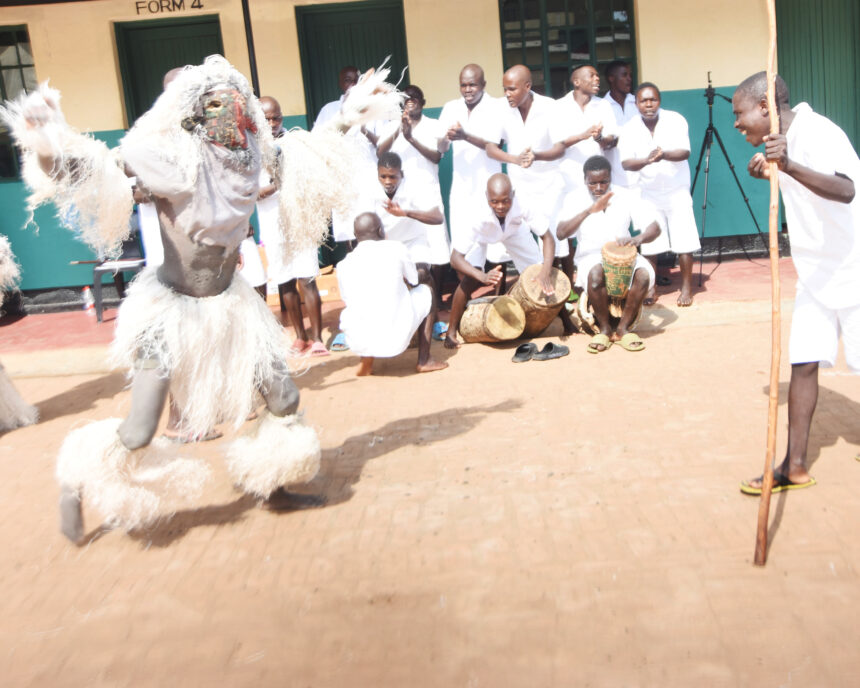
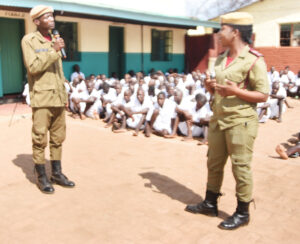
In celebration of this gesture, the juveniles decided to celebrate it through a showcase of their talents that ranged from poetry, traditional dances, comedy and drama.
The performances showed that there is immense talent at the reformatory centre.
“I love poetry and would love to utilize it fully one day when I am out of here,” said one of the performers. “I used to do this before I came here but I was not serious in terms of creating more poems.”
- Advertisement -
- Advertisement -
He said at the reformatory centre, he thought of perfecting his poetry to keep himself strong.
“In art, you get that chance to create and at the same time keep yourself busy especially at such a place where at times you feel like you have been condemned,” he said.
He said there have been times when he had thought of giving up but he has been encouraged by poetry to keep on walking just like Johnny Walker.
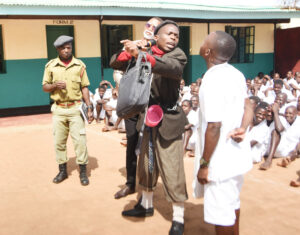
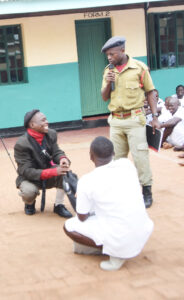
Other juveniles, who served drama in partnership with their warders, said art has helped them survive at the reformatory centre saying there is also healing.
“There is so much in terms of art in here. We will keep on practising for you never know this might help us be somewhere,” he said.
Deschamps said he was happy to see how the juveniles have embraced art at the reformatory centre.
“There is powerful art in here and I should commend prison authorities here for giving these juveniles the chance to express themselves. At Jacaranda School for Orphans, we do the same, giving students the freedom to utilise different talents,” he said.
He said over the years, they have seen how art has impacted on their students.
“These juveniles can also do the same, create art, build it and share stories with the world,” he said.
At Chichiri Prison in Blantyre for instance, art has also been instrumental, empowering inmates.
Chichiri Prison Cultural Troupe is one grouping made up of inmates and it has been vibrant serving traditional dances.
The troupe has been hired by organisations to entertain the masses and at the same time disseminate different messages in order to bring about change.
At Zomba Maximum Prison, Malawi Prison Strings Band made up of inmates and prison warders made headlines in 2016 after being nominated for Best World Music Album.
Their nomination also showed the world that art was doing wonders in prison walls as regards empowerment.
Malawi Prisons Service spokesperson Steve Meke said that Malawi Prison Strings Band has been holding performances but not as active as it used to be in the past years.
Meke said MPS is running its activities differently with an aim of empowering inmates and that one of the areas is to have them showcase their talents.
Through the Zomba Prison Project, Malawi Prison Strings Band recorded an album titled ‘I Have No Everything Here’ which was produced by Ian Brennan.
The band was formed in 2008, largely to entertain inmates at Zomba Prison.
Commissioner General Wandika Phiri said MPS, as guided by Section 163 of the Constitution, believes that correctional facilities should not merely be places where young people are ‘warehoused’ but where they are reformed, rehabilitated and prepared for their successful re-integration into society.
“The performances that the juveniles have served today have shown that there is so much talent in our prisons that need encouragement for it to flourish,” Phiri said.
Commissioner for Prisons responsible for rehabilitation, reformation and prison industries, Bizirial Chapuwala, said art has played a vital role in rehabilitation of inmates saying through participation in different disciplines, some inmates have relieved their personal pain of custodial imprisonment.
“Through art such as dance and music, some prisoners have earned money, which relieves their financial woes in prison,” Chapuwala said.
He said prisoners who participate in traditional dances such as Gule Wamkulu at Zomba and Chichiri prisons are those who have been transferred from the Central Region and that they have no access to relational visits.
“So, knowing that Gule Wamkulu is traditionally given money as a token of appreciation, these prisoners receive a token of appreciation which they share amongst themselves,” he said.
Chapuwala further said through art of drama and comedy, some inmates have developed assertive spirit of believing in themselves that they can make the public laugh.
“In this regard, the inmates develop positive attitude at them and vice versa making them feel accepted by the community,” he said.
Chapuwala said through art of music, drawings, paintings, drama and comedy, some inmates express their feelings, worldview, experiences and communicate to the public their state of life and as reformed persons.
“Through art, prisoners have enhanced their creativity, talent building and innovation over what they did when not under prison environment,” he said.
While inmates have excelled with other art disciplines, some inmates have also been instrumental in fashion, Chapuwala said.
He said that his division established at least a tailoring workshop for each region.
“Blantyre is for Southern Region, Lilongwe for Central Region and Mzimba for the Northern Religion. While other stations were chosen solely to be uniform production units, Bvumbwe Young Offenders was designed as a tailoring training centre for the young prisoners who need the skills as part of their social development,” Chapuwala said.
According to Chapuwala, from September 9 2025, prisoners’ workshops have produced over 28,000 sets of uniforms, which met the minimum standard of two pairs each.
“Bvumbwe Young Offenders contributed a total of 1,735 pairs. Their last sew was on April 1, 2026,” he said.
Chapuwala said they were open to work with different stakeholders in its programmes including art to empower inmates.