The early afternoon sun spreads softly over the wetlands near the shores of Lake Chilwa, glinting off small pools of water that snake through fields in Namasalima Village in Zomba.
For many families here, the rising and falling waters of the lake have long shaped the pulse of life. Some seasons bring fish and fertile soils. Others bring hunger, flooding and uncertainty.
Yet in the middle of the village stands a striking contrast.
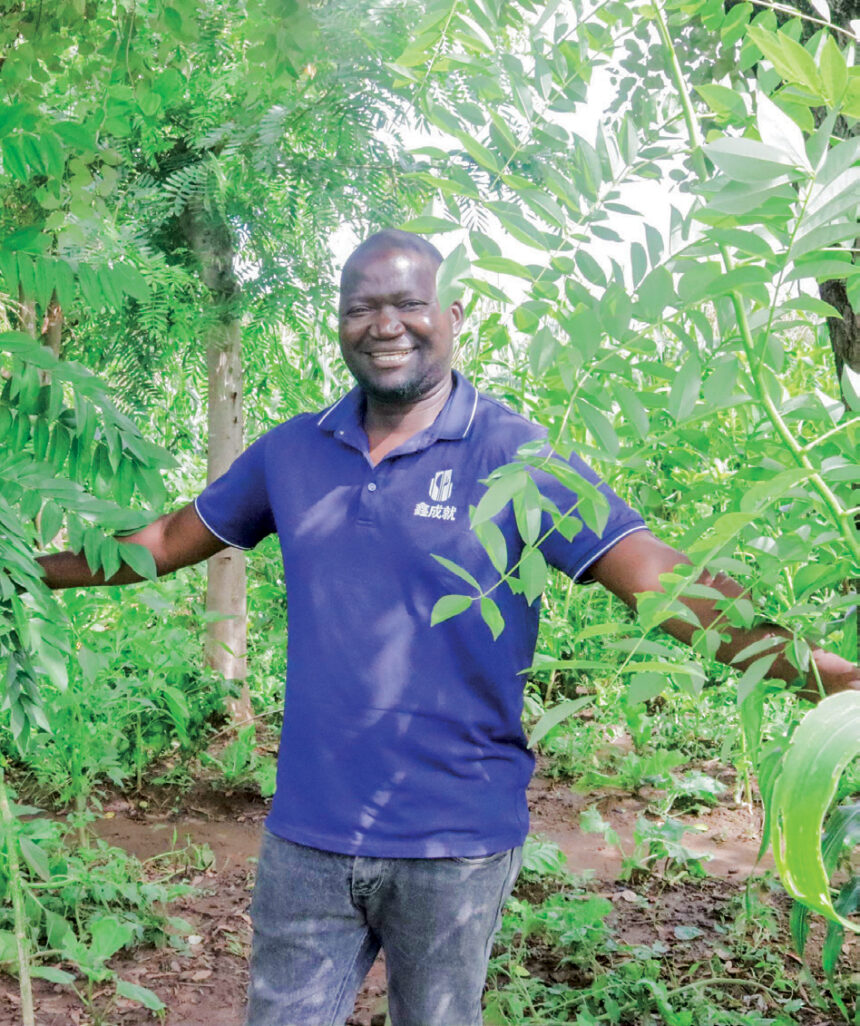
Davison Chauluka’s homestead is a patchwork of thriving crops and fruit trees. Vegetable beds stretch across his yard while chickens cluck around the compound.
Goats tethered nearby nibble quietly in the shade. Even as nearby fields lie waterlogged from flooding caused by Domasi River, whose waters eventually drain into Lake Chilwa, Chauluka’s crops stand firm and healthy.
- Advertisement -
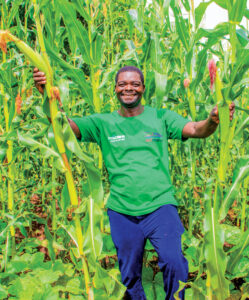
“For many years, I farmed but harvested very little. My family struggled to survive,” he says while standing beside a thriving maize field.
Chauluka supports a family of six including his wife and four children. Farming had been his only livelihood but poor harvests often left the household struggling.
Things began to change in 2023 when he joined a conservation and livelihoods project implemented by Churches Action in Relief and Development (Card) in the Lake Chilwa Basin.
The initiative is funded by Jersey Overseas Aid and the Scottish Catholic International Aid Fund and implemented in partnership with Trócaire Malawi, Civil Society Network on Climate Change and the Centre for International Forestry Research and World Agroforestry (Cifor-Icraf).
- Advertisement -
- Advertisement -
It works with communities in Zomba, Machinga and Phalombe districts.
Through the project, Chauluka received training in climate-smart agriculture and permaculture.
“I was also provided with seed and technical support, including guidance on producing a cost effective hybrid organic and inorganic fertiliser,” he says.
Today his compound reflects those lessons.
Fruit trees surround his home, crops grow in carefully managed plots and drainage channels help prevent waterlogging even during floods.
“With the knowledge I received, I can now manage my land better. My family eats well and we are able to sell some of the produce,” Chauluka says with a smile.

According to Agatha Kayira, project coordinator for Phalombe and Zomba, conservation efforts must also address people’s livelihoods.
“We train communities to conserve the environment but we also consider their socioeconomic lives because conservation is linked to how people survive,” Kayira says.
The initiative supports communities through activities such as savings groups, livestock pass-on programmes and beekeeping.
Some groups have received goats through a revolving system where beneficiaries pass on offspring to other members.
Technical support for restoration efforts is provided by Cifor-Icraf.
Research associate Chamuka Thebulo says the organisation works closely with farmers to strengthen tree restoration efforts.
“We provide technical support in forest restoration, advising on which trees are suitable for different areas and how they should be managed,” Thebulo says.
Farmers are trained in nursery management and agroforestry practices using both indigenous and exotic species.
“The areas now have more trees and the skills farmers are gaining will help ensure their survival,” Thebulo adds.
The initiative is also helping participants establish new livelihoods through village savings and loans (VSL) groups.
In another part of the community, Lemita Majola is steadily building a better future for her family.
Majola belongs to a 25-member VSL group made up entirely of women. After receiving training from Card in business management and savings practices, she began using small loans from the group to start and expand her business.
The change has transformed her household.
Today Majola’s three children, two girls and a boy, are all in school and each has a bicycle to make the journey easier.
“With the money I get from the VSL group, I started a business and it has been growing,” she says.
Her earnings have also allowed her to purchase land where she plans to build a new house.
For Majola and the other women in her group, the savings initiative has brought confidence and independence.
Across the basin, efforts ranging from lake patrols and agroforestry to savings groups and climate-smart farming are beginning to deliver results.
Programme manager at Trócaire, Chris Connelly, says the strength of the initiative lies in how the efforts reinforce one another.
“The communities are layering different interventions so the combined benefits for both people and ecosystems are strong,” Connelly says.
During visits to project sites, he observed thriving household gardens, beach village patrols protecting fish stocks and savings groups building profitable businesses.
“These alternative livelihoods mean people do not have to rely on activities such as charcoal burning. That reduces pressure on the natural resources of Lake Chilwa,” he says.
He also notes growing awareness among communities about protecting the environment.
“People now see the lake as a special part of their environment and understand how it sustains their families,” Connelly adds.
Back at his homestead, Chauluka walks through his lush gardens and pauses to inspect a row of leafy crops.
Just a short distance away, floodwaters shimmer across neighbouring fields. Yet within his compound, life is flourishing.