By Harriet Kachimanga:
They are a force to be reckoned with in the population; deaf people.
As the National Statistical Office’s Population and Housing Census of 2018 indicates, Malawi has 377,000 deaf people.
However, that is five years ago.
The figure could be greater than then now.
- Advertisement -
Ironically, such people claim to be marginalised, if not ostracised, in the society.
This is according to 18-year-old girl Margret Ruvas from Namiyango Township in Blantyre.
Ruvas— who did her primary school at Mary View in Nguludi, Chiradzulu, and secondary education at Providence in Mulanje District—claims that she had to overcome hurdles just to complete her education.
“Challenges I am referring to include communication barriers both in class and outside it. I also felt that despite my intelligence and perseverance, most of my specialist teachers lacked the understanding of deaf culture, attendant deaf rights and ethics. For instance, they would often unknowingly impede my ability to fully grasp lessons by speaking without facing students, hindering my lip-reading.
- Advertisement -
- Advertisement -
“Amidst these challenges, I sat Malawi School Certificate of Education (MSCE) examinations in 2022 with determination. However, without adequate communication support and an inclusive environment, I struggled to perform to my full potential and, as a result, failed the examinations,” she points out.
Since then, she has been staying idle.
“I want to go back to school and rewrite MSCE examinations.
“However, I am yet to find an appropriate school. I will not relent until I pass the examinations and proceed to college or university so that I become a hotel chef,” Ruvas, resolve written on her face, says.
Her ordeal is evidence of some of the challenges that come about due to inaccessibility of sign language and sign language interpreters among the deaf community.
Sign language plays a crucial role in the lives of the deaf community, serving as their primary means of communication.
However, barriers to accessibility persist in Malawi, limiting the ability of deaf individuals to freely communicate using sign language.
Growing up deaf in Malawi comes with other immense challenges, even for those who have managed to access education, as sign language is not widely and formally recognised.
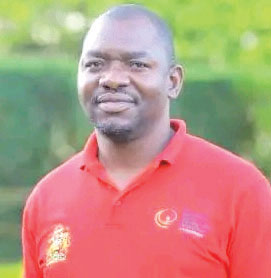
One of such people is Sekerani Kufakwina.
Kufakwina, a dedicated civil servant working as human resource officer, faced numerous challenges in his professional life due to his deafness.
Despite his strong qualifications and capabilities, communication breakdown often caused him to miss out on job progression opportunities, tasks and important events.
In his career, he has encountered situations where crucial information or instructions were not effectively communicated to him due to the lack of awareness around deaf communication needs and the inability of people surrounding him to use and understand sign language.
“For me, this has led to missed job opportunities and a sense of frustration and exclusion. These challenges extend beyond the career realm, as I often struggle to participate fully in social activities and at gatherings. Without proper communication support, I often find myself missing out on important conversations and connections, leading to a sense of isolation,” Kufakwina opens up.
He shared a story about his failed dream to become a police officer.
“During my post-secondary education years, I applied to join the Malawi Police Service. Having passed the aptitude test and been shortlisted to attend oral interviews, the panel came and I requested for a sign language interpreter, to no avail. I then requested for a written interview, a request that was denied. That is how I missed a job opportunity despite being fit and fulfilling all requirements,” he recollects.
Despite the challenges faced by deaf individuals in Malawi, the country has made significant strides in recognising their rights and mainstreaming them into society.

Malawi Council for the Handicapped Executive Director, George Chiusiwa, explains the need to create a world where deaf people can sign everywhere.
“For Malawi to attain the goal of a genuinely inclusive society, there is a need to fully guarantee the right to accessibility for deaf people through the wide use of sign language.
“There is also a need to recognise sign language as a national language for deaf persons and further recognise it as an official language under the Disability Act of 2012. This will be a progressive step towards realising the communication needs of this segment of the population,” Chiusiwa points out.
Chiusiwa adds that “the bold policy action by the Government of Malawi to adopt the Malawi Sign Language Dictionary that was prepared and published by the Malawi National Association of the Deaf in 2022 should be commended” as this dictionary is a significant tool for addressing communication hurdles and obstacles faced by deaf people in various facets of development.
He further asserts that Malawi can only attain real inclusive development, as espoused in the Malawi 2063 agenda, if the deaf community is not left behind or excluded based on communication deficiencies.
While progress has been made at the international level, achieving inclusivity and respect for rights for deaf individuals requires more efforts.
In its quest to ensure inclusivity at national level, Malawi is party to various international human rights instruments. Such international legal instruments play a crucial role in promoting the rights of deaf people worldwide by placing certain obligations on State parties.
For instance, the United Nations Convention on the Rights of Persons with Disabilities (UNCRPD) is a legally binding treaty that addresses the rights and well-being of individuals with disabilities, including deaf people. Ratified by Malawi in 2009, the UNCRPD recognises the linguistic rights of deaf individuals, emphasising the importance of sign language as a means of communication and calling for its recognition and promotion in various areas of life.
Similarly, the Universal Declaration of Human Rights (UDHR), under Article 1, affirms that all people are born free and equal in dignity and rights. This includes the right of deaf individuals to communicate freely and access sign language in ensuring their inclusion and participation in society. The Constitution of Malawi is also very clear on non-discrimination and equality as this supreme law proscribes discrimination, stigma and exclusion on the basis of one’s disability or condition.
In fact, deaf culture has to be celebrated as part of Malawi’s social and human diversity through the use of sign language as a national and official language based on Section 8 of the Disability Act of 2012.
Sign language is thus a tool towards achieving social equality and inclusive justice in the country as stakeholders pursue development aspirations guided by the Malawi 2063 vision.
Therefore, as Malawi commemorates International Day of Sign Languages on October 24, one only hopes that sign language will take a position of more significance in national affairs.
It is now or never.