Malawi’s access to China’s vast market under a new zero-tariff arrangement could open major opportunities for agricultural exports, but questions remain over whether local producers are ready to meet the requirements needed to benefit.
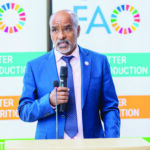
Chinese Ambassador to Malawi Lu Xu mentioned the opportunity during a regional workshop on the One Country One Priority Product (Ocopp) initiative under the Food and Agriculture Organisation (FAO)-China South-South Cooperation Programme, which Malawi is hosting.
Delegates are from Ghana, Tanzania, Zambia and Uganda.
Lu said China will, from May 1, 2026, offer zero tariffs on 100 percent of product categories to African countries with diplomatic ties to Beijing, including Malawi.
“This will open wider opportunities for Malawi’s high-quality agricultural products to access the vast Chinese market,” Xu said.
- Advertisement -
However, experts are of the view that tariff-free access alone does not guarantee entry into the Chinese market.
Exporters must meet strict quality, safety and phytosanitary standards and ensure consistent supply volumes, factors that have historically limited Malawi’s export capacity.
Malawi’s participation in the Ocopp initiative focuses on the banana value chain, a sector that supports over 1.5 million people but has been weakened by Banana Bunchy Top Virus.

FAO Representative in Malawi Ali Said Yesuf said stakeholders are working to revive the sector through farmer training, introduction of disease-resistant varieties and stronger partnerships.
- Advertisement -
- Advertisement -
“Yes, the sector has faced challenges, but through this initiative we are seeing recovery driven by innovation, partnerships and farmer empowerment,” Yesuf said.
Deputy Minister of Agriculture Thokozani Tembo said the initiative offers a practical pathway for transforming the agriculture sector and aligning production with market demands.
Tembo said the focus on the banana value chain reflects Malawi’s commitment to sustainable practices in production, harvesting, processing and storage.
He added that the programme could serve as a model for other value chains and help the country increase productivity while using fewer resources.