By Mike Mataka:
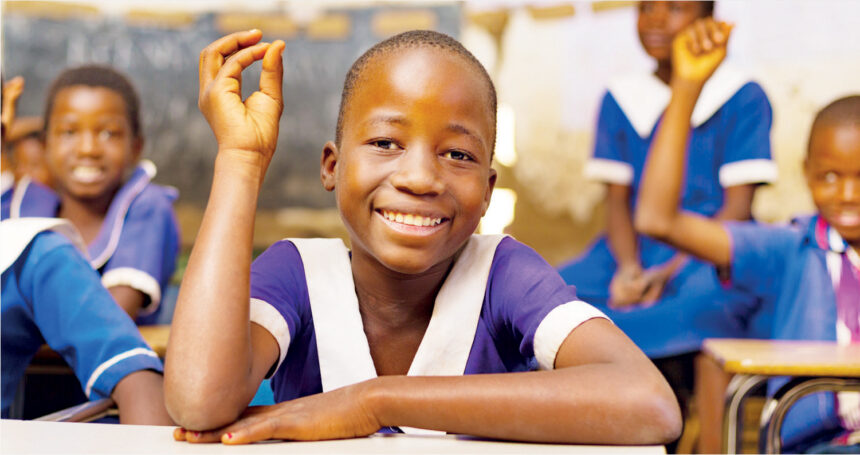
When 20-year-old Khadija Justin clutched her acceptance letter to Mzuzu University earlier this year, her eyes welled with tears of pride and disbelief. For a young woman raised by a single parent in Group Village Mlomba, under Traditional Authority (TA) Mposa, in Machinga District, this milestone was once unimaginable.
Yet, today, Khadija is proof of what determination, coupled with the right support, can achieve.
“I used to dream of a better future but I didn’t know how I would get there. Through World Vision’s support, I received school uniforms and learning materials at primary school level. That gave me the courage to work hard and now I am going to study for a Bachelor of Education in Languages at Mzuzu University,” she said.
Her story is the story of Mposa itself. For 15 years, World Vision Malawi has worked with community members to transform lives in education, health, livelihoods, child protection and water access.
- Advertisement -
As the organisation finally closes its chapter in Mposa, the village that once struggled with poverty, hunger and hopelessness has been redefined by resilience and promise.
When World Vision arrived in 2010, the challenges were many. Barely 2 percent of children completed primary school. Clean water was scarce and many families relied on unsafe streams.
Malnutrition was widespread, with exclusive breastfeeding practices almost unheard of. Early marriages and school dropout cases were commonplace, cutting short the potential of countless young girls.
But the story began to change. Through support amounting to more than $4.2 million, channeled mainly from Canada, classrooms were built, teachers trained and boreholes drilled.
- Advertisement -
- Advertisement -
Reading camps mushroomed and child sponsorship programmes supported thousands of boys and girls.
Khadija, who began receiving support while in standard three at Madziamera Primary School, is one of 3,000 children who benefitted directly from the sponsorship programme.
She speaks proudly of how she scored 20 points in her final examinations, earning a spot at one of Malawi’s top public universities.
For her, the dream of becoming a teacher is no longer far-fetched; it is within reach.
The statistics tell a powerful story. In just over a decade, the proportion of children completing primary school soared from 2 percent to 84 percent.
More than 6,000 children are now enrolled in school compared to less than 5,000 a few years earlier.
In health, the proportion of children exclusively breastfed until six months of age jumped from 3 percent to nearly 9 percent, while cases of wasting among under-five children fell dramatically.
The pneumonia treatment rate improved from 62 percent in 2021 to over 80 percent by 2024, thanks to the training of village health workers and health surveillance assistants.
For people such as Mellia Dyton, a care leader trained by World Vision, the transformation is most visible in children’s bodies and minds.
“Before World Vision intervened, many children here were suffering from malnutrition. Some even died because parents didn’t know how to prepare balanced diets. I was, therefore, trained to be teaching families about the six food groups and how to prepare them from what is locally available. Now we have healthier children and they are also performing better than before at school. Yes, World Vision is going, but the skills remain with us and we will carry on,” Dyton said.
Her conviction illustrates the sustainability the programme aimed for — a community able to feed itself, not just today, but for years to come.
Equally striking is the change in access to water. In 2010, mothers and children trudged long distances to scoop water from muddy streams, risking cholera and diarrhoea.
Today, 99 percent of households have clean, safe drinking water, thanks to more than 32 boreholes drilled and 10 rehabilitated.
George Jamali, who is one of the trained area mechanics, beams with pride when he explains his role.
“My work is to maintain boreholes so that they don’t break down. I make sure that water is always safe for families. Before, women and children used to cover long distances, only to fetch dirty water. Now cases of diarrhoea and typhoid have reduced greatly,” Jamali said.
His testimony reveals the confidence that community members now have in their ability to sustain these systems without outside help.
The transformation extended beyond infrastructure to social change.
Early marriages, once an accepted norm, have been rolled back. Community structures empowered by World Vision managed to withdraw over 100 girls from forced marriages and send them back to school.
The proportion of children married before 18 dropped from 21 percent in 2016 to just above 10 percent five years later. This shift was made possible by strong community groups, mother networks and child protection committees, who now patrol villages with vigilance and monitor child rights violations.
Children themselves found their voices through an innovation that is now shaping leadership for the future: the Children’s Parliament.
For many participants, especially teenagers, the platform became a turning point. It gave them the confidence to raise issues affecting their lives such as child labour and defilement, while also influencing positive changes, in terms of the provision of school materials and the return of children who had dropped out.
Teachers observed that the initiative not only empowered learners but also encouraged greater parental involvement, creating a ripple effect where children’s empowerment translated directly into improved performance in school.
But Mposa’s story would be incomplete without acknowledging its battles with nature.
Cyclone Freddy in 2023 ravaged fields and left families destitute.
Funny Kachingwe, a mother of five, remembers the sense of hopelessness vividly.
“After the cyclone destroyed my crops, I felt like my world had collapsed. My husband was stressed, worrying about how we would support our children. But World Vision gave us fertiliser, seeds and training. I started irrigation farming and harvested seven 50-kilogramme bags of maize. I also learned to make Mbeya organic fertiliser. Now I can feed my children again,” Kachingwe said.
Her resilience reflects how World Vision combined immediate relief with long-term adaptation, teaching families not just to recover but to withstand future shocks.
These stories are backed by broader evidence. Households reporting strong economic resilience rose from 22 percent in 2012 to 55 percent in 2024.
Through pass-on livestock programmes, the organisation distributed goats and chickens to thousands of households, while fruit trees and vegetable seeds diversified diets and income streams. Farmers were trained in climate-smart practices such as irrigation and organic fertiliser making, ensuring that resilience was not just about bouncing back but moving forward.
As World Vision bows out of Mposa, the government and traditional leaders are left both with gratitude and responsibility.

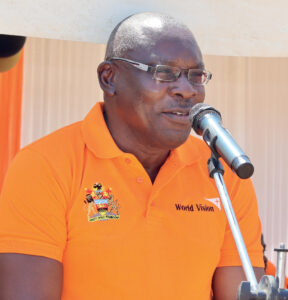
Secretary for Local Government, Unity and Culture Richard Hara commended the organisation.
“World Vision has been a valuable partner in moving Malawians from poverty to prosperity. While development is ongoing, the government pledges to continue supporting communities through existing structures. We call upon people of Mposa to safeguard and utilise the infrastructure that has been left behind,” Hara said.
World Vision itself sees the programme as a success story.
“As we step out of Mposa, we do so with happiness. We have achieved what we planned— transformation in education, health, agriculture and child protection. We also learned lessons but we, as an organisation, are satisfied,” Jeremy Banda, its board director, noted.
Perhaps the most poignant words come from Senior Chief Mposa, who has witnessed his community’s transformation first hand.
“You cannot talk about development in this area without mentioning World Vision. They have not only given us fish but also taught us how to fish. We now have the skills to take over from where they left. When I walk around my area now, I smile,” Mposa said.
As World Vision steps away, Mposa stands transformed—not by charity alone, but by the skills, resilience and determination of its people.
The smiles of students walking to school with clean uniforms, mothers confidently feeding their families, farmers adapting to a changing climate and children raising their voices in Parliament are the living proof of what sustained support and community commitment can achieve. The infrastructure remains, yes, but more importantly, so do the knowledge and confidence to use it.