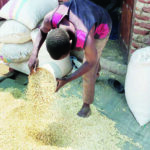
The farming season is here and farmers from 14 districts of Malawi who are part of the Participatory Integrated Climate Services for Agriculture (Picsa), implemented by the meteorological department, are receiving timely, location specific weather information to support their farming decisions.
The Picsa approach aims to help farmers make informed decisions based on accurate climate and weather information, locally relevant crop, livestock and livelihood options, and participatory tools that support decision making.
Meanwhile, farmers from the same 14 districts who are part of One Acre Fund have started redeeming fertilisers, while those who are beneficiaries of the Farm Input Subsidy Programme (Fisp), implemented by the Malawi Government, will purchase fertiliser from the Smallholder Farmers Fertiliser Revolving Fund at K10,000 per bag.
Some farmers from the same districts are also using the Zaulimi mobile application developed by Agricultural Commodity Exchange.
Through Zaulimi, farmers can access market information, trade facilitation and a warehouse receipt system.
- Advertisement -
All these services require quality data, especially user data. When combined, this data can lead to the identification of a particular person or entity, such as farmer identity cards (IDCs) or field IDs, yet it is stored across multiple service providers whose databases are not interoperable.
This means a farmer has to log into different mobile applications to interact with each platform, which is a cumbersome process and prone to errors.
At the same time, the farmer does not have control of the data, particularly if a service is phased out.
However, progress made under the United Nations Development Programme (UNDP) – led National Registration and Identification System of Malawi offers a foundation for coordinating a sectoral layer for a farmer ID system that could link these different systems.
- Advertisement -
- Advertisement -
With the introduction of the Data Protection Act, there is now hope that farmers will have a say in how their data is used.
The Malawi Data Protection Authority is an independent statutory body established under the Data Protection Act 2024 to protect personal data and the privacy of individuals by regulating the processing of personal information.
The Act empowers data subjects to have greater autonomy and control over their personal data by ensuring that public and private institutions handle users’ data with care.
The Malawi Communications Regulatory Authority is the designated Data Protection Authority responsible for ensuring appropriate handling of personal data in Malawi as required by the Act.
It is a requirement for anyone or any institution processing data for more than 10,000 people to register with the authority.
The introduction of this new law has increased the workload and budget for farmer organisations that provide digital services and interface with different platforms on behalf of their members.
Would it not make better sense for these organisations to move from silos to systems as a way of providing quality services without increasing workload or budget?
The National Agricultural Data Infrastructure (Nagdi) framework proposed by the Commonwealth is considered an approach for delivering Digital Public Infrastructure within the agricultural sector for managing agricultural data.
According to UNDP, Digital Public Infrastructure is a set of foundational digital systems that form the backbone of modern societies and enable secure and seamless interactions between people, businesses and governments.
The vision of Nagdi is to strengthen and harmonise existing individual data systems at country level through an interoperable national data infrastructure.
This will enable interconnected infrastructure at regional and global levels, creating a superhighway for secure data exchange within and between countries and across regions for macro-level decision making.
Under the Commonwealth’s Nagdi framework, the unique identifier of farmers in Malawi, held under the supervision of the National Registration Bureau through the National ID system, provides a secure basis for offering services to the farming community.
A common data layer for the agricultural sector is then built on top of the National ID system as a component of Nagdi, using the farmers’ unique identifiers to harmonise user data across the databases of various service providers.
With the consent of farmers and their organisations, this creates the foundation for seamless data exchange between service providers, as the systems will now be able to communicate with one another.
If a farmer’s entry point is the Pisca project to access climate and weather information, the Nagdi system will enable One Acre Fund to authenticate the same farmer to redeem fertiliser, support Fisp’s mobile payments system with reliable data and allow Zaulimi to provide market information without requiring the farmer’s profile to be entered into separate databases.
Nagdi will minimise data duplication by allowing interoperability between existing agricultural service providers in Malawi.