


Copyright Society of Malawi (Cosoma) acknowledged Wednesday that it needs to do more, in terms of conducting sensitisation programmes on blank media levy.
The copyright body has disbursed K505 million with a total of K279 million going to musicians whose works were reproduced last year.
Cosoma is also expected to disburse blank media levy amounting to K139 million to literary authors/ publishers and K87 million to film producers.
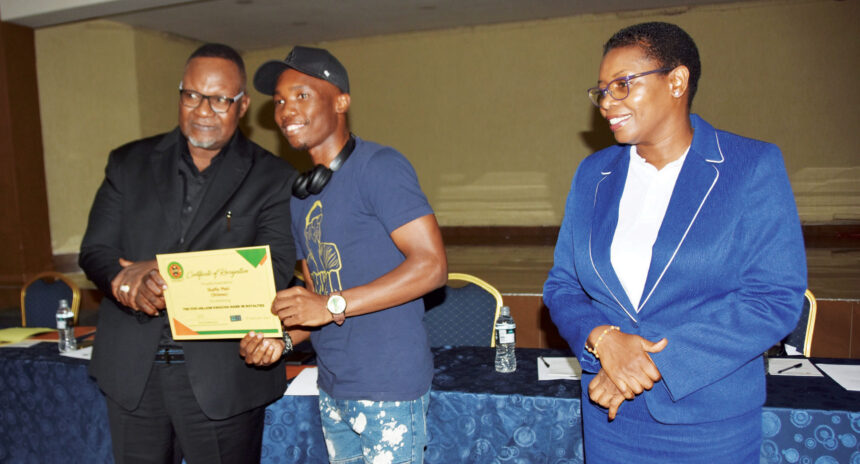
During the disbursement of blank media levy to musicians in Lilongwe recently, two artists, namely Eli Njuchi and Driemo, came out top, pocketing over K5 million.
However some musicians took to social media to query the benchmarks used in distributing blank media levy, with others hitting at the copyright body for giving them ‘peanuts’ and yet their music had been playing frequently.
- Advertisement -
Cosoma Head of Documentation and Distribution Shadrick Kumtengo said they have been conducting sensitisation campaigns for all concerned parties but have observed that they need to do more.
“The society continually engages stakeholders in making sure that the right information is disseminated but there are gaps and we need to engage them more,” Kumtengo said.
Some artists have overtime alleged that those who criticise the copyright body are given more money to shut them up but Kumtengo denied this.
“This is not right and totally baseless; basically, we have observed that some artists who have made a name for themselves in previous years feel that they deserve to be compensated with the blank media levy funds despite that their works are not active in the distribution periods,” he said.
- Advertisement -
- Advertisement -
Kumtengo maintained that blank media levy compensates the works which have been active during the specified distribution period.
“Like in the current disbursement, the distribution period is April to September 2023. You will note that artists whose works were released or used in November and December 2023 are complaining.
“This means when we distribute funds covering the period November and December 2023, it would seem like we have given the royalty because they complained, which is not the case,” he said.
Kumtengo said the biggest challenge since they started managing blank media levy is that artists have stopped selling their works and that they hope to receive funds from Cosoma.
“In a normal situation the artist is supposed to first make sales to recoup their investments, and later hope to get royalty as secondary income from their works,” he said.
He said blank media levy just like any other remuneration or royalty disbursed by Cosoma is paid to works which have been used in a specified period.
“These remunerations are paid regardless of whether an artist is a member or not. All what the society requires is that the beneficiary makes declarations about the rightholders who participated in the creation of the work,” he said.
Kumtengo clarified that blank media levy comes from an economic right of production under section 29 of the Copyright Act, 2016.
“As such, all data for distribution of the funds from the same is collected from reproduction streams i.e. softcopy operators (burning centres), ringtones, downloads etc. These streams have different points and co-eficients in our distribution software,” he said.
Kumtengo added that in terms of distribution, the reproduction data collected form the mentioned streams is inputted in their system on day-to-day basis (real time) as they receive.
“The inflow of data from all corners of the country converges and is converted into point values and later the system makes systematic calculations and allocation to the works depending on frequency. The more frequency a work gets, the more the allocation of the funds,” he said.