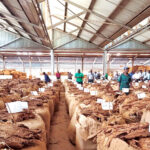





African countries, Malawi inclusive, have been advised to adopt mechanised harvesting for cotton to effectively compete in the Chinese raw cotton market.
The recommendation came when African journalists participating in the China International Press Communication Centre (CIPCC) programme visited Wuxi Cotton Textile Group, one of the largest enterprises in China’s cotton textile sector.
The company’s deputy director of sales, Julian Zhu, said the emphasis on machinery was meant to prevent contamination of cotton, a crucial factor for secondary products of the crop.
“While China’s domestic production is significant, the country also imports raw cotton.
“On the African continent, we only buy from Egypt but other nations have the potential to tap into this market, but quality and efficiency are paramount,” he said.
- Advertisement -
The company operates a vast facility with 700,000 spindles and 500 looms, producing 40,000 tonnes of high-grade yarn and 50 million metres of premium fabrics annually.
Currently, the company has expanded its operations to Ethiopia, establishing a factory that began production in 2019 and has since been recognised for its significant contribution to the Ethiopian industrial park.
Meanwhile, local farmers have also been tipped to use high quality seed and add value to boost yield and maximise earning from crop production.
This follows another visit by the journalists to Daizhuang Village in Jiangsu Province, a model of modern, efficient agriculture practices.
- Advertisement -
- Advertisement -
The village has developed biodiversity-based agriculture through what they call the Daizhuang Experience.
This model, characterised by village-community coordination and party building for enriching villagers, operates on a Party Branch + Cooperative + Farmers framework.
Director of Daizhuang Village Committee, Li Youyi, said the village had achieved remarkable success, with a collective income of 5.2 million RMB (about $775,000) and a per capita income of 45,000 RMB (about $6,700) in 2024.
“The project has significantly boosted organic rice yields and increased farmer benefits by refraining from chemical pesticides and fertilisers and employing integrated farming modes like rice duck co-culture.
“The village has become an organic food base. We have demonstrated that quality and sustainable practices can maximise yield and add value, leading to substantial returns for farmers,” Youyi said.