

By Levison Mwase, contributor:
Malawi is among countries in southern, eastern and western Africa that have recorded progress in contraception services access.
According to the latest Family Planning (FP) 2030 Measurement Report, Malawi is among countries that made positive strides between 2012 and 2023.
FP 2030 is a global partnership dedicated to promoting and expanding access to family planning services.
Comprising governments, civil society organisations, private sector partners and development agencies, FP2030 works collaboratively to advance family planning as a fundamental human right and an essential component of sustainable development.
- Advertisement -
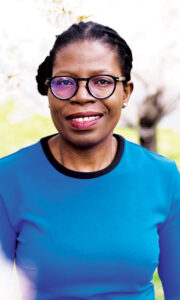
Samukeliso Dube is the executive director for FP2030.
The report, which was launched on Wednesday in Washington DC., the United States, shows that the average rise in Modern Contraceptive Prevalence (MCP) across all regions is 0.3 percent each year but the fastest-growing regions— that is, western, eastern and southern Africa— are moving at twice that rate.
And in six countries—Malawi, Burkina Faso, Mozambique, Madagascar, Sierra Leone, and Uganda—MCP has risen by more than 1 percentage point per year since 2012.
This is considered a remarkable achievement, taking into account the challenges that include low funding and the disruptions of the Covid pandemic that forced a socio-economic meltdown for at least three years after 2019.
- Advertisement -
- Advertisement -
“Conversely, in Malawi and Zimbabwe, women whose first births were within marriage had higher modern contraceptive use at 6 months postpartum,” the report reads.
This year’s measurement report covers 85 countries, including all low and lower-middle income countries as well as a few new middle-income countries that have recently made commitments to FP2030.
There are at least one billion women and girls of reproductive age of between 15 and 49 years in those 85 countries and, at the mid-point of 2023, an estimated 377 million of those women were using a modern method of contraception, 92 million more than were using a method in 2012.
“Their use of modern contraception averted 141 million unintended pregnancies, 30 million unsafe abortions and 141,000 maternal deaths in the last year alone,” the report reads.
It finds that the number of women using modern contraception has grown by 92 million since the outset of the partnership in 2012, attributing part of that to population growth.
“The number of women of reproductive age across the 85 countries has grown by 177 million since 2012—a 20 percent increase. But it’s also because a rising proportion of women is choosing to use modern contraception.
“Today, among all women of reproductive age, 35.2 percent are using a modern method of contraception. 12 years ago, the figure was 31.9 percent. This upward shift reflects the impact of the FP2030 partnership to bend the curve and expand rights-based family planning,” the report points out.
It further finds that a significant percentage of women in every country that was analysed received their one and only postpartum check either 41-plus days after delivery or not at all.
“This includes more than 80 percent of postpartum women in Ethiopia; more than 60 percent of postpartum women in Angola and Tanzania; more than 40 percent of women in Malawi, Burundi, Uganda and Madagascar; and more than 20 percent of women in Zimbabwe, Rwanda, Zambia and Kenya. Only in three countries— Kenya, Rwanda, and Zambia—do the majority of women receive their postnatal checks within four hours of delivery,” the report indicates.
However, while detailed information on the content of postnatal checks is scarce, the data available suggests that counseling on family planning may be missing in many encounters.
For instance, in Malawi’s most recent survey (SPA 2013-2014), only 12 percent of antenatal checks included this information and the same is found in many other countries in the sub-Sahara region.
While the 3.3 percentage points is the increase in MCP across all 85 countries, this average is heavily weighted by the very populous nations in Asia, which already have high MCP and are, therefore, progressing slowly, obscuring the extremely rapid growth in other regions.
With the rapid growth is the sub- Saharan Africa region that leads the world, with an increase of 6.4 percentage points since 2012— twice the average rate of growth.
“This works out to 32 million additional users of modern contraception just in sub-Saharan Africa alone,” it shows.
Malawi is reported to be among countries with relatively low susceptibility in the 12 months after giving birth.
Within the region, Zimbabwe has the highest, in the first month, at 48.3 percent followed by Lesotho, at 34.1 percent, and Namibia, at 22.1 percent.
By 12 months postpartum, women in all countries, except Angola, Burundi, Ethiopia, Malawi and Rwanda have become susceptible to a pregnancy.
With the World Health Organisation recommending that births be spaced at least 24 months apart, in all the 14 reviewed countries in the region, more than 10 percent of births are too closely spaced, falling within two years of a previous birth.
However, very short birth intervals of seven to 17 months— which are the riskiest—are not common in the region, although around one in 10 births in Angola, the Comoros and Madagascar do fall within this very close interval.
In Angola, Burundi, Rwanda, Tanzania and Uganda, women whose first births were outside of marriage had higher modern contraceptive use at six months postpartum.
“Conversely, in Malawi and Zimbabwe, women whose first births were within marriage had higher modern contraceptive use at six months postpartum,” the report says.
However, the growth in access of contraception is faced by a financing challenge, as family planning funding from donor governments is on the decline, captured at $1.35 in 2022, compared to 2021’s $1.48 billion and marks the lowest level of funding since 2016, which was $1.31 billion.
The report finds that while some of the decline was due to actual decreases by donor governments, a significant share can be attributed to the rise of the US dollar globally.
Access to contraception is regarded as the critical factor that unlocks a world of possibilities for women and girls: finishing school, pursuing a career, planning for and starting healthy families and participating fully as equal members of society as voluntary, rights-based family planning is essential for progress on gender equality.
The report recommends that there be more investment, to support and expand implant access throughout the world, recognising that implants have proven hugely popular in Africa and may be one of the keys to achieving long-term improvements in contraceptive prevalence.
“But they remain expensive and must be subsidised by the international community. We need to maintain implant access where it already exists and expand access to regions and demographic groups that have been left behind,” the report says.
It also recommends investing in postpartum family planning (and other high impact practices) as a key intervention that has been proven to save the lives of mothers and newborns and increase the uptake of contraception.
Last year, Health Minister Khumbize Kandodo Chiponda indicated that the government had been investing heavily in women’s health, including in family planning services, describing population control as key to development.
She said rapid population growth leads to a scramble for resources, a problem the Ministry of Health has been working around the clock to address.