By Winnie Botha, contributor:
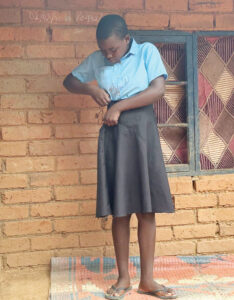
Janet Mwase wakes up at 4am every weekday to help with household chores before setting off for school about one-and-a-half hours later.
Chisu Community Day Secondary School (CDSS), where she goes to, is some 16 kilometres away from her home in Malemba Village, Traditional Authority Mkumbira in Nkhata Bay.
The rugged and hilly topography of the area makes movement from one location to another a tough task. The absence of a reliable transport system means Janet has to rely on her feet to travel to the school.
She takes winding and dusty ways, rain or shine, to reach the only secondary school in her location.
- Advertisement -
“It has been a huge test to my determination,” the 16-year-old schoolgirl says, her backpack slung to her shoulders and a trace of determination in every step she takes.
Janet reveals that the first few kilometres of the daily trips are the most difficult.
“Early in the morning, there is silence along the path with the only noise coming from my footsteps. It is eerily quiet,” she says.
By the time the sun fully rises, Janet is halfway to her school having traipsed through a thick forest before crossing a river.
- Advertisement -
- Advertisement -
In her third school term in Form 1, Janet is determined to carry on despite the challenges she faces.
“The streams swell during the rainy season and I have to use longer routes to get to school. Some men also bully me on my way but I find strength in the fact that every step I take brings me closer to my dream of becoming a journalist,” she says.
Janet is one of the students at Chisu CDSS who walk long distances to school. Most girls have already given up, opting for marriage.

The school’s head teacher, Howard Dunleck, says out of 158 learners at the institution, 69 are girls.
He says this academic year, five Form 1 girls dropped out of school due to pregnancies and marriage.
“Most of the learners fail to optimally concentrate in class because they get tired after covering long distances from their homes on foot,” Dunleck says.
He adds that while it is harder for boys as well, the long distance puts girls at much riskier positions as “they are already vulnerable”.
Thousands of girls across Malawi struggle to access education due to challenges such as long distances to school, inadequate infrastructure and lack of teaching and learning materials.
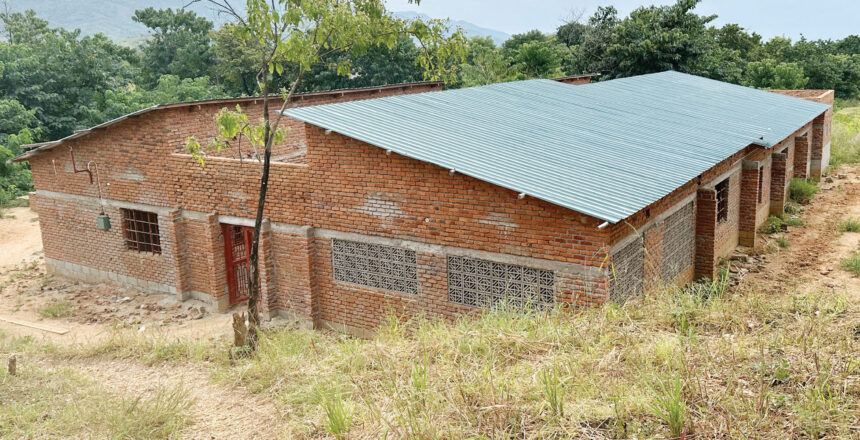
To remove some barriers that girls who learn at Chisu CDSS face, Plan Malawi with funding from Plan Norway National Office, through the Child Not Bride project, is building a 64-bed hostel at the school.
Dunleck says 50 out of the 68 girls at the CDSS cover long distances and that teachers are worried more girls will drop out.
“Safety, especially for adolescent girls, is important. The hostel will offer a safe haven where girls can focus on their studies without fear of being harassed,” the teacher says.
Plan Malawi’s Child Not Bride Project Manager MacDonald Mumba states that it is not easy for learners living in typical rural areas to access quality education.
“On top of social norms, the distance learners cover on foot to school is a big demotivator. As Plan Malawi, we have put in place measures to address the challenge in different parts of the country,” Mumba says.
He adds that through the project, Plan Malawi has managed to construct girls’ hostels in Karonga, Mzimba and now Nkhata Bay.
“The importance of the girls’ hostels extends beyond the physical infrastructure; it embodies a vision of empowerment and equality; it represents a commitment to ensuring that every girl, regardless of her background or circumstances, has the opportunity to thrive.
“Through education, girls can transcend limitations, unlock their potential and shape a brighter future for themselves and their communities,” Mumba says.
He further explains that educated girls are more likely to marry later, have fewer children and contribute to the economic development of their communities.
“Girls become agents of change, breaking down gender barriers and challenging societal norms and by investing in girls’ education, Plan Malawi is not only transforming individual lives but also catalysing positive change on a larger scale,” Mumba says.
The Child Not Bride project is Plan International’s five-year activity through which the organisation has so far constructed three girls’ hostels, each costing K90 million.
The hostels, according to authorities in the beneficiary schools, have motivated girls to remain in school while also slashing absenteeism rates