





By Taonga Sabola & Mercy Matonga:
On the crisp morning of June 23, 2020, as the first blush of dawn kissed the Malawian sky, a quiet revolution stirred across the land.
From the rolling hills of Rumphi to the bustling markets of Blantyre, citizens braved the biting cold, queuing as early as 5am at over 5,000 polling stations with hearts beating to the rhythm of hope and history.
This was no ordinary election; it was a second chance, borne out of the Constitutional Court’s bold annulment of the disputed May 2019 presidential vote.
Gone was the simple plurality; now, the law demanded an absolute majority—50-percent-plus-one—a rule that shifted the electoral terrain dramatically.
- Advertisement -
On one side stood Peter Mutharika, the-then incumbent president and flagbearer of the Democratic Progressive Party (DPP), which was reinforced by Atupele Muluzi of the United Democratic Front (UDF).
In that political marriage of convenience, Mutharika chose Atupele as running mate.
On the other, a formidable alliance had emerged from the embers of discontent: the-then opposition Malawi Congress Party (MCP)’s Lazarus Chakwera, once a pastor and now a symbol of a new dawn, joined forces with Saulos Chilima of UTM Party and eight other parties under the Tonse Alliance.
The other parties included People’s Transformation Party, People’s Party, Alliance for Democracy, Umodzi Party, Malawi Forum for Unity and Development, Freedom Party, among others.
- Advertisement -
- Advertisement -
Their campaign was thunderous and poetic, painting visions of a million jobs, affordable fertiliser that would be selling at less than K5,000 per 50 kilogramme bag, reduced presidential powers and full plates on every Malawian’s food table. It was not just politics—it was a promise, a prayer, a pact with the people.
The atmosphere on that historic day was electric and pregnant with expectation, and when the votes were finally counted, it was clear that the winds of change had prevailed.
Chakwera, bolstered by Chilima’s youthful energy and the coalition’s diverse reach, secured a decisive victory. The nation exhaled—some with joy, others with cautious optimism—as the Tonse Alliance ascended to power.
Yet, as the country now stands five years removed from that moment of renewal, the echoes of campaign promises still reverberate in market stalls, classrooms and kitchens.
Were the million jobs created? Did fertiliser prices fall to the promised K4,495? Do Malawians, indeed, eat three meals a day? Has power truly shifted from the presidency to the people? For many, the answers remain elusive, caught somewhere between aspiration and reality.

MCP secretary general Richard Chimwendo Banda and publicity secretary Jessie Kabwira were not immediately available for comments yesterday.
But addressing a political rally in Lilongwe’s Area 24 in September last year, Chakwera said while some critics were attempting to discredit his performance, genuine Malawians understood that he had delivered.
The President highlighted what he described as durable, state-of-the-art roads across the country as some of the hallmarks of his purported effective leadership.
He added that honest Malawians were aware that he had revived the railway system, which he said had been inactive for many years and that he had also revamped the National Economic Empowerment Fund loans scheme, which is benefitting “hundreds of thousands of Malawians”.
“Honest Malawians know that I am responsible for increasing the Constituency Development Fund [allocation] from K30 million to K200 million to ensure that development is spread across the country,” the President said.
Chakwera then mentioned that only honest Malawians could testify to his efforts in distributing maize to assist those affected by the dry spell that impacted crop production last year.
And speaking at the Kamuzu Palace in Lilongwe when he swore in eight new Cabinet ministers and deputy ministers, Chakwera said the pain that Malawians had endured over the past years was necessary and unavoidable for Malawi to kickstart its journey to prosperity.
According to Chakwera, he made it clear during his inauguration on July 6, 2020 that five years that were to come would be painful to Malawians as he removed several “tumours” that had been left without being treated for a long time and had haunted the growth and development of the country.
The Malawi leader said he alerted Malawians of the oncoming challenges at the very beginning to prepare them for the painful treatment of straightening deformed bones in various sectors.
He said that as part of straightening the deformed bones, there had been a lot of pain in many areas; pain that Malawians have had to endure.
“In the economy, there was a tumour of sugarcoating the situation by cheating Malawians that our currency was strong when it was not supported by exports.
“Since that tumour was removed two years ago, Malawians have endured too much pain. But I would not have been a competent doctor if I were to just let the tumour to grow and rot for fear of being insulted by Malawians because I am confident that Malawians will enjoy economic bliss in the next five years,” Chakwera said.
He further said there was also a tumour of cooking up figures at the Reserve Bank of Malawi, including the wastage of resources through shoddy deals such as the cementgate, and the siphoning of over K400 billion from Salima Sugar Company.
Chakwera said as part of the rot, the Extended Credit Programme with the International Monetary Fund (IMF) was cancelled.
“So since that tumour was removed, Malawians have endured a lot of pain. But I would not have been a competent doctor if I were to just let the tumour to grow and rot for fear of being insulted by Malawians because I am confident that Malawians will enjoy economic bliss in the next five years,” Chakwera said.
The Malawi leader noted that the agriculture sector had a number of big tumours such as siphoning money from the Agricultural Development and Marketing Corporation (Admarc), dubious transactions in the Farm Inputs Subsidy Programme (Fisp), buying tobacco at lower prices and externalising Malawi’s agricultural produce without bringing back the forex to Malawi.

In a recent interview, Centre for Human Rights and Rehabilitation Executive Director Michael Kaiyatsa said the MCP administration had registered both successes and failures.
He cited infrastructure development, particularly road construction, as one of the MCP’s notable achievements.
However, Kaiyatsa said that the government’s successes should not overshadow the bigger problems affecting the country’s economy and governance.
“The biggest failure of the MCP government has been its inability to reduce the high cost of living and inflation. Over the last five years, inflation has remained high, reducing the purchasing power of Malawians. Despite government promises to control inflation, the problem has persisted, making life harder for most people,” Kaiyatsa said.
In a separate interview, Centre for Social Accountability and Transparency Executive Director Willy Kambwandira said it was unfortunate that Malawi lacked a legal system to hold leaders accountable when they fail to fulfill their promises.
He said MCP had failed to deliver on most of its campaign promises and that, with the current economic challenges, it was unlikely that these would be fulfilled in the remaining months.
“It is time politicians started making realistic promises. Malawians must also hold political parties accountable for what they pledge. Otherwise, these promises will continue to be empty words meant to deceive voters.
“Citizens must demand accountability, especially from governing parties, to ensure they fulfill their commitments,” Kambwandira said.
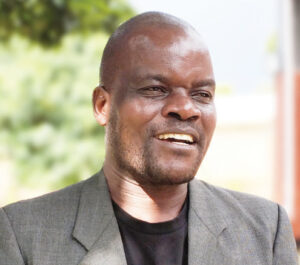
On his part, People’s Federation for National Peace and Development Executive Director Edward Chaka hailed the current administration for ratifying the Arms Trade Treaty in May 2023.
“We are grateful that the current administration ratified the Arms Trade Treaty, which relates to regulations in international trade in conventional weapons and what we are looking forward to is successful implementation,” he said.
He, however, urged the government to review gun control policies.
“We were supposed to review our gun control policies in 2010 but the exercise has been long overdue,” Chaka said.